


Zondacrypto Crisis: Millions Held Hostage by Missing Keys
We have always followed the principles of transparency and clear information. Some of our content includes affiliate links, and we may earn a small commission through these partnerships. These partnerships do not influence our editorial independence or opinion. By using our site, you accept our privacy policy and terms and conditions.


Financial services expert with over three years of experience monitoring cryptocurrency markets and blockchain innovation. Passionate about digital assets and the decentralized future.
Cryptocurrency is a high-risk asset class, and investing carries significant risk, including the potential loss of some or all of your investment. The information on this website is provided for informational and educational purposes only and does not constitute financial, investment, or gambling advice. Cryptowinx does not endorse any specific exchange or gaming platform. For more details, please read our terms and full disclaimer.
Cryptowinx navigates the digital asset universe with a dynamic, forward-looking vision. Throughout our evolution, we have followed every market cycle, from vertical rises to corrections, always remaining a solid point of reference for our community. Our team is made up of industry experts and analysts who experience the blockchain ecosystem daily: we constantly monitor Bitcoin’s stability, study the expansion of the Ethereum ecosystem, and analyze the new frontiers of crypto casinos. We are committed to absolute editorial integrity, separating the signal from the noise through rigorous fact-checking and multi-perspective news analysis. In a landscape where innovations emerge in moments, our mission is to simplify complex concepts and offer transparency into what is established and what is still experimental.
Learn more Cryptowinx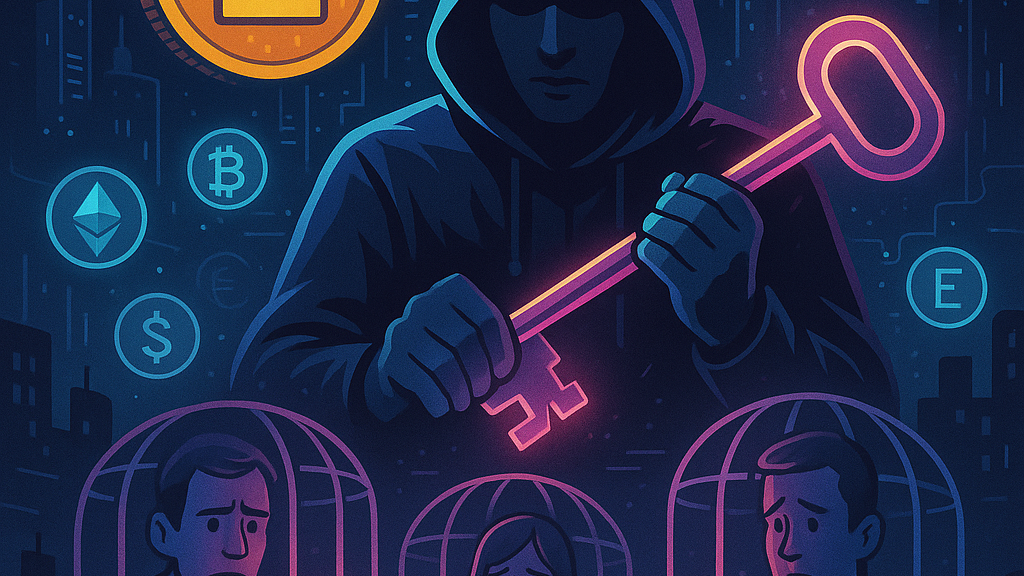
Poland’s largest cryptocurrency exchange, Zondacrypto, is embroiled in a severe withdrawal crisis that has left millions of customers unable to access their funds. The situation escalated as the company referenced a wallet containing approximately 4,500 BTC, which they claimed reflected their financial stability, although access to these coins remains blocked.
The wallet in question is secured by a private key belonging to the exchange’s founder, Sylwester Suszek. After selling the exchange in 2021, he vanished from public life in March 2022, prompting scrutiny from regulators, prosecutors, and even the country’s Prime Minister.

Issues with withdrawals first became apparent in December 2025, when users began experiencing prolonged delays, voicing their concerns on the exchange’s official Telegram channel. Management attributed these delays to heightened customer demand and the implementation of new security measures, but the situation soon deteriorated further.
By late March 2026, dissatisfaction reached a boiling point, leading to the creation of a whistleblower platform, zonda-alert.pl, to collect user grievances. Simultaneously, blockchain analysts uncovered significant drops in the exchange’s Bitcoin holdings, with average balances plummeting from 55.7 BTC in August 2024 to a mere 0.086 BTC by April 2026, demonstrating a staggering decline of 99.7%.
Understanding the scale of the problem is crucial, as Zondacrypto handles a substantial portion of Poland’s retail cryptocurrency transactions. A prolonged freeze on withdrawals jeopardizes the financial stability of hundreds of thousands of customers across the nation.
During an address on April 17, CEO Przemysław Kral sought to reassure stakeholders by highlighting the existence of the wallet containing 4,500 BTC, valued near $330 million. However, he conceded that the company cannot access these funds due to the missing private key, which was never transferred during the sale to new ownership.
Since disappearing, Suszek has eluded both media inquiries and private investigations, leaving family members unable to confirm his whereabouts or even his status. Consequently, the inaccessible wallet is practically ineffectual.
Meanwhile, authorities have been investigating a series of irregular transfers amounting to over $21 million that moved from Zondacrypto wallets to a single deposit address at Kraken between December 2025 and April 2026. Kral has publicly dismissed these findings and threatened legal repercussions, yet the lack of transparency worsens customer trust.

The situation has become a national scandal, dominating headlines in Poland. Prime Minister Donald Tusk has intensified scrutiny, alleging that Zondacrypto has financed politicians who opposed regulatory measures for the cryptocurrency market, further complicating the political narrative surrounding the exchange.
On April 8, the National Prosecutor’s Office initiated a formal investigation, while the Office of Competition and Consumer Protection has been amassing complaints against the exchange since 2022. Reports indicate that the internal security agency is now also involved in probing Zondacrypto.
The fallout from this crisis resembles the turmoil experienced during the FTX collapse, characterized by frozen assets, ambiguous communications, and a CEO struggling to assert financial health amidst alarming blockchain data.
As over one million customers and the future of Poland’s approach to the MiCA regulations hang in the balance, the forthcoming weeks will be critical. Regulators face a daunting task to unravel the complexities surrounding the missing keys, the founder’s disappearance, and the ensuing political ramifications. The patience of affected customers is likely to wear thin as the resolution remains uncertain.
Leave the reaction
Gregory Russell








Commentaries
Add your comment
Fill in necessary fields and publish