


Why JPX Should Rethink Excluding Digital Assets from TOPIX
We have always followed the principles of transparency and clear information. Some of our content includes affiliate links, and we may earn a small commission through these partnerships. These partnerships do not influence our editorial independence or opinion. By using our site, you accept our privacy policy and terms and conditions.


A Senior Altcoin Analyst, Sarah combines on-chain data with a background in venture capital research. With a Master’s in Computer Science, she provides precise evaluations…
Cryptocurrency is a high-risk asset class, and investing carries significant risk, including the potential loss of some or all of your investment. The information on this website is provided for informational and educational purposes only and does not constitute financial, investment, or gambling advice. Cryptowinx does not endorse any specific exchange or gaming platform. For more details, please read our terms and full disclaimer.
Cryptowinx navigates the digital asset universe with a dynamic, forward-looking vision. Throughout our evolution, we have followed every market cycle, from vertical rises to corrections, always remaining a solid point of reference for our community. Our team is made up of industry experts and analysts who experience the blockchain ecosystem daily: we constantly monitor Bitcoin’s stability, study the expansion of the Ethereum ecosystem, and analyze the new frontiers of crypto casinos. We are committed to absolute editorial integrity, separating the signal from the noise through rigorous fact-checking and multi-perspective news analysis. In a landscape where innovations emerge in moments, our mission is to simplify complex concepts and offer transparency into what is established and what is still experimental.
Learn more Cryptowinx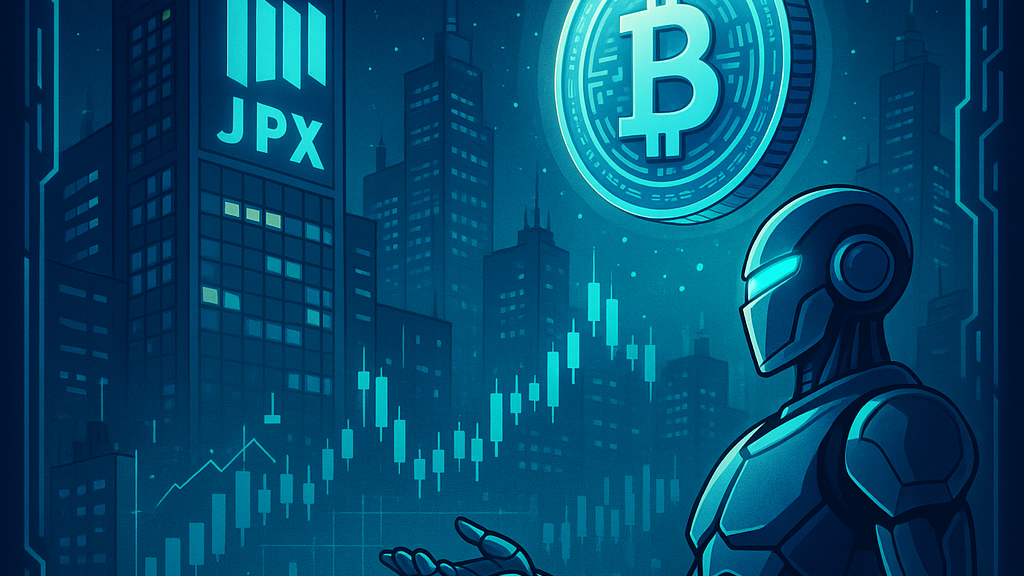
Recent proposals from JPX Market Innovation & Research (JPXI) have sparked meaningful discussions about the inclusion of companies with significant cryptoasset holdings in TOPIX and other key indices. The suggestion to defer these companies from inclusion raises crucial considerations for the index provider.
As digital assets gain traction, the implications of such a rule extend beyond simple market mechanics; they touch upon the legitimacy of various business operations within Japan. Companies like Metaplanet, Remixpoint, and ANAP Holdings, which are entirely compliant with regulations and uphold traditional corporate standards, might find themselves unjustly excluded.

First, the proposed rule deviates from TOPIX’s established measuring criteria. Traditionally, TOPIX serves as a broad and neutral benchmark for the Japanese equity market, employing objective tools such as liquidity assessments and established market capitalization thresholds. Introducing a crypto-asset screen shifts the focus from these established metrics to the specific balance sheet components, which could undermine the index’s integrity.
Secondly, the phrase “principal asset is cryptoassets” is ambiguous, creating confusion around its actual implications. Administrative questions arise regarding whether this classification pertains to parent holdings or includes subsidiaries and indirect exposures, complicating the applicability of the rule.
Moreover, the practical application of the rule may inadvertently become more convoluted than intended. If direct cryptocurrency holdings are disapproved while indirect stakes are permissible, it encourages companies to manipulate their disclosures, thus obstructing clear financial communication.
Additionally, the proposal’s clause allowing existing companies to continue their participation without restrictions creates an inherent contradiction. If holding cryptocurrencies is fundamentally incompatible with TOPIX, the exemption for current constituents undermines the proposal’s rationale.
Furthermore, the indefinite timeline attached to this rule raises concerns about its long-term implications. With an open-ended deferral, there is a risk of effectively excluding companies from future considerations, particularly given the upcoming periodic review scheduled for 2026.

International index providers are treading carefully around similar issues, with MSCI and FTSE Russell opting to refrain from blanket exclusions. There is a clear recognition that the classification of companies engaged in cryptocurrency-related activities is still evolving, suggesting that JPXI might benefit from further discussions before solidifying its stance.
Creating an asset-neutral framework might offer a more sustainable solution. A consistent approach addressing various asset categories would sidestep the definitional dilemmas currently posed. Options could include enhanced disclosure standards for significant treasury positions, a universal concentration framework, or even an alternative index variant that specifically excludes crypto-heavy firms.
While JPXI’s intent to scrutinize new types of issuers is commendable, the specific rule under review lacks clarity and could lead to unintended consequences. By refining the criteria and ensuring a more comprehensive evaluation system, JPXI can maintain the objective nature that has long defined TOPIX as a reliable benchmark for investors.
In light of these considerations, it is essential for market stakeholders to voice their opinions. A coalition has been organized urging JPXI to withdraw its proposed exclusion, emphasizing the importance of preserving TOPIX as a neutral, rules-based index. The deadline for public comments approaches quickly, reinforcing the need for active participation from issuers, investors, and market participants alike.
Leave the reaction
Sarah Chen












Commentaries
Add your comment
Fill in necessary fields and publish