


NTS Faces Backlash After Crypto Recovery Phrase Leak
We have always followed the principles of transparency and clear information. Some of our content includes affiliate links, and we may earn a small commission through these partnerships. These partnerships do not influence our editorial independence or opinion. By using our site, you accept our privacy policy and terms and conditions.


Financial services expert with over three years of experience monitoring cryptocurrency markets and blockchain innovation. Passionate about digital assets and the decentralized future.
Cryptocurrency is a high-risk asset class, and investing carries significant risk, including the potential loss of some or all of your investment. The information on this website is provided for informational and educational purposes only and does not constitute financial, investment, or gambling advice. Cryptowinx does not endorse any specific exchange or gaming platform. For more details, please read our terms and full disclaimer.
Cryptowinx navigates the digital asset universe with a dynamic, forward-looking vision. Throughout our evolution, we have followed every market cycle, from vertical rises to corrections, always remaining a solid point of reference for our community. Our team is made up of industry experts and analysts who experience the blockchain ecosystem daily: we constantly monitor Bitcoin’s stability, study the expansion of the Ethereum ecosystem, and analyze the new frontiers of crypto casinos. We are committed to absolute editorial integrity, separating the signal from the noise through rigorous fact-checking and multi-perspective news analysis. In a landscape where innovations emerge in moments, our mission is to simplify complex concepts and offer transparency into what is established and what is still experimental.
Learn more Cryptowinx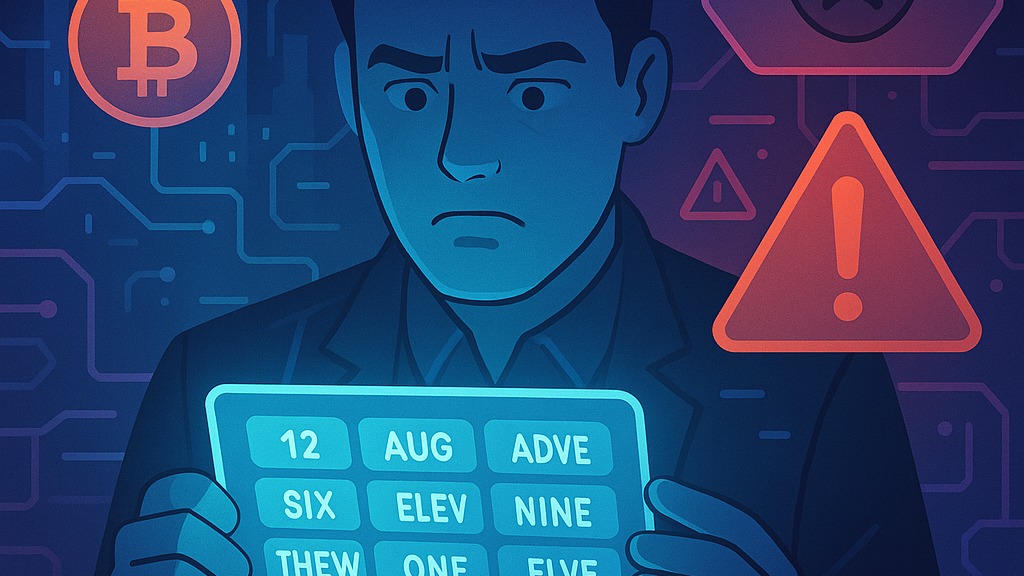
Recent developments have put South Korea’s National Tax Service (NTS) under scrutiny due to a critical security breach. A public document inadvertently showcased a cryptocurrency wallet’s recovery phrase, triggering alarms about the agency’s ability to safeguard digital assets.
This unfortunate incident permitted unauthorized access to tokens valued at approximately $4.8 million shortly after the photo was published. The breach underscores ongoing concerns about the control and management of cryptocurrency holdings by government entities.

The NTS was publicizing the confiscation of assets linked to 124 high-profile tax offenders. In total, 8.1 billion won, or roughly $5.6 million, was reported as seized. Among the confiscated assets were four USB drives with digital currencies belonging to a person referred to as “Mr. C.”
Included in the materials was an image that prominently displayed a Ledger cold wallet beside a sheet where the recovery phrase was printed. This exposure led to immediate risks, as anyone who accessed this information could potentially regain control over the digital funds.
Following the image’s release, on-chain data from Etherscan revealed that an initial deposit of ETH was made into the wallet before significant transfers occurred. Within a short time frame after the leak, transactions moved four million PRTG tokens, raising the question of how secure the NTS’s custody measures truly are.
Experts in the cryptocurrency market have expressed strong disapproval of the NTS’s handling of the situation. One academic, Professor Hwang Seok-jin, likened the act of publishing the recovery phrase to sharing a bank account password publicly. This lapse in security has potentially undermined public trust in the authorities tasked with managing seized assets.
Moreover, Professor Cho Jae-woo pointed out that this incident represented a lost opportunity for the government to recoup funds for the national treasury. The challenge of liquidating the stolen tokens may prove difficult, considering the low trading volume of PRTG, which averages only $299 daily.

The cryptocurrency is listed exclusively on MEXC, and with 40% of the total supply being transferred in this incident, significant selling could adversely impact the asset’s market price. Growing concern surrounds the South Korean authorities’ procedures for managing confiscated digital currencies, particularly since recent incidents have highlighted ongoing vulnerabilities.
Earlier this year, Gwangju authorities were scrutinized for missing Bitcoin associated with phishing attacks that exploited recovery phrases. In another case, the Gangnam police revealed that 22 BTC stored in a cold wallet had been drained since 2021, leading to arrests and further investigations.
As digital asset seizures become more commonplace, calls for enhanced security protocols are becoming more pronounced. The recent exposure of a wallet’s recovery phrase signifies a severe lapse in handling critical information, raising the imperative for improved internal controls to prevent similar security breaches in the future.
Leave the reaction
Gregory Russell







Commentaries
Add your comment
Fill in necessary fields and publish