


Crypto Firms Advocate for SEC to Establish DeFi Regulations
We have always followed the principles of transparency and clear information. Some of our content includes affiliate links, and we may earn a small commission through these partnerships. These partnerships do not influence our editorial independence or opinion. By using our site, you accept our privacy policy and terms and conditions.


A presale and tokenomics specialist, Sofia evaluates new crypto projects with the analytical rigor of her Bocconi background. Having reviewed over 200 launches, she excels…
Cryptocurrency is a high-risk asset class, and investing carries significant risk, including the potential loss of some or all of your investment. The information on this website is provided for informational and educational purposes only and does not constitute financial, investment, or gambling advice. Cryptowinx does not endorse any specific exchange or gaming platform. For more details, please read our terms and full disclaimer.
Cryptowinx navigates the digital asset universe with a dynamic, forward-looking vision. Throughout our evolution, we have followed every market cycle, from vertical rises to corrections, always remaining a solid point of reference for our community. Our team is made up of industry experts and analysts who experience the blockchain ecosystem daily: we constantly monitor Bitcoin’s stability, study the expansion of the Ethereum ecosystem, and analyze the new frontiers of crypto casinos. We are committed to absolute editorial integrity, separating the signal from the noise through rigorous fact-checking and multi-perspective news analysis. In a landscape where innovations emerge in moments, our mission is to simplify complex concepts and offer transparency into what is established and what is still experimental.
Learn more Cryptowinx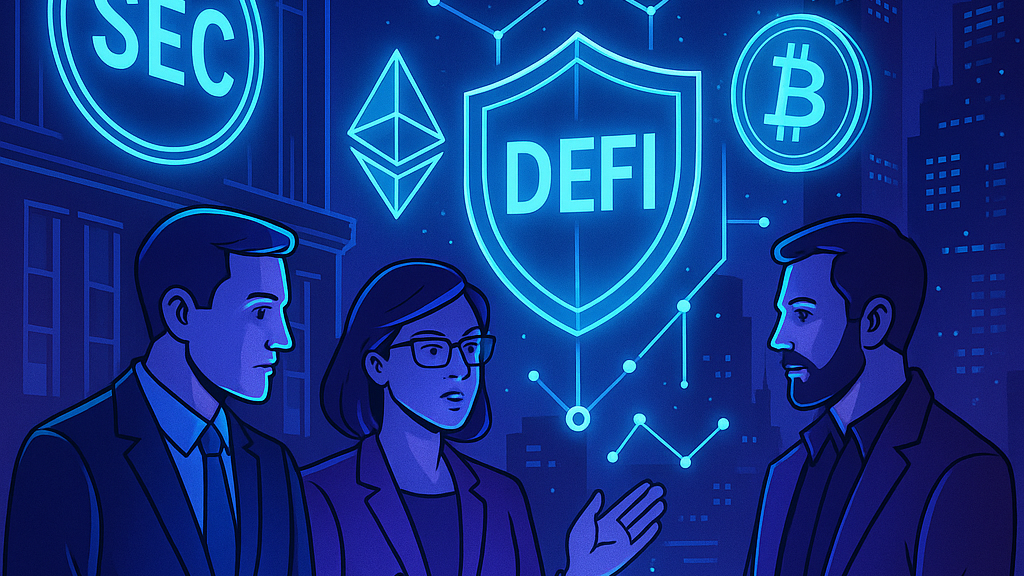
A group of over 30 cryptocurrency companies and advocacy organizations is urging the U.S. Securities and Exchange Commission (SEC) to transform its informal guidance on decentralized finance (DeFi) user interfaces into enforceable regulations.
These firms are particularly focused on the SEC’s treatment of non-custodial interfaces in the context of broker-dealer legislation. They believe that relying solely on informal guidance will not provide sufficient long-term protection for stakeholders.

The coalition, spearheaded by the DeFi Education Fund, voiced its concerns in a formal letter directed to the SEC.
Recently, the SEC’s Division of Trading and Markets released a statement indicating that certain non-custodial interfaces, including DeFi front ends and self-custody wallets, might not require registration as broker-dealers. While the coalition found some merit in this announcement, they highlighted its temporary nature and the lack of legal binding that comes with it. They expressed worries that future SEC administrations might alter the interpretations, thereby expanding the definition of what constitutes a broker.
This potential shift could unintentionally include software developers and other key infrastructure providers within the broker-dealer registration requirements, which the coalition argues would impede innovation and restrict access to blockchain markets.
The organizations emphasized that non-custodial interfaces do not act as intermediaries in transactions. Instead, they merely facilitate user instructions into commands that blockchains can interpret, allowing users to maintain complete control of their assets. This fundamental difference, they argue, necessitates a distinct regulatory approach compared to conventional broker-dealer operations.
A recent statement from Stand With Crypto and its allies stressed the urgent need for notice-and-comment rulemaking. This process would ensure the SEC’s proposed regulations are subject to public review prior to implementation.
They assert that such a framework would cultivate stable, technology-neutral standards. It would provide developers and businesses with a reliable regulatory environment rather than one that fluctuates with changes in SEC leadership. The coalition is advocating for a principles-based framework that clearly defines what activities qualify as brokerage operations.

Furthermore, they indicated that clearer regulations would also be beneficial for other stakeholders in the blockchain ecosystem, such as validators, API providers, and data networks, all of whom could be adversely affected by vague interpretations of broker definitions.
The establishment of the SEC’s Crypto Task Force was noted as a positive development by the coalition, expressing hope that this initiative would foster greater understanding and collaboration across the agency while leading to rules that accurately reflect the complexities of decentralized finance.
As the letter outlines, the primary industry concern is the risk that arises from regulatory ambiguity. Developers creating software tools face uncertainties that can discourage investment and innovation. The coalition highlighted the necessity for formal regulations, arguing that they would ease this burden, allowing the industry to plan with confidence for the future.
Without binding regulations, the coalition warned of the potential for future SEC leadership to broaden the definition of brokers to include software developers, a change that could ultimately diminish investor access to blockchain capabilities. They anticipate continuing to provide detailed feedback as this initiative unfolds.
In summary, the coalition’s call to the SEC emphasizes the urgency for formalized DeFi regulations to ensure lasting clarity and support for the evolving cryptocurrency landscape.
Leave the reaction
Sofia Russo












Commentaries
Add your comment
Fill in necessary fields and publish