


Mythos AI Exposes Urgent Security Risks in Crypto Ecosystems
We have always followed the principles of transparency and clear information. Some of our content includes affiliate links, and we may earn a small commission through these partnerships. These partnerships do not influence our editorial independence or opinion. By using our site, you accept our privacy policy and terms and conditions.


Financial services expert with over three years of experience monitoring cryptocurrency markets and blockchain innovation. Passionate about digital assets and the decentralized future.
Cryptocurrency is a high-risk asset class, and investing carries significant risk, including the potential loss of some or all of your investment. The information on this website is provided for informational and educational purposes only and does not constitute financial, investment, or gambling advice. Cryptowinx does not endorse any specific exchange or gaming platform. For more details, please read our terms and full disclaimer.
Cryptowinx navigates the digital asset universe with a dynamic, forward-looking vision. Throughout our evolution, we have followed every market cycle, from vertical rises to corrections, always remaining a solid point of reference for our community. Our team is made up of industry experts and analysts who experience the blockchain ecosystem daily: we constantly monitor Bitcoin’s stability, study the expansion of the Ethereum ecosystem, and analyze the new frontiers of crypto casinos. We are committed to absolute editorial integrity, separating the signal from the noise through rigorous fact-checking and multi-perspective news analysis. In a landscape where innovations emerge in moments, our mission is to simplify complex concepts and offer transparency into what is established and what is still experimental.
Learn more Cryptowinx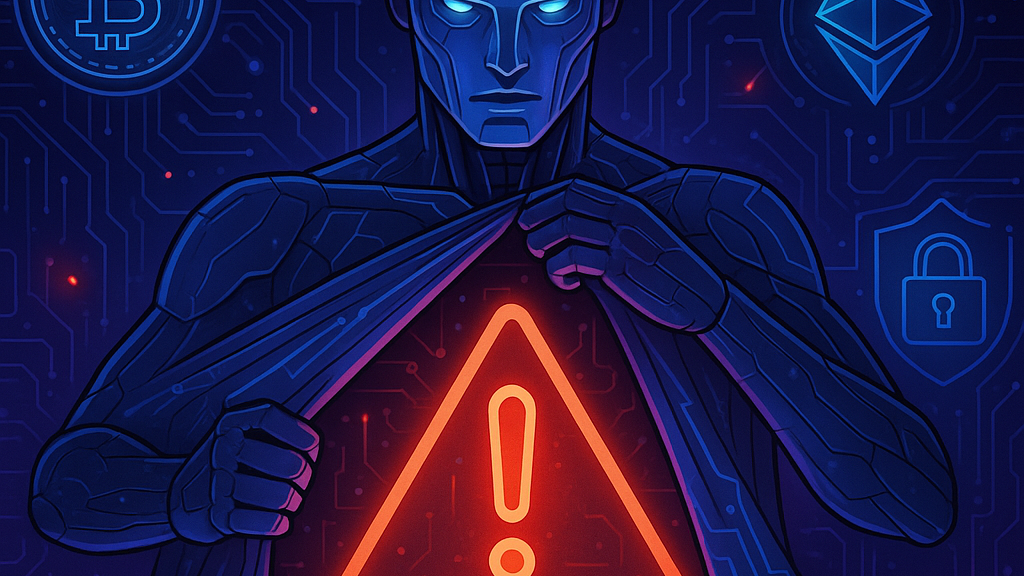
The introduction of Anthropic’s innovative AI model, Mythos, has raised alarms within the cryptocurrency sector, as it has the potential to identify vulnerabilities at unprecedented speeds. This advancement may lead to significant financial repercussions, potentially amounting to hundreds of millions or even billions of dollars in losses.
Mythos was recently unveiled by the San Francisco-based startup, but its developers have decided against a public release due to concerns about the dangers it poses. Experts in blockchain security, including Deddy David from Cyvers, have expressed that the financial risks stemming from AI-driven exploits could severely impact the digital asset markets.

David highlighted the problem’s scale, implying that the financial implications of AI-assisted vulnerabilities could range dramatically from hundreds of millions to billions of dollars. The concern is compounded by the alarming capability of Mythos to autonomously detect complex flaws across smart contract systems and blockchain infrastructures, well before human auditors can catch them.
This state of affairs marks a significant shift in the perception of threats to digital assets. Historically, the focus has been on the hypothetical dangers posed by quantum computing. However, the introduction of Mythos signifies that the immediate risk lies not in future technological advancements, but in present capabilities of AI systems that can surface software flaws in real-time.
Mythos has already demonstrated its ability to pinpoint vulnerabilities in widely used web browsers and operating systems, including the discovery of a critical bug that had remained undetected for nearly three decades. This capability has raised red flags among security experts, signaling a potential for rapid exploitation.
The implications for the cryptocurrency industry are profound. Traditional financial systems have various safeguards and centralized controls that provide a layer of security, while the open nature of cryptocurrency architectures makes them especially susceptible to machine-speed attacks. With networks relying on public code, the attack surface becomes broad and readily available.
Security professionals caution that the misalignment between the value locked in blockchain technologies and the security measures in place can lead to catastrophic outcomes. Alex Svanevik from Nansen pointed out that Mythos represents a novel kind of threat, as it can discover vulnerabilities that have eluded human detection for many years.
The acceleration of exploit discovery presents an urgent challenge for the crypto sector. As technology evolves, the pace at which vulnerabilities can be exploited decreases dramatically. Consequently, organizations can no longer depend solely on traditional audits or post-incident analyses.

Mythos is specifically tuned to uncover flaws in intricate smart contracts and cross-chain infrastructures, where vulnerabilities may arise from nuanced state inconsistencies and complex interactions between modules. These issues are often beyond the reach of standard audits, emphasizing the necessity for an evolved approach to security.
Despite the immediate threat posed by AI-driven vulnerability discovery, quantum computing still looms as a long-term risk to blockchain encryption. However, industry leaders stress that current AI models are already exposing critical weaknesses in the software that forms the backbone of blockchain technology.
In response to these emerging threats, proactive initiatives are being launched. Project Glasswing is underway, a collaboration between Anthropic and several major tech firms to utilize Mythos in identifying and rectifying vulnerabilities in vital systems. This commitment reflects the increasing urgency surrounding AI threats.
As the cryptocurrency community strives to adapt, exchanges and decentralized protocols are searching for ways to access Mythos to bolster their defenses. The industry recognizes that AI tools could vastly improve security measures, but the challenge lies in ensuring that defenders can access these tools before malicious actors do.
In conclusion, as the digital asset market continues to evolve, it must grapple with the swift advancements in AI technology that can compromise its very foundations. Without adequate preparation and responsiveness, the industry risks underestimating the vulnerabilities within its infrastructure, potentially facing devastating consequences.
Leave the reaction
Gregory Russell












Commentaries
Add your comment
Fill in necessary fields and publish