


J.P. Morgan Highlights Automation and Tokenization in ETFs
We have always followed the principles of transparency and clear information. Some of our content includes affiliate links, and we may earn a small commission through these partnerships. These partnerships do not influence our editorial independence or opinion. By using our site, you accept our privacy policy and terms and conditions.


A Web3 and NFT expert, Elena focuses on the evolution of digital art and blockchain gaming for CryptoWinx. She combines technical expertise with a deep…
Cryptocurrency is a high-risk asset class, and investing carries significant risk, including the potential loss of some or all of your investment. The information on this website is provided for informational and educational purposes only and does not constitute financial, investment, or gambling advice. Cryptowinx does not endorse any specific exchange or gaming platform. For more details, please read our terms and full disclaimer.
Cryptowinx navigates the digital asset universe with a dynamic, forward-looking vision. Throughout our evolution, we have followed every market cycle, from vertical rises to corrections, always remaining a solid point of reference for our community. Our team is made up of industry experts and analysts who experience the blockchain ecosystem daily: we constantly monitor Bitcoin’s stability, study the expansion of the Ethereum ecosystem, and analyze the new frontiers of crypto casinos. We are committed to absolute editorial integrity, separating the signal from the noise through rigorous fact-checking and multi-perspective news analysis. In a landscape where innovations emerge in moments, our mission is to simplify complex concepts and offer transparency into what is established and what is still experimental.
Learn more Cryptowinx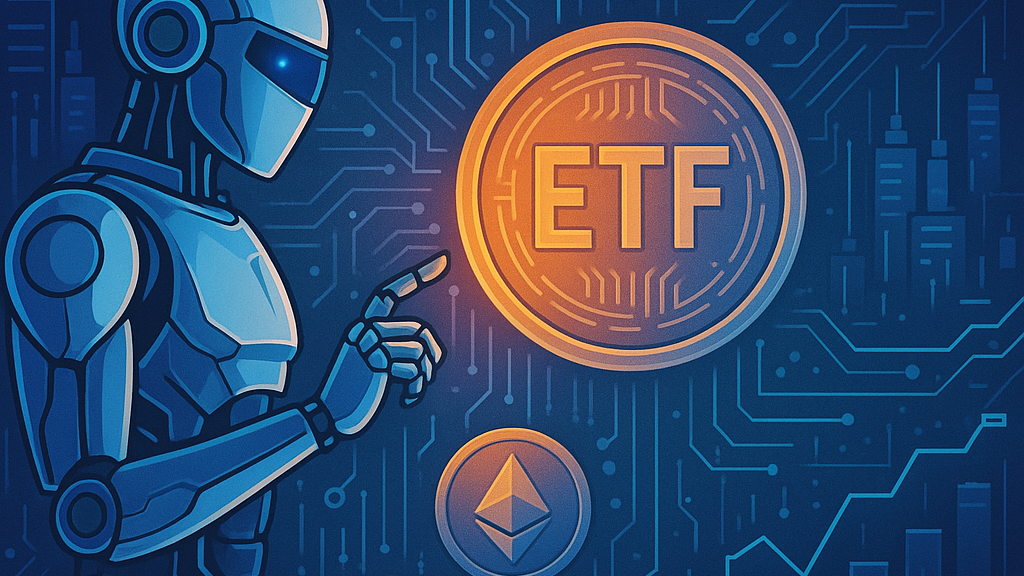
The future of exchange-traded funds (ETFs) is being significantly influenced by automation and a shift towards tokenization, promising to streamline operations within the financial industry.
As the ETF market expands rapidly, nearing a projected valuation of $35 trillion by 2030, the underlying systems are evolving to meet increasing demands. J.P. Morgan notes that the prevalence of automated trading systems is on the rise, which is crucial for managing the growing volume of trades. These systems are not just enhancing efficiency but are also responding to stricter regulatory requirements.

According to J.P. Morgan, nearly half of the primary market ETF transactions are now processed through automated systems, indicating a major shift away from manual trading methods. This development is essential as financial institutions face more rigorous compliance mandates, requiring timely trade reporting and liquidity tracking. Traditional manual processes have become inefficient, making automation a necessity in the current landscape.
Active ETFs have emerged as a significant portion of new launches, marking a departure from the more traditional passive strategies. These active funds often involve frequent adjustments to holdings and include assets that may be less liquid, thereby necessitating advanced operational controls and faster reporting capabilities. To address these needs, firms are significantly investing in sophisticated trading and analytics technology. J.P. Morgan, for example, has integrated its Athena platform into its ETF services, facilitating real-time pricing and enhanced risk management.
The conversation is also shifting toward the potential of tokenization in the ETF space. This innovative approach could revolutionize how ETFs function by utilizing blockchain technology. Tokenized ETFs are designed to represent shares on blockchain networks, which could allow for near-instant transactions and continuous trading opportunities.
J.P. Morgan executives recognize the potential of tokenization, although they also acknowledge that it remains an area under exploration. There are two primary types of tokenized ETFs being evaluated: synthetic tokenized ETFs, which mirror the performance of traditional funds through derivatives, and native tokenized ETFs that issue shares directly on the blockchain.

One of the standout advantages of tokenized ETFs is the prospect of rapidly finalizing transactions. Traditional ETF settlements can take several days, but tokenized models could drastically reduce this period, enhancing capital efficiency while lowering counterparty risks. However, widespread acceptance of tokenization hinges on regulatory guidance, the development of necessary infrastructure, and market demand.
As the ETF industry continues to grow and innovate, the integration of automation and tokenization stands to significantly reshape operational frameworks. J.P. Morgan’s focus on these advancements reflects the broader trend of modernization in investment strategies and asset management.
Leave the reaction
Elena Rodriguez








Commentaries
Add your comment
Fill in necessary fields and publish