


Implications of Quantum Computing on Bitcoin Ownership Rights
We have always followed the principles of transparency and clear information. Some of our content includes affiliate links, and we may earn a small commission through these partnerships. These partnerships do not influence our editorial independence or opinion. By using our site, you accept our privacy policy and terms and conditions.


James Mitchell combines investment banking with cryptocurrency journalism to analyze the institutional adoption of digital assets. Specializing in ETFs and regulation, he translates complex developments…
Cryptocurrency is a high-risk asset class, and investing carries significant risk, including the potential loss of some or all of your investment. The information on this website is provided for informational and educational purposes only and does not constitute financial, investment, or gambling advice. Cryptowinx does not endorse any specific exchange or gaming platform. For more details, please read our terms and full disclaimer.
Cryptowinx navigates the digital asset universe with a dynamic, forward-looking vision. Throughout our evolution, we have followed every market cycle, from vertical rises to corrections, always remaining a solid point of reference for our community. Our team is made up of industry experts and analysts who experience the blockchain ecosystem daily: we constantly monitor Bitcoin’s stability, study the expansion of the Ethereum ecosystem, and analyze the new frontiers of crypto casinos. We are committed to absolute editorial integrity, separating the signal from the noise through rigorous fact-checking and multi-perspective news analysis. In a landscape where innovations emerge in moments, our mission is to simplify complex concepts and offer transparency into what is established and what is still experimental.
Learn more Cryptowinx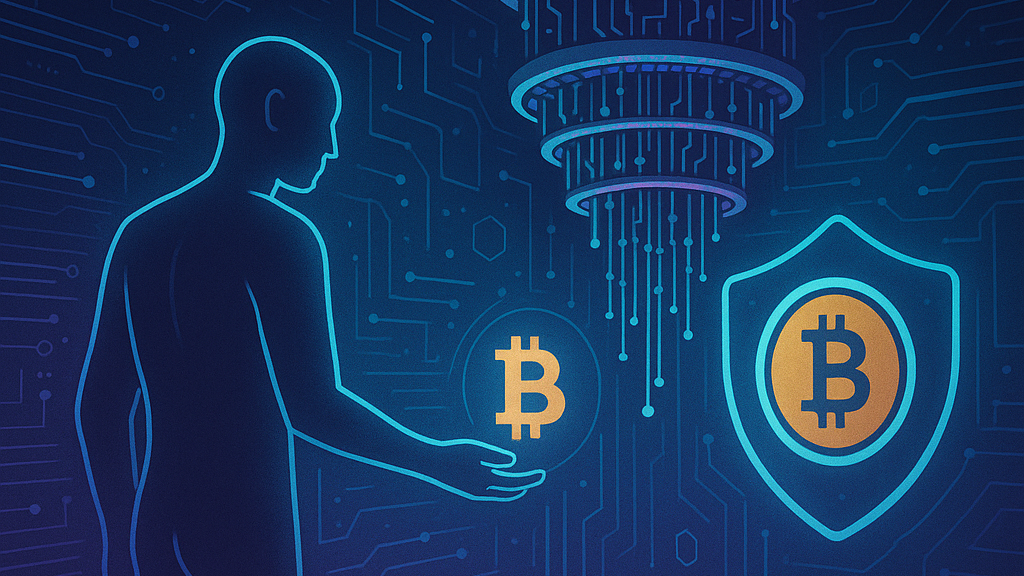
The ongoing discourse regarding quantum computing’s impact on Bitcoin often intersects two distinct queries that provoke both technical and legal considerations.
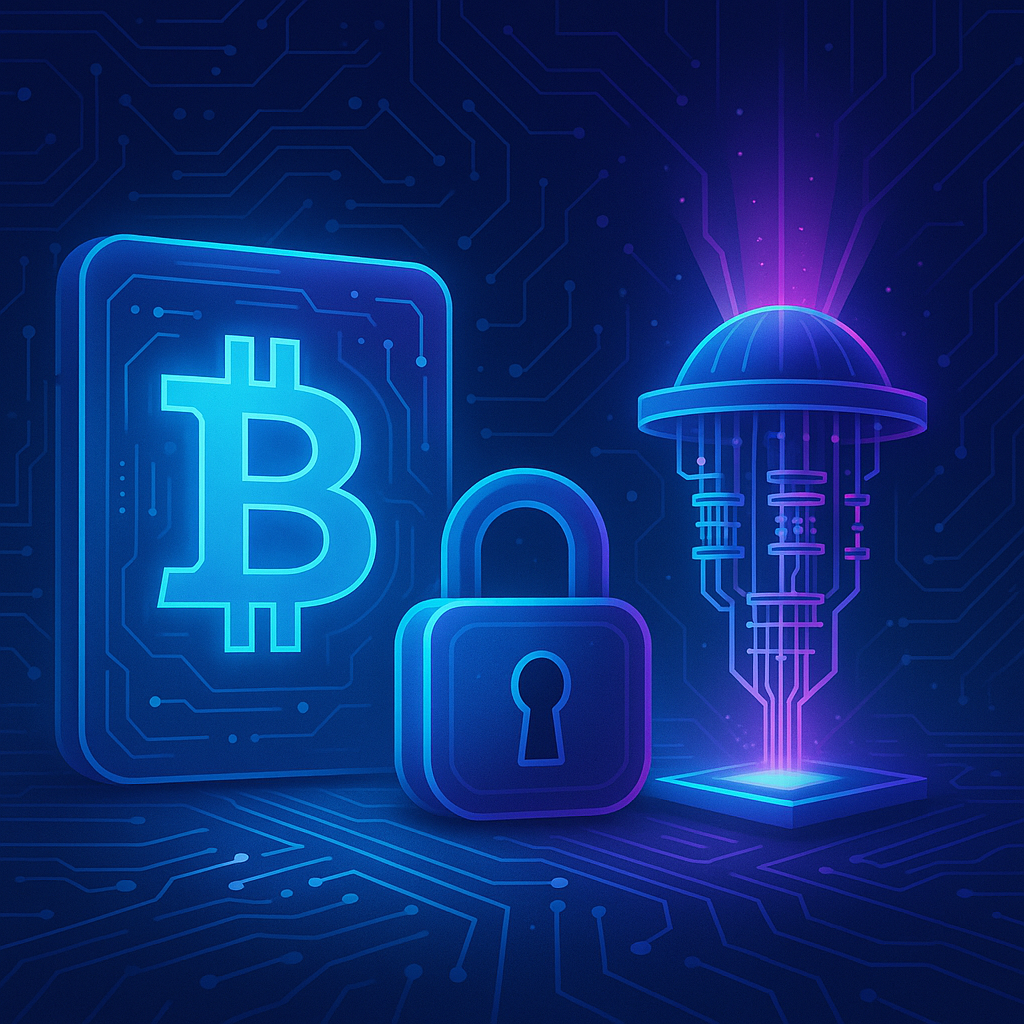
On one hand, there are the technical aspects concerning the security of Bitcoin’s cryptographic framework. Should quantum technology advance sufficiently to compromise Bitcoin’s signature system, adjustments could be made to the protocol. This could involve introducing new types of addresses, revising migration protocols, implementing soft forks, and even changing key rotation strategies. Such matters are rooted in engineering and would necessitate a structured response.

Conversely, the legal implications are complex. A significant concern emerges when a quantum computer is utilized to uncover the private key associated with an inactive wallet and then transferring the Bitcoin contained therein. This situation raises urgent questions about property rights. Is this act a legitimate recovery of an abandoned asset, or is it theft?
The introduction of Bitcoin Improvement Proposal (BIP) 361 in April 2026 addressed these concerns by suggesting that over 6.5 million BTC residing in quantum-vulnerable unspent transaction outputs (UTXOs) be frozen. This proposal underscores a critical debate surrounding ownership, the potential for confiscation, and the conceptualization of property within a system governed primarily by control.
While the arrival of a capable quantum computer remains uncertain, the pressing matter is whether the movement of long-suspended coins using quantum-derived keys will be legally recognized as legitimate or deemed as theft. Classical property law, in this context, delivers a straightforward verdict: it is theft.
This outcome may not resonate well with Bitcoin enthusiasts, given that Bitcoin itself does not enforce ownership in the conventional legal sense but rather maintains a system of control. Validating a transaction simply requires proof of spending, which complicates the relationship between legal title and network acceptance. The emphasis on control amplifies the necessity of clarifying what legal conclusions arise from these actions.
When considering dormant Bitcoin, it is crucial to acknowledge that the current environment does not deem these old coins abandoned simply due to inactivity.
The real risk from quantum technology lies within a specific subset of Bitcoin. Not all coins face the same vulnerability; for instance, typical addresses do not disclose their public keys until funds are spent. However, earlier pay-to-public-key outputs and other outdated structures do expose the public key, thus presenting a clear target for potential attackers.
Recent research from Google Quantum AI revealed that Bitcoin’s secp256k1 curve could be compromised with far fewer resources than previously thought, heightening the urgency of the matter. Current devices lag behind these thresholds, yet progress in algorithmic optimization suggests that time is of the essence.
A broad quantity of these vulnerable coins may remain dormant for various reasons, including the original owners being deceased or simply uninterested. It is essential to recognize that the blockchain does not disclose the specific reasons behind the inactivity of a wallet.

The concept that non-use implies ownership relinquishment is a myth rooted in misunderstanding property law. Ownership persists until there is an explicit transfer or abandonment, which necessitates intent and action. Abandonment cannot be simply assumed through inactivity.
Amidst these discussions, some propose that dormant Bitcoin could fall under unclaimed property law, but this perspective overlooks the nature of self-custody. Unclaimed property statutes hinge on custodians managing assets on behalf of owners; thus, they do not apply to Bitcoin directly held by individuals.
As the dialogue continues, it becomes evident that the legal ramifications of a quantum attack on Bitcoin are profound. The notion that classic legal frameworks could validate a quantum attack as lawful recovery is unfounded.
While the technical community grapples with solutions, the legal ramifications remain starkly clear. Dormancy does not equate to abandonment; death transfers ownership rather than terminates it. Consequently, it stands to reason that moving Bitcoin through quantum means will likely be recognized as theft.
As BIP-361 contemplates freezing certain coins, the landscape transforms. It may represent a necessary response to a significant threat, yet the long-term implications for ownership rights are troubling. This transformation may inadvertently prioritize some owners at the expense of others, complicating ownership and control in a system already fraught with challenges.
Ultimately, the ongoing debate is not merely a technical or legal issue but a complex interplay of property rights in the face of modern technological challenges, laying bare the conflict between property security and the evolving dynamics of digital assets.
Leave the reaction
James Mitchell








Commentaries
Add your comment
Fill in necessary fields and publish