


Financial Giants Embrace XRP Ledger for Stablecoin Payments
We have always followed the principles of transparency and clear information. Some of our content includes affiliate links, and we may earn a small commission through these partnerships. These partnerships do not influence our editorial independence or opinion. By using our site, you accept our privacy policy and terms and conditions.


James Mitchell combines investment banking with cryptocurrency journalism to analyze the institutional adoption of digital assets. Specializing in ETFs and regulation, he translates complex developments…
Cryptocurrency is a high-risk asset class, and investing carries significant risk, including the potential loss of some or all of your investment. The information on this website is provided for informational and educational purposes only and does not constitute financial, investment, or gambling advice. Cryptowinx does not endorse any specific exchange or gaming platform. For more details, please read our terms and full disclaimer.
Cryptowinx navigates the digital asset universe with a dynamic, forward-looking vision. Throughout our evolution, we have followed every market cycle, from vertical rises to corrections, always remaining a solid point of reference for our community. Our team is made up of industry experts and analysts who experience the blockchain ecosystem daily: we constantly monitor Bitcoin’s stability, study the expansion of the Ethereum ecosystem, and analyze the new frontiers of crypto casinos. We are committed to absolute editorial integrity, separating the signal from the noise through rigorous fact-checking and multi-perspective news analysis. In a landscape where innovations emerge in moments, our mission is to simplify complex concepts and offer transparency into what is established and what is still experimental.
Learn more Cryptowinx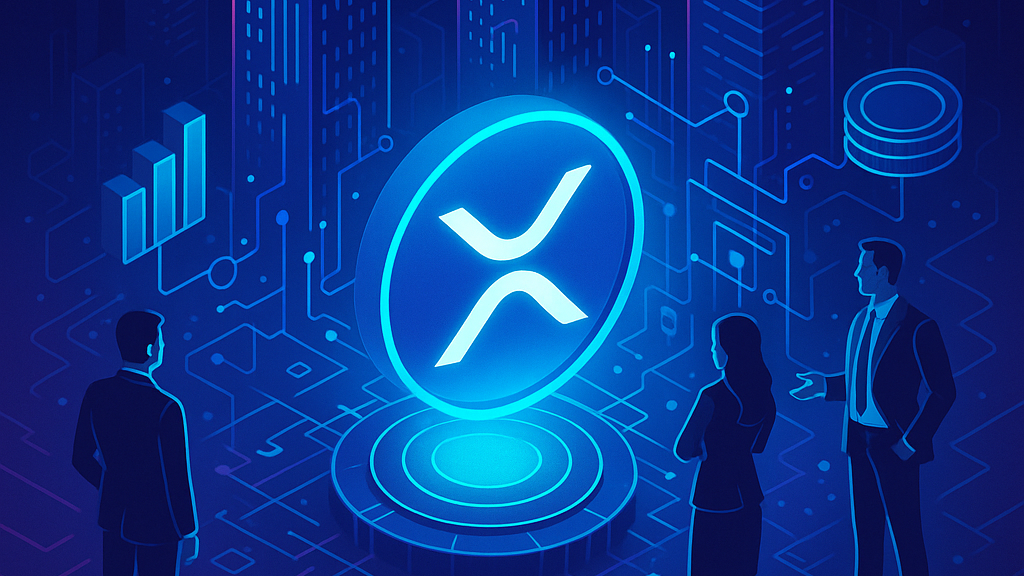
In a notable shift within the financial industry, BlackRock, Mastercard, Gemini, and Ripple have successfully completed trials utilizing a regulated stablecoin to facilitate card payments on the XRP Ledger. This initiative marks a significant transition from merely observing blockchain technology to actively leveraging it for practical applications.
The focus of the trial was on RLUSD, a stablecoin crafted to enhance the efficiency and transparency of payment processing compared to existing systems.

Odelia Torteman, a Ripple executive, recently shared insights about these advancements during an industry forum in London. While the XRP token is often perceived primarily as a trading asset, major entities like BlackRock and Franklin Templeton are increasingly recognizing the potential of the underlying ledger for institutional finance.
The XRP Ledger is designed to facilitate cross-border transactions and support the movement of diverse asset types simultaneously. It boasts a decentralized exchange and automated market maker, empowering large organizations to conduct trades and transfer value without over-relying on traditional financial intermediaries.
Last September, Franklin Templeton, in collaboration with Ripple and DBS Bank, unveiled innovative methods for lending and trading. They transformed money market funds into digital tokens to enhance liquidity.
By integrating these tokens with regulated stablecoins, these firms aim to optimize capital efficiency while adhering to regulatory requirements. This strategy is particularly appealing to substantial investors who often hesitate due to the fluctuations inherent in the broader cryptocurrency landscape.
Reports suggest that this emerging technology is also making its way into Treasury products. Ripple has worked with Securitize to establish a framework allowing investors in BlackRock’s BUIDL fund to convert their assets into RLUSD.

This innovative approach provides round-the-clock liquidity through smart contracts. Traditionally, accessing funds from investment vehicles like these could be time-consuming and limited to banking hours, but this new methodology allows for immediate fund availability.
As data indicates, the XRP Ledger is becoming a preferred option for entities requiring stringent identity and compliance measures. With features like “trust lines” and tailored tools for know-your-customer protocols, it is evolving to meet the needs of institutional clients.
Clearly, the practical usage of XRP is undergoing transformation as more organizations engage in its processes. Although historically it has been utilized mainly for speculative trading, it is now emerging as a crucial liquidity mechanism in the financial sector.
As a digital asset, XRP serves as a facilitator for banks, enabling swift transactions across various forms of value on a global scale.
Leave the reaction
James Mitchell










Commentaries
Add your comment
Fill in necessary fields and publish