


Crypto Market Plummets Amid Rising US-Iran Tensions
We have always followed the principles of transparency and clear information. Some of our content includes affiliate links, and we may earn a small commission through these partnerships. These partnerships do not influence our editorial independence or opinion. By using our site, you accept our privacy policy and terms and conditions.


A Web3 and NFT expert, Elena focuses on the evolution of digital art and blockchain gaming for CryptoWinx. She combines technical expertise with a deep…
Cryptocurrency is a high-risk asset class, and investing carries significant risk, including the potential loss of some or all of your investment. The information on this website is provided for informational and educational purposes only and does not constitute financial, investment, or gambling advice. Cryptowinx does not endorse any specific exchange or gaming platform. For more details, please read our terms and full disclaimer.
Cryptowinx navigates the digital asset universe with a dynamic, forward-looking vision. Throughout our evolution, we have followed every market cycle, from vertical rises to corrections, always remaining a solid point of reference for our community. Our team is made up of industry experts and analysts who experience the blockchain ecosystem daily: we constantly monitor Bitcoin’s stability, study the expansion of the Ethereum ecosystem, and analyze the new frontiers of crypto casinos. We are committed to absolute editorial integrity, separating the signal from the noise through rigorous fact-checking and multi-perspective news analysis. In a landscape where innovations emerge in moments, our mission is to simplify complex concepts and offer transparency into what is established and what is still experimental.
Learn more Cryptowinx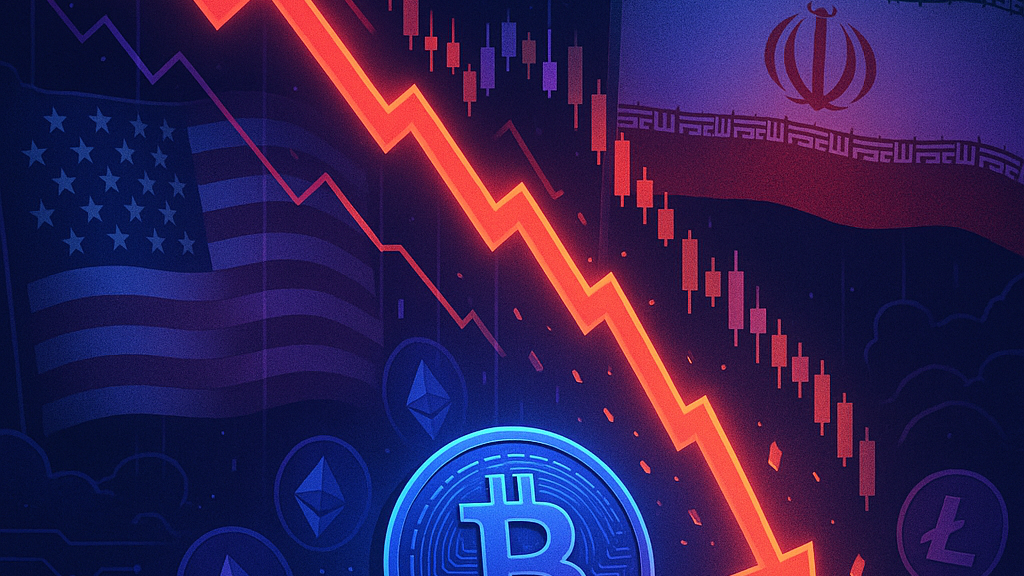
The cryptocurrency market experienced a sharp decline today, February 27, as geopolitical tensions escalated in the Middle East, particularly between the United States and Iran. Investors reacted to these developments by taking profits following a brief period of gains.
Bitcoin’s price fell below $66,000, contributing to an overall market dip of 2.85%, bringing the total market capitalization to approximately $2.28 trillion. Several cryptocurrencies, including Pippin, which saw a staggering 26% drop, alongside Kaspa and Zcash, which each fell over 6%, exemplified the widespread downturn.

Despite the bearish trend for many tokens, a few, such as Decred, LayerZero, and Arbitrum, managed to rise by more than 4% during the same timeframe, showing that not all facets of the crypto market were impacted equally.
Market observers attribute this latest decline to escalating tensions surrounding potential military action by the U.S. against Iran. Recent comments from Ambassador Mike Huckabee urged non-essential personnel at the U.S. embassy in Jerusalem to evacuate, hinting at a looming conflict. This alert followed a similar evacuation directive issued for non-essential staff in Lebanon.
Traders on Polymarket are increasingly convinced of the likelihood of an attack, with the odds of military action in March climbing to 72%, and even greater speculation of an attack occurring before that timeframe, reaching as high as 80%.
Analysts warn that any conflict could have serious repercussions on the global financial landscape, as Iran has threatened retaliation against U.S. military installations in the region and has indicated intentions to close the Strait of Hormuz. Such actions would likely exacerbate inflationary pressures, complicating the Federal Reserve’s ability to adjust interest rates in upcoming meetings.
The current downturn in cryptocurrency pricing has also been coupled with a broader contraction in the stock market. The Dow Jones Industrial Average saw a decline of over 500 points, while both the S&P 500 and Nasdaq 100 indices fell more than 1%. The stock market’s turmoil arises from ongoing concerns regarding significant growth in the private credit sector, as seen with companies like Blue Owl and Apollo.
Moreover, the recent uptick in the U.S. Producer Price Index, which increased by 0.5% in January—above analysts’ forecasts—has contributed to the prevailing uncertainty in both crypto and stock markets.
In conclusion, the interplay of geopolitical risks and profit-taking by investors is significantly shaping the cryptocurrency landscape, driving many to reconsider their strategies as these tensions unfold.
Leave the reaction
Elena Rodriguez











Commentaries
Add your comment
Fill in necessary fields and publish