


Brazil’s Q1 Crypto Activity Sees $6.9 Billion, Driven by Stablecoins
We have always followed the principles of transparency and clear information. Some of our content includes affiliate links, and we may earn a small commission through these partnerships. These partnerships do not influence our editorial independence or opinion. By using our site, you accept our privacy policy and terms and conditions.


Financial services expert with over three years of experience monitoring cryptocurrency markets and blockchain innovation. Passionate about digital assets and the decentralized future.
Cryptocurrency is a high-risk asset class, and investing carries significant risk, including the potential loss of some or all of your investment. The information on this website is provided for informational and educational purposes only and does not constitute financial, investment, or gambling advice. Cryptowinx does not endorse any specific exchange or gaming platform. For more details, please read our terms and full disclaimer.
Cryptowinx navigates the digital asset universe with a dynamic, forward-looking vision. Throughout our evolution, we have followed every market cycle, from vertical rises to corrections, always remaining a solid point of reference for our community. Our team is made up of industry experts and analysts who experience the blockchain ecosystem daily: we constantly monitor Bitcoin’s stability, study the expansion of the Ethereum ecosystem, and analyze the new frontiers of crypto casinos. We are committed to absolute editorial integrity, separating the signal from the noise through rigorous fact-checking and multi-perspective news analysis. In a landscape where innovations emerge in moments, our mission is to simplify complex concepts and offer transparency into what is established and what is still experimental.
Learn more Cryptowinx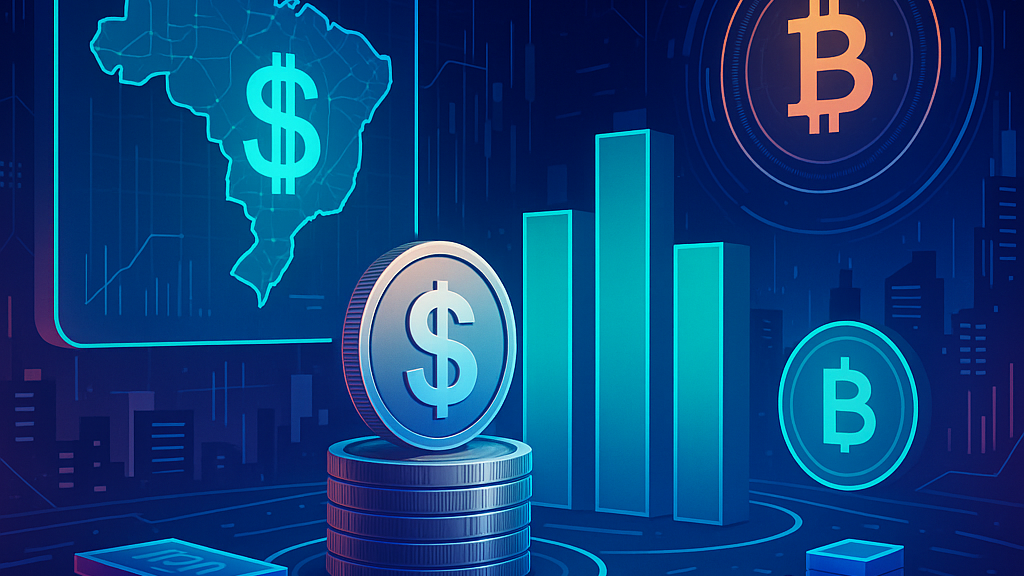
In a remarkable shift in the crypto landscape, the Central Bank of Brazil reported significant growth in cryptocurrency transactions for the first quarter of 2026. The total volume reached $6.9 billion, with stablecoins playing a pivotal role in this surge.
Data from the Central Bank indicates that stablecoins accounted for approximately $6.8 billion of this total, representing a noteworthy increase of over 100% from the previous year’s figures. This trend underscores the growing acceptance of stablecoins as a preferred transactional medium among Brazilian consumers.

With stablecoins comprising about 98% of the total cryptocurrency purchases, they have established themselves as essential tools for payments and remittances within the country. These digital assets remain particularly attractive as they are exempt from certain financial taxes that apply to traditional currencies.
The Brazilian government previously considered implementing taxes on stablecoin transactions. However, the initiative was reportedly paused by President Luiz Inácio Lula da Silva, who is focusing on the upcoming presidential elections. This decision may have contributed to the accelerating adoption of stablecoins in Brazil.
Fernando Rocha, head of statistics at the Central Bank, commented on the regulatory landscape, indicating that future regulations for cryptocurrency exchanges are expected to enhance the accuracy of transaction data. He stated that the bank is preparing for a more detailed analysis of crypto activity in the latter half of 2026.
As stablecoin usage expands, Brazil has positioned itself as a significant player in the global cryptocurrency market. According to data from TRM Labs, the country ranks as the fifth-largest cryptocurrency market in the world, just behind the United States, South Korea, Russia, and India, with a retail volume of $40.4 billion recorded in Q1 2026.

This burgeoning trend has seen stablecoins penetrate beyond their original cryptocurrency applications, finding utility in various sectors, including B2B transactions. Moreover, numerous international travel agencies operating in Brazil are reportedly integrating stablecoin payments, facilitating a smoother transaction process for travelers.
In summary, the continued rise of stablecoins in Brazil signals a broader acceptance of cryptocurrency technology, impacting not only the financial sector but also everyday transactions. As regulations evolve and the government reassesses its tax strategies, the dynamics of cryptocurrency adoption in the nation are poised for further transformation.
Leave the reaction
Gregory Russell











Commentaries
Add your comment
Fill in necessary fields and publish