


Bitcoin Inflows to Binance Hit Record Lows as $80K Target Emerges
We have always followed the principles of transparency and clear information. Some of our content includes affiliate links, and we may earn a small commission through these partnerships. These partnerships do not influence our editorial independence or opinion. By using our site, you accept our privacy policy and terms and conditions.


A Senior Altcoin Analyst, Sarah combines on-chain data with a background in venture capital research. With a Master’s in Computer Science, she provides precise evaluations…
Cryptocurrency is a high-risk asset class, and investing carries significant risk, including the potential loss of some or all of your investment. The information on this website is provided for informational and educational purposes only and does not constitute financial, investment, or gambling advice. Cryptowinx does not endorse any specific exchange or gaming platform. For more details, please read our terms and full disclaimer.
Cryptowinx navigates the digital asset universe with a dynamic, forward-looking vision. Throughout our evolution, we have followed every market cycle, from vertical rises to corrections, always remaining a solid point of reference for our community. Our team is made up of industry experts and analysts who experience the blockchain ecosystem daily: we constantly monitor Bitcoin’s stability, study the expansion of the Ethereum ecosystem, and analyze the new frontiers of crypto casinos. We are committed to absolute editorial integrity, separating the signal from the noise through rigorous fact-checking and multi-perspective news analysis. In a landscape where innovations emerge in moments, our mission is to simplify complex concepts and offer transparency into what is established and what is still experimental.
Learn more Cryptowinx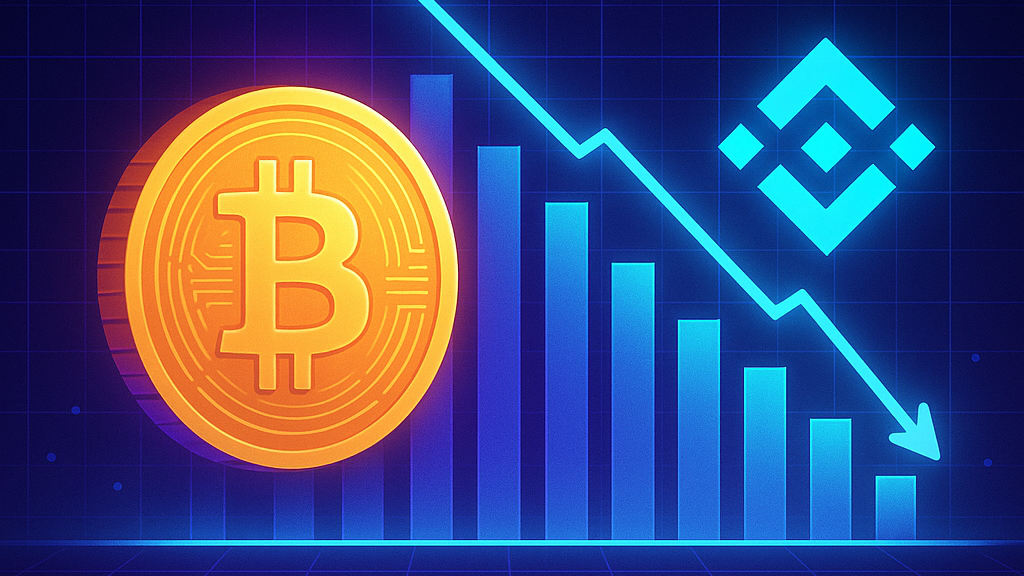
Recent data reveals a notable decline in Bitcoin inflows to Binance, with figures plummeting to their lowest point this year. Mid-sized wallets, typically holding between 100 and 1,000 BTC, have significantly reduced their sell-side activity. This downturn is especially intriguing as Bitcoin enthusiasts set their sights on the $80,000 price benchmark.
According to statistics, inflows to Binance from these mid-size wallets now hover between 3,000 and 4,000 BTC. This trend marks a substantial decrease from the average deposits earlier in the year, which were around 5,500 to 6,000 BTC. Analysts suggest that this reduction hints at a shift away from immediate selling pressure.

Amr Taha, a crypto analyst, emphasizes that the seven-day average inflows illustrate this cooling trend. The diminished activity suggests fewer coins are being deposited onto the exchange, which can be interpreted as a sign of reduced selling intent from these wallet holders.
In contrast, Coinbase appears to be experiencing a surge in inflows, particularly from mid-size wallets, which have reached approximately 8,500 BTC. This figure is reminiscent of activity observed after the FTX collapse, indicating a stark difference in trading behaviors across platforms.
The disparity in inflow activity is noteworthy, especially when considering that other exchanges reflect a much quieter environment. The fragmented nature of these inflows may imply mixed market sentiment rather than an overarching trend.
While the inflows depict a calming sell-side pressure, Bitcoin’s long-term outlook continues to generate interest. Following a significant decrease in net flows, which fell to -300,000 BTC in March, there appears to be a withdrawal trend gaining ground.

Despite recent market fluctuations, exchange reserves have declined consistently for seven straight weeks, with more than 105,000 BTC withdrawn since early March. Even during a minor price retreat in early April, the anticipated return of coins to exchanges did not materialize.
This landscape presents a complex interplay between varying exchange activities and the sentiment towards Bitcoin’s future price. As traders navigate these shifts, the goal of reaching $80,000 looms larger than ever.
Leave the reaction
Sarah Chen












Commentaries
Add your comment
Fill in necessary fields and publish