


Bitcoin Faces Significant Losses with Worst Q1 Since 2014
We have always followed the principles of transparency and clear information. Some of our content includes affiliate links, and we may earn a small commission through these partnerships. These partnerships do not influence our editorial independence or opinion. By using our site, you accept our privacy policy and terms and conditions.


Financial services expert with over three years of experience monitoring cryptocurrency markets and blockchain innovation. Passionate about digital assets and the decentralized future.
Cryptocurrency is a high-risk asset class, and investing carries significant risk, including the potential loss of some or all of your investment. The information on this website is provided for informational and educational purposes only and does not constitute financial, investment, or gambling advice. Cryptowinx does not endorse any specific exchange or gaming platform. For more details, please read our terms and full disclaimer.
Cryptowinx navigates the digital asset universe with a dynamic, forward-looking vision. Throughout our evolution, we have followed every market cycle, from vertical rises to corrections, always remaining a solid point of reference for our community. Our team is made up of industry experts and analysts who experience the blockchain ecosystem daily: we constantly monitor Bitcoin’s stability, study the expansion of the Ethereum ecosystem, and analyze the new frontiers of crypto casinos. We are committed to absolute editorial integrity, separating the signal from the noise through rigorous fact-checking and multi-perspective news analysis. In a landscape where innovations emerge in moments, our mission is to simplify complex concepts and offer transparency into what is established and what is still experimental.
Learn more Cryptowinx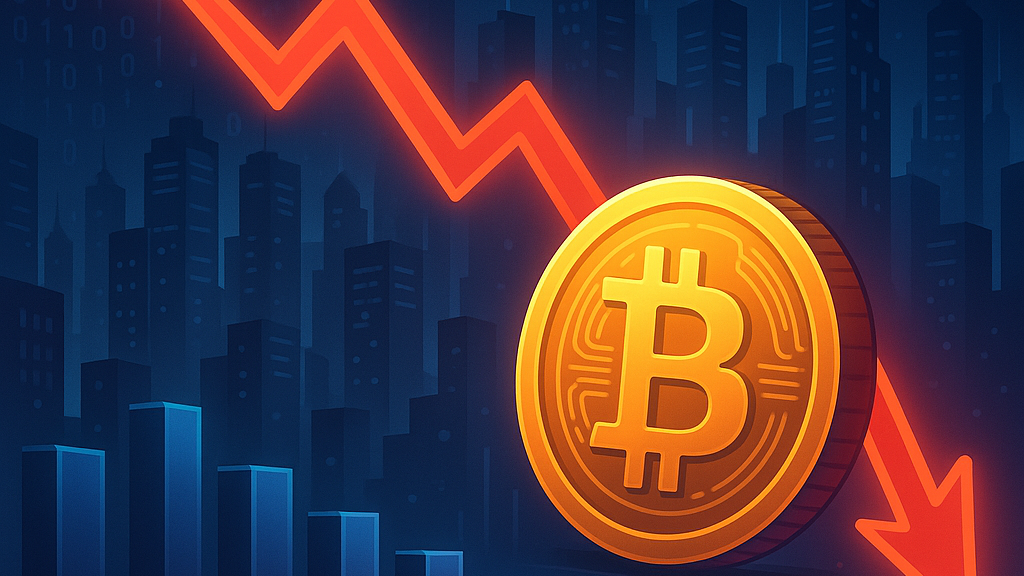
For the first quarter of 2026, Bitcoin encountered a notable downturn, reflecting a -23.21% return. This disappointing result is the third-most severe first-quarter performance the cryptocurrency has seen since 2013, as per insights from CoinGlass.
While Bitcoin struggled, Ethereum also experienced a sharp decline of -32.17%, marking its own third-worst Q1 outcome ever recorded. Both cryptocurrencies recorded their losses following a notable market peak in October 2025.

Historically, Bitcoin’s average first-quarter return stands at 45.90%, while the median leans towards a narrower -2.26%. The current figures indicate a significant deviation, with only two earlier Q1s yielding worse results: Q1 of 2014, which saw a drop of -37.42%, and Q1 of 2018, with an even sharper -49.7% plunge.
Ethereum’s performance in Q1 2026 is especially striking against its historical average, which is remarkably high at 66.45%. This drastic drop contrasts sharply with previous highs and indicates a volatile environment for both major cryptocurrencies.
Bitcoin’s track record since 2013 presents a mixed bag of results, with some years showcasing remarkable gains. For instance, the first quarters of 2013, 2021, 2023, and 2024 recorded impressive increases of +539.96%, +103.17%, +71.77%, and +68.68%, respectively. In stark contrast, several years also saw significant losses, notably in 2014, 2015, 2018, and 2022.
Examining the patterns, the average Q1 return can be heavily influenced by exceptional outliers such as 2013 and 2021’s performances. The median Q1 return of -2.26% suggests that first quarters more commonly yield slight losses rather than gains.

The previous year, 2025, showcased alarming volatility, as Bitcoin registered a decline of -11.82% during Q1, followed by a -23.07% loss in Q4. This pattern of back-to-back quarterly reductions has not been observed since 2022 when Bitcoin faced continuous losses across all four quarters.
The recent downturn can be traced back to the major liquidation event in October 2025, which led to a staggering $19 billion in liquidations. Bitcoin fell from an all-time high of $126,080 to around $66,000, translating to a 48% drop from its peak. This significant decline has raised concerns about the ongoing market stability and the performance expectations for the remainder of 2026.
Leave the reaction
Gregory Russell












Commentaries
Add your comment
Fill in necessary fields and publish