


XRP Ledger: Key Player in Institutional Capital Movement
We have always followed the principles of transparency and clear information. Some of our content includes affiliate links, and we may earn a small commission through these partnerships. These partnerships do not influence our editorial independence or opinion. By using our site, you accept our privacy policy and terms and conditions.


A crypto casino and gaming specialist, Raj brings a digital native’s perspective to industry trends and provably fair systems. Having reviewed over 150 platforms, he…
Cryptocurrency is a high-risk asset class, and investing carries significant risk, including the potential loss of some or all of your investment. The information on this website is provided for informational and educational purposes only and does not constitute financial, investment, or gambling advice. Cryptowinx does not endorse any specific exchange or gaming platform. For more details, please read our terms and full disclaimer.
Cryptowinx navigates the digital asset universe with a dynamic, forward-looking vision. Throughout our evolution, we have followed every market cycle, from vertical rises to corrections, always remaining a solid point of reference for our community. Our team is made up of industry experts and analysts who experience the blockchain ecosystem daily: we constantly monitor Bitcoin’s stability, study the expansion of the Ethereum ecosystem, and analyze the new frontiers of crypto casinos. We are committed to absolute editorial integrity, separating the signal from the noise through rigorous fact-checking and multi-perspective news analysis. In a landscape where innovations emerge in moments, our mission is to simplify complex concepts and offer transparency into what is established and what is still experimental.
Learn more Cryptowinx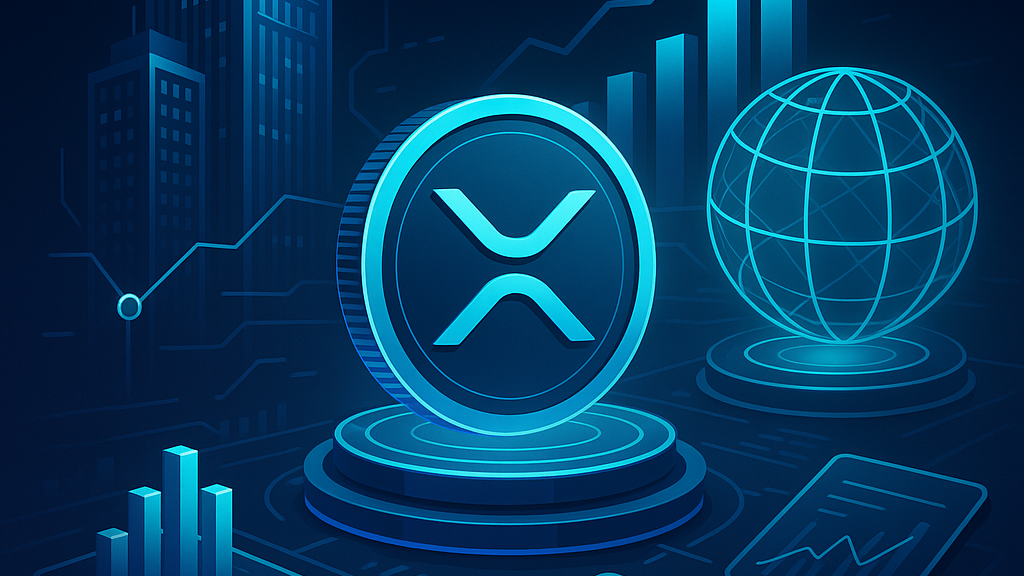
The landscape of institutional finance is rapidly transforming as organizations increasingly turn to blockchain technologies. Among the platforms gaining traction is the XRP Ledger, which is establishing itself as a leader in efficiency, scalability, and dependability. This ledger is proving to be a top choice for institutions aiming to facilitate the swift and cost-effective movement of capital across international markets.
A significant opportunity is presenting itself for the XRP Ledger, with analysts observing its potential to serve as a cornerstone for trillions of dollars in institutional investments. Marius Jurgilas, the CEO of Axiology, recently pointed out the vast potential during a presentation shared by ChartNerd on X, highlighting the substantial funding gaps and idle funds in European markets that could be effectively tokenized on the blockchain.

At the core of this development is Axiology’s implementation of the XRP Ledger, tailored for compliance and efficiency. This platform aims to streamline the complexities of the capital market, which currently involves numerous intermediaries like broker-dealers and custodians, into a singular, effective layer. This innovative Distributed Ledger Technology (DLT) is part of the European Central Bank’s PONTES program, slated to roll out in the third quarter of 2026.
Adding to its institutional credibility, Axiology has also become the second entity to obtain a Trading and Settlement System (TSS) license under the EU’s DLT pilot regime, specifically for Central Bank Money Settlement. This license will enable the firm to create a trading and settlement framework leveraging the advantages of distributed ledger technology.
Furthermore, the CEO of Ripple, Brad Garlinghouse, has emphasized that XRP’s utility extends beyond mere payment processing. He noted that the original vision for Ripple involved addressing significant inefficiencies in the global financial system, rather than merely expediting monetary transfers.
Garlinghouse explained that while XRP started as a solution for cross-border transactions, its application has expanded to encompass a variety of use cases, including asset tokenization and liquidity services. As adoption accelerates and the range of applications widens, the foundational concepts driving XRP and the XRP Ledger are coming into clearer focus, demonstrating an evolving strategy of gradual expansion.

Looking ahead, the XRP market appears poised for a shift due to changes in market structure. Research by SMQKE shared on X has indicated that the supply of XRP available on exchanges has dropped to just 1.7 billion—its lowest level in seven years.
According to 21Shares, this situation can be characterized as a supply-shock dynamic. As diminishing supply clashes with a rising demand, the potential for a significant price adjustment throughout 2026 becomes more plausible.
Leave the reaction
Raj Patel










Commentaries
Add your comment
Fill in necessary fields and publish