


Crypto Heists Decline, But Cyber Threats Persist
We have always followed the principles of transparency and clear information. Some of our content includes affiliate links, and we may earn a small commission through these partnerships. These partnerships do not influence our editorial independence or opinion. By using our site, you accept our privacy policy and terms and conditions.


A Senior Altcoin Analyst, Sarah combines on-chain data with a background in venture capital research. With a Master’s in Computer Science, she provides precise evaluations…
Cryptocurrency is a high-risk asset class, and investing carries significant risk, including the potential loss of some or all of your investment. The information on this website is provided for informational and educational purposes only and does not constitute financial, investment, or gambling advice. Cryptowinx does not endorse any specific exchange or gaming platform. For more details, please read our terms and full disclaimer.
Cryptowinx navigates the digital asset universe with a dynamic, forward-looking vision. Throughout our evolution, we have followed every market cycle, from vertical rises to corrections, always remaining a solid point of reference for our community. Our team is made up of industry experts and analysts who experience the blockchain ecosystem daily: we constantly monitor Bitcoin’s stability, study the expansion of the Ethereum ecosystem, and analyze the new frontiers of crypto casinos. We are committed to absolute editorial integrity, separating the signal from the noise through rigorous fact-checking and multi-perspective news analysis. In a landscape where innovations emerge in moments, our mission is to simplify complex concepts and offer transparency into what is established and what is still experimental.
Learn more Cryptowinx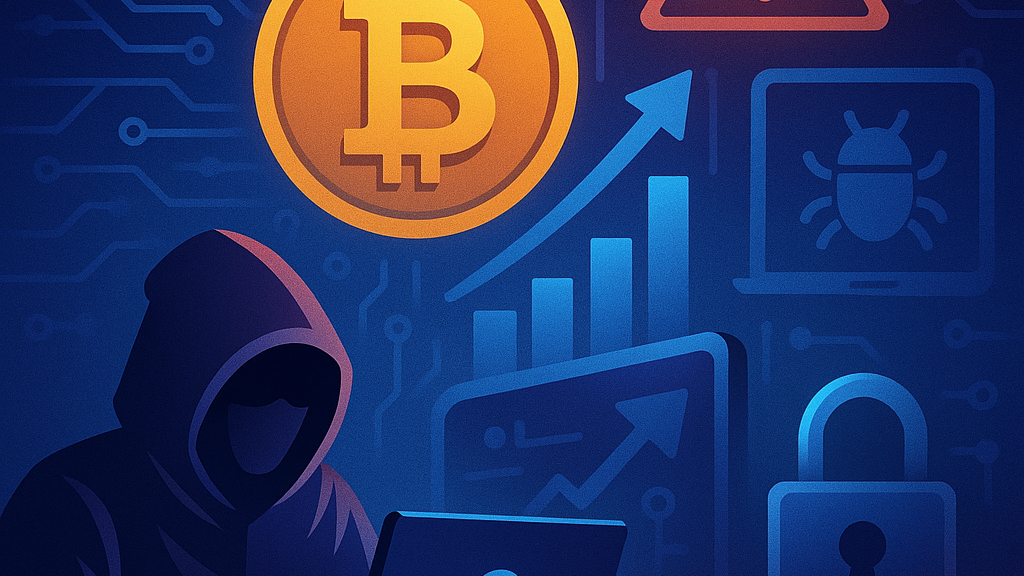
February marked a notable shift in the world of cryptocurrency security, with reported damages from hacks and scams plummeting to just $26.5 million. This figure, the lowest seen in nearly a year, highlights a significant reduction in malicious activities within the crypto landscape, as noted by the blockchain security company PeckShield.
This downturn in theft contrasts sharply with the devastating breaches of early 2025, when a single incident resulted in a staggering loss of $1.5 billion from the crypto exchange Bybit.

Analyzing the incidents from last month reveals that two major attacks were responsible for a significant portion of the financial losses. The first and most damaging event occurred on February 21, targeting YieldBlox, a decentralized autonomous organization (DAO) lending platform. This breach involved price manipulation tactics that resulted in the theft of $10 million. On the same day, the decentralized identity platform IoTeX was also compromised, suffering a loss of nearly $9 million due to a private key vulnerability. Collectively, these two attacks accounted for over 70% of the total losses reported in February.
In stark contrast to January’s figures, February’s loss of $26.5 million represents a dramatic 69% decrease from the preceding month’s total of $86 million. The security firm PeckShield reported that this decline contributes to a remarkable 98.2% drop compared to February 2025’s scandalous total loss.
PeckShield’s spokesperson suggested that the absence of a high-profile, billion-dollar hack this month contributed to the diminished totals. Without a significant incident to overshadow the monthly statistics, the overall damages appear far less alarming.
Market dynamics also played a crucial role in this shift. In early February, Bitcoin’s value dipped below $70,000, prompting a broader market correction. This shift meant that traders and financial institutions were more focused on managing their losses and adjusting their liquidity rather than on engaging in protocol attacks.
During these turbulent market phases, the tendency is for exploitation activities to decrease, according to various reports. Analysts have pointed to tighter security measures and improved monitoring as factors aiding in the decreased theft incidents.
Furthermore, advancements in artificial intelligence have become instrumental in fortifying defenses against vulnerabilities. Tools such as automated code inspections and real-time anomaly detection are becoming commonplace, allowing issues to be identified and rectified before they can be exploited.

As security practices continue to evolve in response to innovation, experts remain optimistic that the trend of reduced losses will persist throughout the year.
Despite the downward trend in hack-related losses, not all aspects of cryptocurrency security are improving. Phishing attacks continue to plague the sector, with criminals impersonating trusted entities to extract sensitive information like private keys and login details. Although losses from these phishing schemes fell significantly in 2025—from $494 million to $83 million—the threat remains prevalent.
PeckShield has warned that cybercriminals are increasingly redirecting their strategies from attacking code to targeting individuals. Manipulating a user into divulging their credentials can often be easier than breaching a well-secured smart contract.
In light of this threat, it is crucial for both institutions and significant cryptocurrency holders to prioritize their security measures, including the use of multi-signature cold storage to safeguard their assets. Protecting private keys must be viewed as an essential component of their cybersecurity strategy.
Leave the reaction
Sarah Chen












Commentaries
Add your comment
Fill in necessary fields and publish