


2026 Ramadan May Challenge Bitcoin’s Rally Trends
We have always followed the principles of transparency and clear information. Some of our content includes affiliate links, and we may earn a small commission through these partnerships. These partnerships do not influence our editorial independence or opinion. By using our site, you accept our privacy policy and terms and conditions.


Financial services expert with over three years of experience monitoring cryptocurrency markets and blockchain innovation. Passionate about digital assets and the decentralized future.
Cryptocurrency is a high-risk asset class, and investing carries significant risk, including the potential loss of some or all of your investment. The information on this website is provided for informational and educational purposes only and does not constitute financial, investment, or gambling advice. Cryptowinx does not endorse any specific exchange or gaming platform. For more details, please read our terms and full disclaimer.
Cryptowinx navigates the digital asset universe with a dynamic, forward-looking vision. Throughout our evolution, we have followed every market cycle, from vertical rises to corrections, always remaining a solid point of reference for our community. Our team is made up of industry experts and analysts who experience the blockchain ecosystem daily: we constantly monitor Bitcoin’s stability, study the expansion of the Ethereum ecosystem, and analyze the new frontiers of crypto casinos. We are committed to absolute editorial integrity, separating the signal from the noise through rigorous fact-checking and multi-perspective news analysis. In a landscape where innovations emerge in moments, our mission is to simplify complex concepts and offer transparency into what is established and what is still experimental.
Learn more Cryptowinx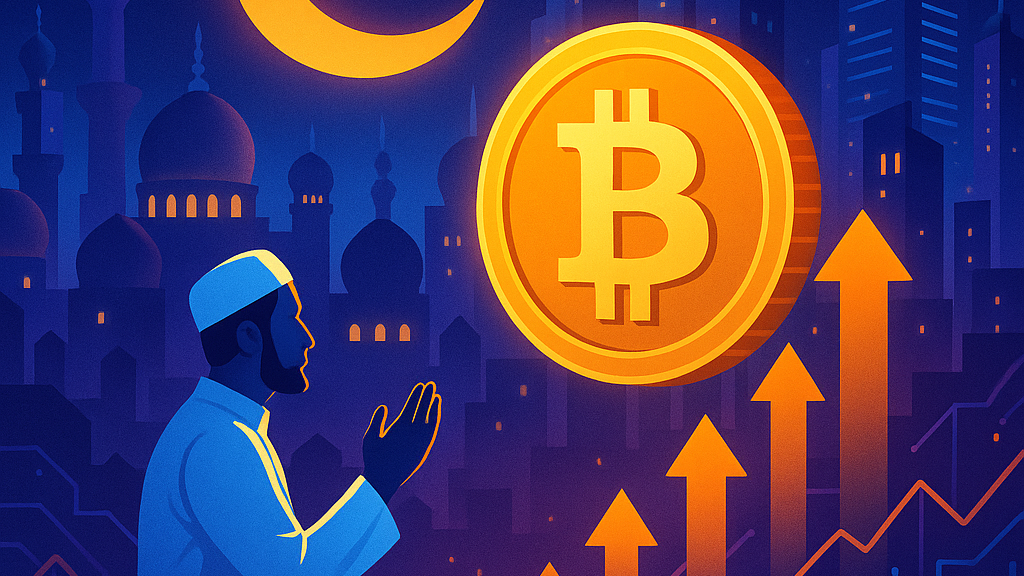
As 2026 unfolds, the anticipated Bitcoin surge associated with Ramadan appears to be losing strength. Analysts have noted that while the traditional patterns of market volatility seen during the holy month may still be present, they are manifesting differently this year.
It’s essential to clarify that Ramadan, a sacred time in the Islamic calendar, does not directly influence digital currencies. Instead, the fluctuations in Bitcoin’s price are driven by factors such as global liquidity and market sentiment.

Observing the previous seven Ramadan periods from 2019 to 2025, Bitcoin exhibited a notably consistent trend. Typically, it experienced an initial price spike, followed by a phase of erratic trading, and then concluded with a downturn. The notable deviation was in 2020, where a robust macroeconomic recovery overshadowed these tendencies.
However, the pattern observed was not simply an upward trajectory for Bitcoin during Ramadan. Rather, it highlighted a timing and structure phenomenon: a swift early surge often led to volatility mid-month, followed by a decline as the month approached its end.
This year, the opening week has displayed a distinct departure from past trends. Bitcoin started its trading with significant fluctuations rather than a straightforward upward movement, which indicates a weaker market stance compared to previous Ramadan seasons.
Despite the familiar emotional swings and unstable recoveries, the sequence of movements this year is altered. Analysts suggest that the overall market health seems less robust, casting doubt on the possibility of a strong Ramadan rally.
Examining on-chain data reveals a mixed scenario. The Binance Buying Power Index has plummeted to levels indicative of exhausted conditions, hinting that a relief bounce might occur if selling pressures diminish. This analysis suggests a potential opportunity for recovery if historical patterns hold true.

However, other indicators remain concerning. For instance, network activity has languished for half a year, signaling weak demand and participation, making any potential rallies precarious. Moreover, short-term holders are still realizing losses, indicating that many recent investors are exiting at a disadvantage, which is more characteristic of a base-building phase rather than a definitive uptrend.
Therefore, while a bounce or a fragmented recovery for Bitcoin might arise in the coming weeks, this could be contingent on improved buying power signals. Nevertheless, the combination of subdued on-chain demand and the losses reported by short-term traders suggests that any upward movement may initially face significant challenges and resistance.
In conclusion, the narrative surrounding a Ramadan rally for Bitcoin in 2026 appears increasingly tenuous. The hallmark patterns of volatility and rapid swings remain apparent, but their manifestation is markedly different this year, prompting a cautious outlook from traders and analysts alike.
Leave the reaction
Gregory Russell












Commentaries
Add your comment
Fill in necessary fields and publish