


Whale Loses $220K in Address Poisoning, Scammer Returns Majority
We have always followed the principles of transparency and clear information. Some of our content includes affiliate links, and we may earn a small commission through these partnerships. These partnerships do not influence our editorial independence or opinion. By using our site, you accept our privacy policy and terms and conditions.


A Web3 and NFT expert, Elena focuses on the evolution of digital art and blockchain gaming for CryptoWinx. She combines technical expertise with a deep…
Cryptocurrency is a high-risk asset class, and investing carries significant risk, including the potential loss of some or all of your investment. The information on this website is provided for informational and educational purposes only and does not constitute financial, investment, or gambling advice. Cryptowinx does not endorse any specific exchange or gaming platform. For more details, please read our terms and full disclaimer.
Cryptowinx navigates the digital asset universe with a dynamic, forward-looking vision. Throughout our evolution, we have followed every market cycle, from vertical rises to corrections, always remaining a solid point of reference for our community. Our team is made up of industry experts and analysts who experience the blockchain ecosystem daily: we constantly monitor Bitcoin’s stability, study the expansion of the Ethereum ecosystem, and analyze the new frontiers of crypto casinos. We are committed to absolute editorial integrity, separating the signal from the noise through rigorous fact-checking and multi-perspective news analysis. In a landscape where innovations emerge in moments, our mission is to simplify complex concepts and offer transparency into what is established and what is still experimental.
Learn more Cryptowinx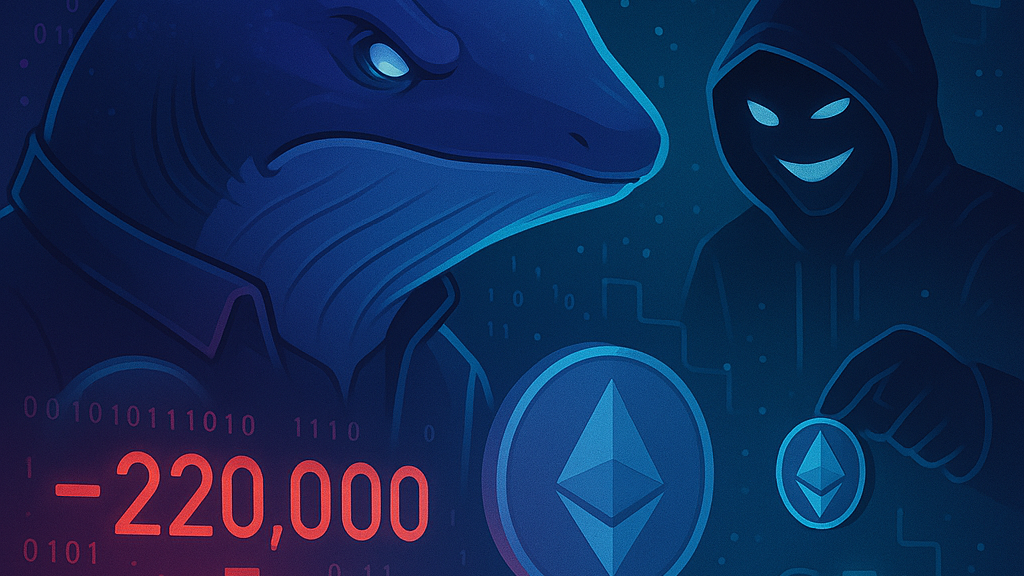
A significant sum of $220,000 was mistakenly sent by a TON whale to a scammer, who returned a large portion of the funds following the incident.
In a surprising turn of events within the cryptocurrency world, a whale on the TON blockchain inadvertently fell prey to an address poisoning scam. The unfortunate user sent a hefty amount of TON tokens, ultimately totaling $220,000, to a fraudulent wallet.

What unfolded next was unexpected for many. The scammer chose to return a majority of the funds—a move that has generated extensive discussion among online crypto enthusiasts.
Details shared by crypto user Adam Muhammad Mukhtar revealed how the scam transpired. The fraudster had cleverly established a wallet address very similar to one that the whale had used previously. To give credibility to the deceit, the scammer had previously transferred a small token amount to the whale’s transaction history, which made the fraudulent address appear familiar.
When the whale attempted to send a large amount, he mistakenly copied this similar address, failing to scrutinize the full string. His brief glance at the characters proved to be a costly error, resulting in the transfer of 126,000 TON directly into the hands of the scammer.
This fraudulent tactic, identified as address poisoning, involves embedding a deceptive address within a user’s transaction history, relying on their carelessness during future transfers. Victims often do not verify the entire address, allowing scammers to intercept substantial amounts.
The whale transferred 126,000 TON, approximately worth $220,000, but the scammer later returned 116,000 TON—equivalent to around $203,000—while retaining 10,000 TON as a sort of fee.
Details of this unfortunate incident were shared widely on social media, stirring various reactions regarding the scammer’s unusual decision to return the majority of the funds.
Once the funds arrived in the scammer’s wallet, instead of vanishing, he returned a significant portion—116,000 TON, valued at about $203,000, while keeping 10,000 TON, which is roughly $17,000, as ‘compensation.’ The scammer even attached a message expressing regret for the situation, acknowledging the impact of the loss on the whale.
This development has shocked many in the crypto community, as such refunds are exceedingly rare in cases of address poisoning, where victims typically face irretrievable losses.
Moreover, address poisoning scams are on the rise, posing an increasing threat within the cryptocurrency landscape. According to reports from blockchain analytics firms, losses related to these scams have surpassed $400 million in just one year. The pervasive nature of this tactic underscores the need for vigilance when handling cryptocurrency transactions.
Mukhtar’s account has resonated with many, as it serves as a critical reminder for users to thoroughly verify wallet addresses prior to initiating any transfers. This incident reiterates the importance of caution, illustrating how a momentary lapse in attention can lead to significant financial repercussions.
Leave the reaction
Elena Rodriguez






Commentaries
Add your comment
Fill in necessary fields and publish