


Washington’s Legal Action Against Kalshi Over Gambling Allegations
We have always followed the principles of transparency and clear information. Some of our content includes affiliate links, and we may earn a small commission through these partnerships. These partnerships do not influence our editorial independence or opinion. By using our site, you accept our privacy policy and terms and conditions.


Financial services expert with over three years of experience monitoring cryptocurrency markets and blockchain innovation. Passionate about digital assets and the decentralized future.
Cryptocurrency is a high-risk asset class, and investing carries significant risk, including the potential loss of some or all of your investment. The information on this website is provided for informational and educational purposes only and does not constitute financial, investment, or gambling advice. Cryptowinx does not endorse any specific exchange or gaming platform. For more details, please read our terms and full disclaimer.
Cryptowinx navigates the digital asset universe with a dynamic, forward-looking vision. Throughout our evolution, we have followed every market cycle, from vertical rises to corrections, always remaining a solid point of reference for our community. Our team is made up of industry experts and analysts who experience the blockchain ecosystem daily: we constantly monitor Bitcoin’s stability, study the expansion of the Ethereum ecosystem, and analyze the new frontiers of crypto casinos. We are committed to absolute editorial integrity, separating the signal from the noise through rigorous fact-checking and multi-perspective news analysis. In a landscape where innovations emerge in moments, our mission is to simplify complex concepts and offer transparency into what is established and what is still experimental.
Learn more Cryptowinx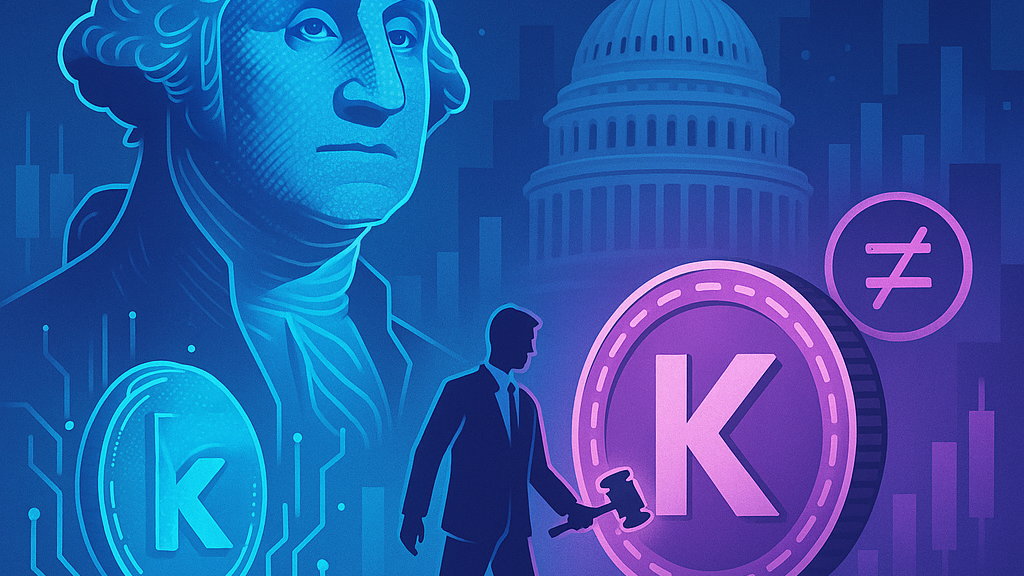
This week, the Attorney General of Washington, Nick Brown, has taken significant legal action against KalshiEx LLC, a prediction market platform, by filing a civil lawsuit. The state alleges that Kalshi operates an illegal online gambling service, contravening established laws.
The lawsuit was submitted to the King County Superior Court, asserting that Kalshi’s binary event contracts, which allow users to wager amounts ranging from one cent to 99 cents for a payout of one dollar to the winners, qualify as gambling according to the state’s legal framework. Specifically, Washington’s law defines gambling as risking something of value on an uncertain outcome.

Brown’s office is pursuing several legal remedies, including an injunction to halt Kalshi’s operations, restitution for users in Washington who may have incurred losses, and civil penalties for any violations identified. Additionally, the state is requesting a complete accounting of all transactions made by users within Washington.
The lawsuit addresses a broad spectrum of markets offered by Kalshi, extending beyond sports betting to include areas such as political elections, entertainment outcomes, public health metrics, and international events. The Attorney General emphasized that for Kalshi, these significant events appear to be mere opportunities for Americans to gamble their money.
Kalshi, which began operations in 2018 and went public in 2021, has positioned itself as a regulated platform for event contracts. However, its expansion into sports betting last year has raised eyebrows, with claims that it offers “legal betting in all 50 states.”
In response to the lawsuit, Kalshi swiftly moved the proceedings to federal court, arguing that federal law takes precedence in this matter. A spokesperson for Kalshi stated that there had been a meeting scheduled with the Attorney General’s office prior to the lawsuit’s filing, suggesting that the decision to proceed was premature. Kalshi also contested some of the specific claims mentioned in the lawsuit, particularly those related to markets involving war.
The state of Washington is known for having stringent gambling regulations. Its constitution, established in 1889, explicitly banned gambling on state property, and subsequent laws have continued to impose strict limitations on betting practices, including a specific prohibition against online gambling.

Washington is joined by at least eleven other states that have taken similar actions against prediction market operators. Recently, Arizona leveled criminal charges against Kalshi, while Nevada secured a temporary restraining order preventing the company from providing certain markets.
Despite its struggles, Kalshi has achieved some victories in federal courts in states like New Jersey and Tennessee. Legal disputes involving Kalshi could very well escalate, possibly reaching the U.S. Supreme Court, as states and the company argue over whether the prediction markets should be classified under state gambling laws. Kalshi maintains that its operations differ fundamentally from state-regulated sportsbooks and casinos.
As the case unfolds, Washington residents using Kalshi could potentially lose access to the platform, and the state’s restitution claims are bolstered by a consumer protection law aimed at recovering gambling losses. The legal proceedings are in the initial phases, and a ruling on which court will handle the case is anticipated shortly.
Leave the reaction
Gregory Russell












Commentaries
Add your comment
Fill in necessary fields and publish