


Wall Street’s Shift to On-Chain Poses Challenge for DeFi
We have always followed the principles of transparency and clear information. Some of our content includes affiliate links, and we may earn a small commission through these partnerships. These partnerships do not influence our editorial independence or opinion. By using our site, you accept our privacy policy and terms and conditions.


A Web3 and NFT expert, Elena focuses on the evolution of digital art and blockchain gaming for CryptoWinx. She combines technical expertise with a deep…
Cryptocurrency is a high-risk asset class, and investing carries significant risk, including the potential loss of some or all of your investment. The information on this website is provided for informational and educational purposes only and does not constitute financial, investment, or gambling advice. Cryptowinx does not endorse any specific exchange or gaming platform. For more details, please read our terms and full disclaimer.
Cryptowinx navigates the digital asset universe with a dynamic, forward-looking vision. Throughout our evolution, we have followed every market cycle, from vertical rises to corrections, always remaining a solid point of reference for our community. Our team is made up of industry experts and analysts who experience the blockchain ecosystem daily: we constantly monitor Bitcoin’s stability, study the expansion of the Ethereum ecosystem, and analyze the new frontiers of crypto casinos. We are committed to absolute editorial integrity, separating the signal from the noise through rigorous fact-checking and multi-perspective news analysis. In a landscape where innovations emerge in moments, our mission is to simplify complex concepts and offer transparency into what is established and what is still experimental.
Learn more Cryptowinx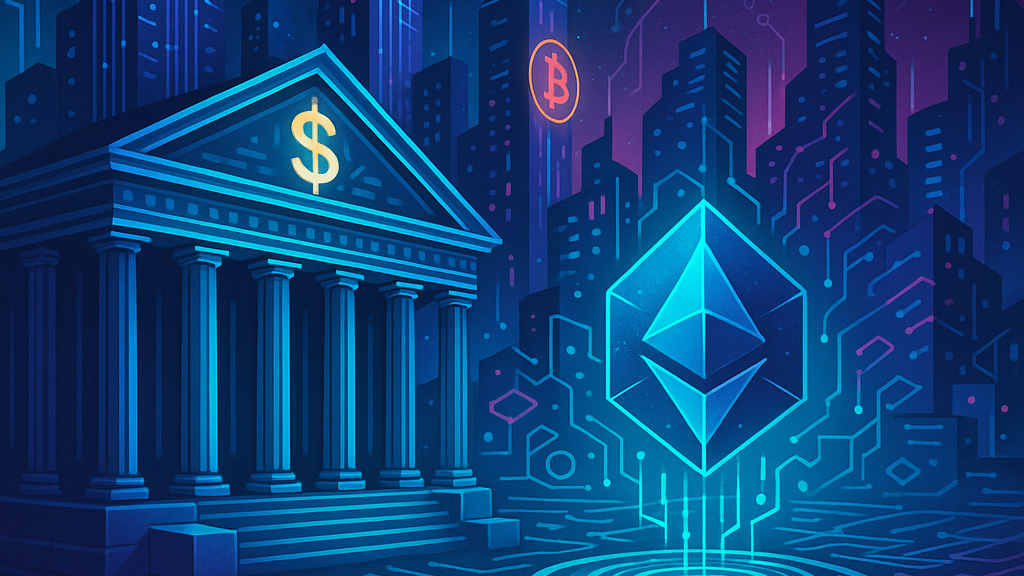
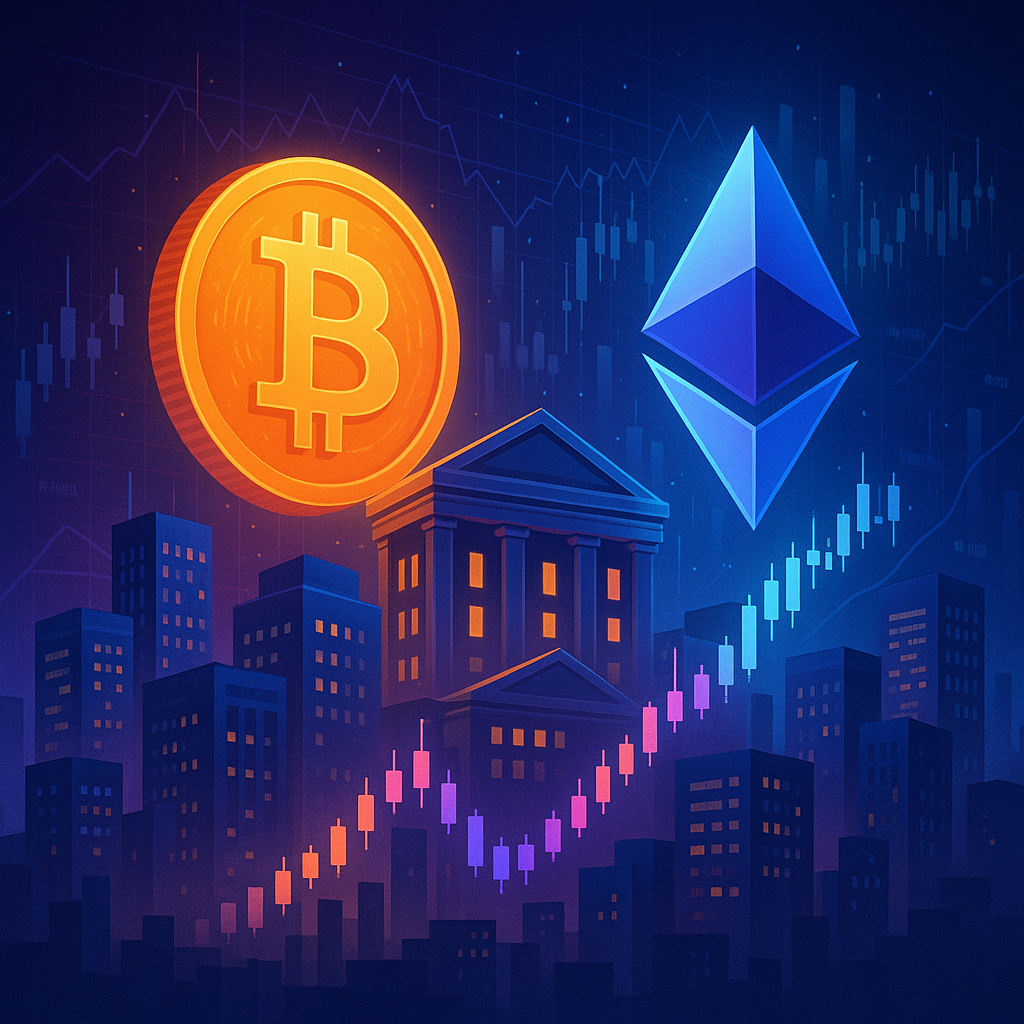
The financial landscape is experiencing a significant transition as traditional institutions like Wall Street begin to embrace on-chain operations. This change places decentralized finance (DeFi) in a precarious position, as it faces a crucial challenge regarding trust and credibility.
In a notable development, January saw the Intercontinental Exchange (ICE) unveil plans for the New York Stock Exchange (NYSE) to establish a tokenized securities platform. This system is designed to operate around the clock, ensuring instant settlements and utilizing stablecoin funding, with both BNY Mellon and Citigroup providing tokenized deposits to support clearing activities beyond regular banking hours.

Advancing to February, WisdomTree made headlines by introducing 24/7 trading and on-the-spot settlement for tokenized money-market fund shares, aided by relief from the Securities and Exchange Commission (SEC). March brought further developments, as the Federal Reserve, the FDIC, and the Office of the Comptroller of the Currency jointly asserted that tokenized securities should be treated equivalently to their non-tokenized equivalents concerning capital requirements, advocating for a technology-neutral approach.
The SEC also granted approval for Nasdaq to engage in trading specific securities in tokenized forms with settlements facilitated through the Depository Trust Company (DTC). Following suit, NYSE partnered with Securitize to enhance digital transfer-agent infrastructure compliant with industry standards.
This series of events has significantly altered DeFi’s competitive stance. Regulated exchanges and bank-backed clearinghouses are now capable of providing continuous trading and on-chain settlements within a supervised framework, making them increasingly attractive to institutional investors.
Currently, the on-chain capital pool targeted by these initiatives is estimated at over $330 billion, comprising approximately $317 billion in stablecoins, nearly $13 billion in tokenized U.S. Treasuries, and $1 billion in tokenized stocks. This substantial capital will inevitably draw interest from institutional investors, irrespective of the specific technological pathways they choose.
DeFi’s inherent advantage lies in its composability—the ability to create interconnected financial products on an open and permissionless infrastructure. However, as the NYSE and Nasdaq illustrate, tokenized securities still rely on established frameworks that involve a level of centralization.

The incident involving Drift showcased vulnerabilities within the DeFi landscape, illustrating that significant risks can emanate not just from smart contracts but from governance and access management layers as well. This was evident when Drift confirmed that a hack, classified by DefiLlama as a $285 million event, occurred due to exploited administrative access and manipulation of prices, resulting in a drastic drop in total value locked from approximately $550 million to below $250 million.
In light of the Drift exploit, DeFi must adopt stricter governance measures. The industry needs to implement robust strategies such as creating segmented permission structures, timely transitions, and better visibility of dependencies to protect against future vulnerabilities.
Looking ahead, the future of DeFi appears to hinge on the ability to demonstrate that open interconnections can provide sufficient value that outweighs the risks associated with governance and control mandates. As on-chain capital is anticipated to grow, the competition will increasingly focus on which systems can earn the trust of institutional investors.
In summary, Wall Street’s venture into on-chain technology has challenged DeFi to prove its resilience and reliability. The success of DeFi will depend on establishing its systems of trust and governance, ensuring that they meet the rigorous standards expected by capital allocators in an evolving financial environment.
Leave the reaction
Elena Rodriguez









Commentaries
Add your comment
Fill in necessary fields and publish