


Wall Street Embraces Tokenization: A New Era Approaches
We have always followed the principles of transparency and clear information. Some of our content includes affiliate links, and we may earn a small commission through these partnerships. These partnerships do not influence our editorial independence or opinion. By using our site, you accept our privacy policy and terms and conditions.


James Mitchell combines investment banking with cryptocurrency journalism to analyze the institutional adoption of digital assets. Specializing in ETFs and regulation, he translates complex developments…
Cryptocurrency is a high-risk asset class, and investing carries significant risk, including the potential loss of some or all of your investment. The information on this website is provided for informational and educational purposes only and does not constitute financial, investment, or gambling advice. Cryptowinx does not endorse any specific exchange or gaming platform. For more details, please read our terms and full disclaimer.
Cryptowinx navigates the digital asset universe with a dynamic, forward-looking vision. Throughout our evolution, we have followed every market cycle, from vertical rises to corrections, always remaining a solid point of reference for our community. Our team is made up of industry experts and analysts who experience the blockchain ecosystem daily: we constantly monitor Bitcoin’s stability, study the expansion of the Ethereum ecosystem, and analyze the new frontiers of crypto casinos. We are committed to absolute editorial integrity, separating the signal from the noise through rigorous fact-checking and multi-perspective news analysis. In a landscape where innovations emerge in moments, our mission is to simplify complex concepts and offer transparency into what is established and what is still experimental.
Learn more Cryptowinx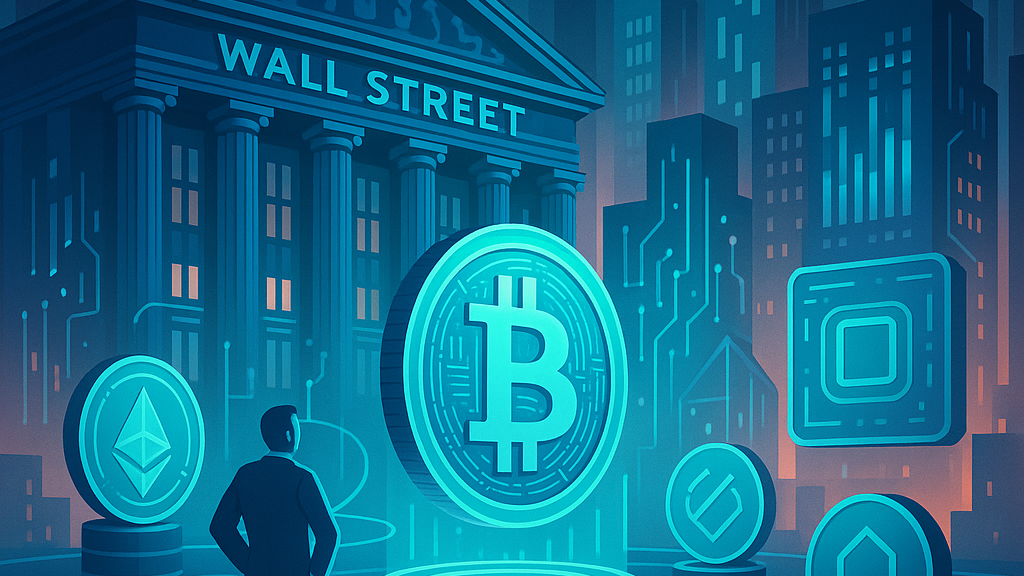
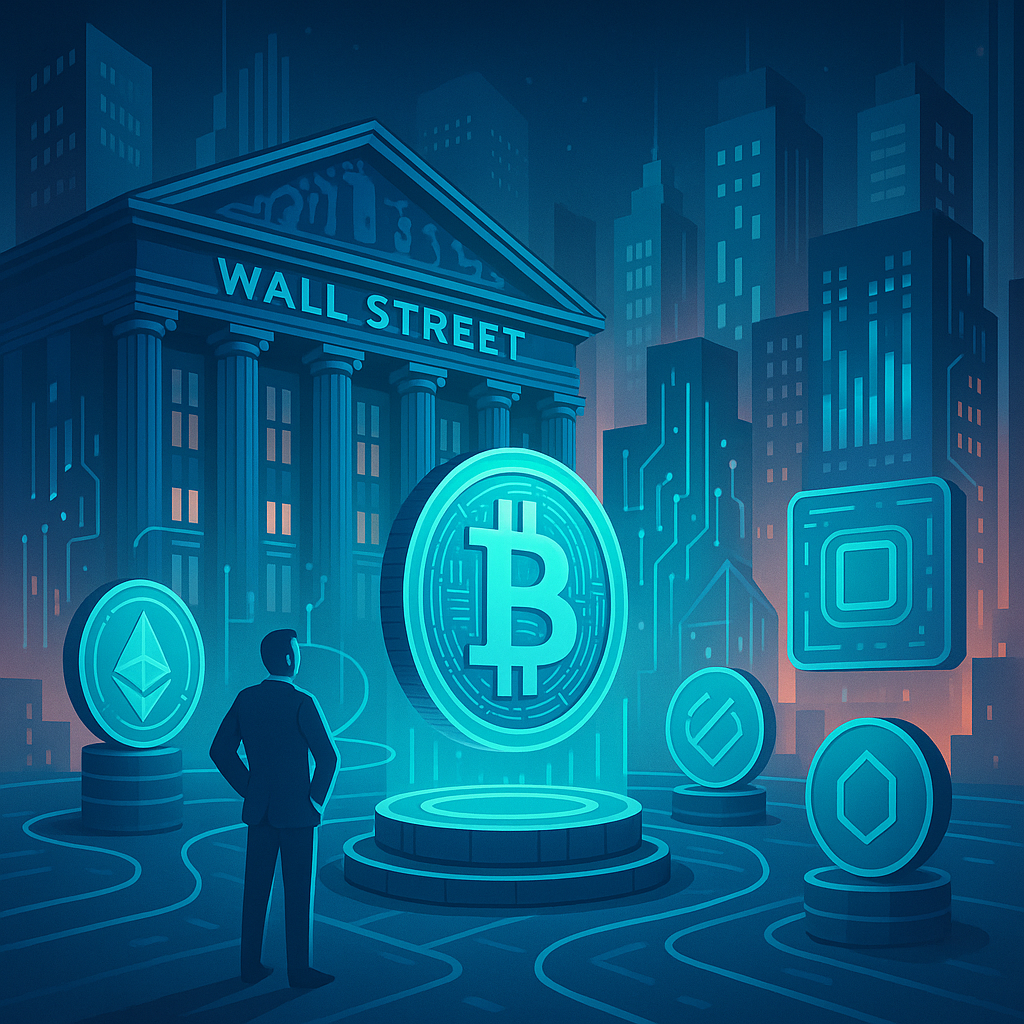
For years, tokenization remained a concept discussed in financial circles, often without substantial progress. However, recent developments indicate a significant shift in Wall Street’s approach to this digital innovation.
BMO has announced its intention to implement tokenized cash capabilities in collaboration with CME Group and Google Cloud. This initiative aims to facilitate real-time payments and enable continuous margin activity, marking a notable step forward in the tokenization landscape. Meanwhile, Nasdaq has secured approval from the SEC to support trading and settlement of select stocks and ETFs using tokenization.

Additionally, U.S. banking regulators recently clarified that tokenized securities would not incur extra capital requirements simply due to their blockchain underpinnings. This change reflects a growing acceptance of tokenization among governmental bodies.
On March 25, the House Financial Services Committee convened a hearing on the topic, signaling that lawmakers are actively working on legislative frameworks to adapt existing securities regulations to accommodate this emerging structure. This alignment of events underscores tokenization’s ascension from a mere curiosity to a pivotal component in the future of financial markets.
Tokenization refers to the digital representation of existing assets on a blockchain ledger, allowing for enhanced automation and decreased transaction constraints. The impact of this technology is profound, streamlining the issuance and transfer of assets while potentially expediting settlement times.
Leading financial institutions recognize the urgency of the movement toward tokenization. Larry Fink’s 2026 chairman’s letter from BlackRock highlighted the role of tokenization in simplifying investments, while JPMorgan’s Kinexys aims to encapsulate the vision of 24/7 transactions that span international borders.
Moreover, Wall Street’s enthusiasm reflects a desire for operational continuity. Financial markets are inherently global, operating around the clock. However, the existing infrastructure heavily relies on traditional business hours, which creates inefficiencies. Tokenization seeks to bridge this gap by aligning financial operations with the real-time pace of today’s economy.
BMO’s recent announcement emphasizes the importance of this technology for institutional clients, allowing for the management of margin products and derivatives seamlessly at any hour. Similarly, JPMorgan is promoting Kinexys as a means to facilitate instantaneous payments and rapid international transfers.
The tangible outcomes of these initiatives are poised to emerge shortly, moving past theoretical discussions toward practical implementations such as off-hours settlement solutions. This evolution shifts the narrative from abstract language surrounding innovation to specific language regarding treasury management and asset mobility.
The ongoing dialogue in Washington reflects a recognition of tokenization as a serious market consideration. The committee’s memorandum from the March hearing noted that lawmakers would scrutinize whether current securities laws adequately address the activities surrounding tokenization and where overlapping regulations may hinder progress.

The consensus during the hearing indicated a push for integrating tokenization into the existing market framework. Industry experts like Nasdaq’s John Zecca advocated for this integration, while organizations like SIFMA emphasized the necessity of investor protection and market coherence amidst this transition.
In contrast, the DTCC maintained its position advocating for a regulated environment to safeguard ownership rights and investor interests. Even those with reservations, like NASAA, acknowledged the legitimacy of tokenized securities while emphasizing adherence to existing securities laws.
Discussions surrounding the efficiency promised by tokenization highlight its dual potential: to expedite asset settlements and to enhance collateral mobility. The traditional financial system, particularly during market fluctuations, often finds itself grappling with trapped capital and slow transfer processes. Tokenized cash and securities could transform this dynamic, enabling swift movement and reallocation of valuable assets.
However, a critical aspect lies in determining who will control the infrastructure for tokenized assets. The organizations that successfully construct the foundational systems will acquire significant influence over the market’s future. While exchanges like Nasdaq have initiated practical steps, competition remains fierce, with the NYSE and Securitize also striving for a foothold in tokenized trading.
The recent congressional hearing suggests a coordinated effort to reshape market structure rather than a series of isolated experiments. Diverging interests are converging; banks advocate for continuous market operations, exchanges aspire for dominance in tokenized trading, and clearinghouses seek to maintain ties to existing regulatory frameworks.
As various stakeholders unite in pursuit of a shared vision of tokenization, it becomes clear that the phase of mere experimentation is shifting into a new era. However, challenges such as platform fragmentation, interoperability concerns, and the need for legal clarity remain significant hurdles. Institutions may face lengthy hurdles in the transition yet could emerge with better branding and innovative demonstrations.
The momentum is unmistakable. When major players in the industry align their rhetoric, it signals a transition from speculation to a concrete future for tokenization. The recent hearing has highlighted that tokenization is ready to move into the mainstream, with the ongoing debate centering on who will define its parameters.
Leave the reaction
James Mitchell










Commentaries
Add your comment
Fill in necessary fields and publish