


Understanding Self-Custody: Keys, Security, and Behavior
We have always followed the principles of transparency and clear information. Some of our content includes affiliate links, and we may earn a small commission through these partnerships. These partnerships do not influence our editorial independence or opinion. By using our site, you accept our privacy policy and terms and conditions.


A Web3 and NFT expert, Elena focuses on the evolution of digital art and blockchain gaming for CryptoWinx. She combines technical expertise with a deep…
Cryptocurrency is a high-risk asset class, and investing carries significant risk, including the potential loss of some or all of your investment. The information on this website is provided for informational and educational purposes only and does not constitute financial, investment, or gambling advice. Cryptowinx does not endorse any specific exchange or gaming platform. For more details, please read our terms and full disclaimer.
Cryptowinx navigates the digital asset universe with a dynamic, forward-looking vision. Throughout our evolution, we have followed every market cycle, from vertical rises to corrections, always remaining a solid point of reference for our community. Our team is made up of industry experts and analysts who experience the blockchain ecosystem daily: we constantly monitor Bitcoin’s stability, study the expansion of the Ethereum ecosystem, and analyze the new frontiers of crypto casinos. We are committed to absolute editorial integrity, separating the signal from the noise through rigorous fact-checking and multi-perspective news analysis. In a landscape where innovations emerge in moments, our mission is to simplify complex concepts and offer transparency into what is established and what is still experimental.
Learn more Cryptowinx
As the cryptocurrency landscape evolves, the principles of ownership and security are under increasing scrutiny. A recent study sheds light on what true self-custody requires as we approach 2026.
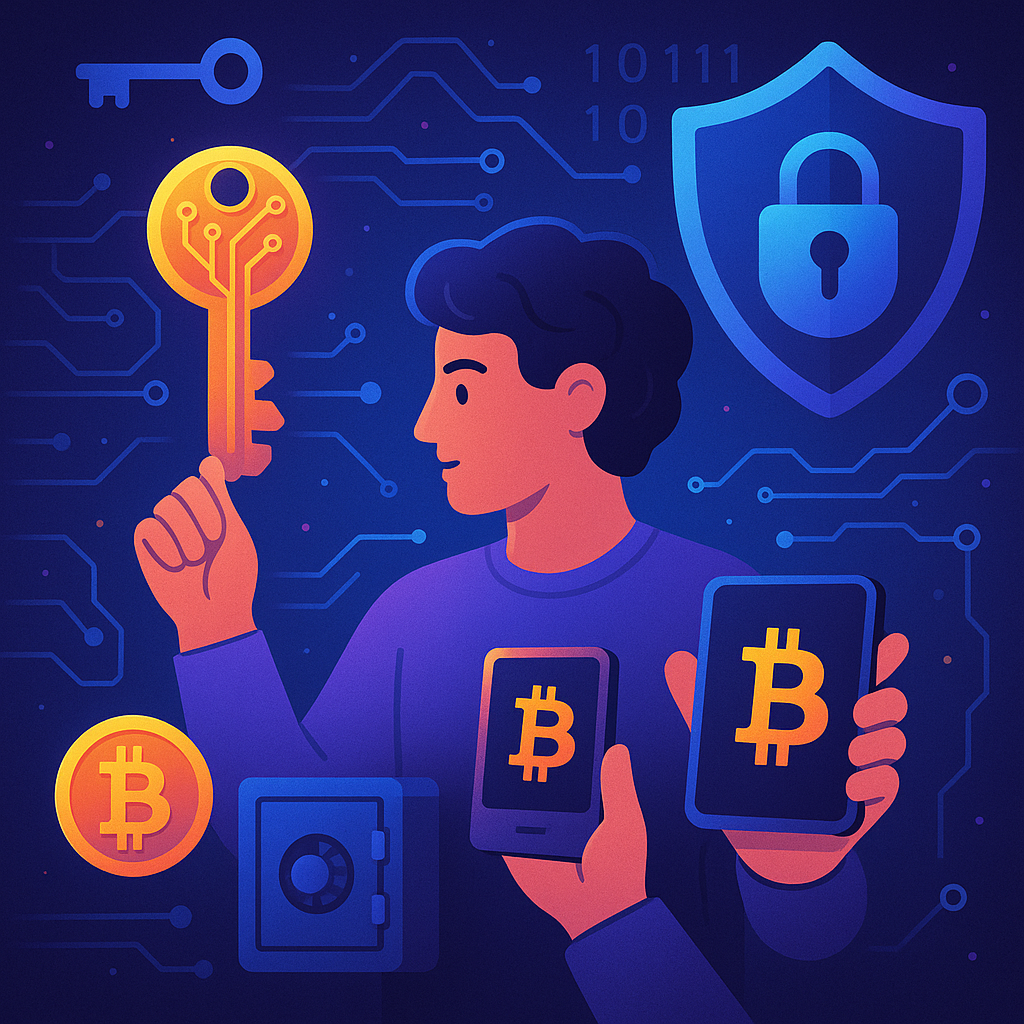
The notion of decentralized ownership has often faced challenges from the harsh realities of online exchanges, where substantial sums have been lost over time. This trend has led many users to embrace the adage: if you don’t hold your keys, you may not hold your coins.

A report by Cointelegraph Research, in collaboration with Trezor, the pioneering hardware wallet, explores how investor attitudes are changing. Through a comprehensive analysis that combines survey feedback and examinations of exchange collapses, this report delineates the fundamental aspects of self-custody, emphasizing its significance in the upcoming years.
Survey results indicate a significant drop in confidence towards centralized exchanges. Many respondents have reported a diminishing trust compared to the previous year, influenced largely by events such as the FTX debacle. Regulatory measures, like the MiCA framework, have not fundamentally altered this landscape, as users are increasingly aware that access to custodial services can be influenced by external decisions.
This growing awareness has prompted a shift toward self-custody as a proactive risk management strategy. Once individuals take their assets into their own hands, security becomes a function of personal care rather than institutional protocols. The data shows that while many users adhere to a straightforward wallet architecture, there remains a general misunderstanding regarding the role of hardware wallets. Although these devices significantly mitigate remote hacking risks, they do not erase user-induced losses.
The findings thus pivot from the selection of devices to the actions of the user. Key elements such as transaction verification, the storage of recovery materials, and the assessment of real-life risks become critical aspects of self-custody.

Ultimately, the essence of merging ownership with security transcends mere regulations or gadgets. It hinges on adopting disciplined practices and a robust understanding of what true custody entails, particularly concerning the limitations of protection mechanisms.
The impact of recognizing the importance of self-custody cannot be overstated, as it pivots the focus onto user behavior and understanding, thus setting the stage for enhanced security in the future of cryptocurrency.
Leave the reaction
Elena Rodriguez










Commentaries
Add your comment
Fill in necessary fields and publish