


Understanding Execution Costs in Bitcoin and Ethereum Trading
We have always followed the principles of transparency and clear information. Some of our content includes affiliate links, and we may earn a small commission through these partnerships. These partnerships do not influence our editorial independence or opinion. By using our site, you accept our privacy policy and terms and conditions.


James Mitchell combines investment banking with cryptocurrency journalism to analyze the institutional adoption of digital assets. Specializing in ETFs and regulation, he translates complex developments…
Cryptocurrency is a high-risk asset class, and investing carries significant risk, including the potential loss of some or all of your investment. The information on this website is provided for informational and educational purposes only and does not constitute financial, investment, or gambling advice. Cryptowinx does not endorse any specific exchange or gaming platform. For more details, please read our terms and full disclaimer.
Cryptowinx navigates the digital asset universe with a dynamic, forward-looking vision. Throughout our evolution, we have followed every market cycle, from vertical rises to corrections, always remaining a solid point of reference for our community. Our team is made up of industry experts and analysts who experience the blockchain ecosystem daily: we constantly monitor Bitcoin’s stability, study the expansion of the Ethereum ecosystem, and analyze the new frontiers of crypto casinos. We are committed to absolute editorial integrity, separating the signal from the noise through rigorous fact-checking and multi-perspective news analysis. In a landscape where innovations emerge in moments, our mission is to simplify complex concepts and offer transparency into what is established and what is still experimental.
Learn more Cryptowinx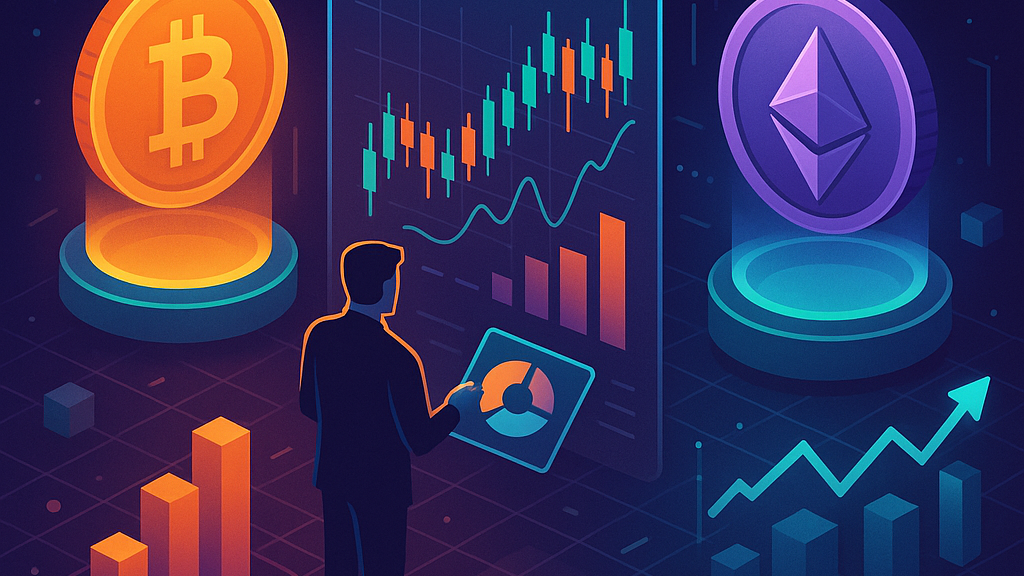
The increasing complexity of cryptocurrency trading highlights a critical oversight: the measurement of execution quality. As Bitcoin and Ethereum become more intertwined with institutional finance, the intricacies of transaction costs are often neglected, demanding urgent attention.
Transaction cost analysis (TCA), a well-established practice in equity markets, provides insights into hidden trading costs that impact overall profitability. In traditional finance, TCA empowers traders to view the gap between anticipated purchase prices and actual execution prices, allowing for more informed decisions.

However, this level of scrutiny is conspicuously absent in cryptocurrency exchanges. As digital currencies become more refined and market behaviors resemble those of traditional assets, understanding execution costs becomes vital. Yet, the crypto industry has lagged in systematically analyzing these expenses, which could erode trust as it continues to grow.
Novice traders may perceive leading cryptocurrency pairs as highly liquid due to seemingly robust order books and competitive spreads. Nevertheless, the notion of liquidity can be misleading; the actual execution price can diverge significantly from expectations, primarily due to market fluctuations, a phenomenon known as slippage.
For instance, if a trader aims to acquire one Bitcoin at $90,000 but ends up paying $90,900 due to sudden market movement, the slippage amounts to $900, reflecting a 1% increase. Such discrepancies are common, yet unlike traditional markets where these costs are calculated meticulously using TCA, the crypto realm lacks similar transparency.
Crypto trading is further complicated by its inherent volatility. With prices shifting rapidly and trading occurring 24/7, the execution costs can vary dramatically. Traders often find it challenging to pinpoint the precise total cost of a transaction, as hidden fees may be embedded within trade prices, clouding clarity.
The absence of standardized data poses another obstacle. While equity markets have centralized data sources for TCA, the decentralized nature of cryptocurrencies means significant fragmentation across platforms, complicating the aggregation of meaningful trading insights.
Additionally, the regulatory landscape remains underdeveloped, lacking a unified framework for TCA or best execution guidelines in digital assets. As a result, the efficiency of portfolio management is frequently compromised, influenced more by external trading conditions than by the skill of asset managers.

There is a growing acknowledgment among regulators regarding these execution gaps. Notably, in 2025, the European Securities and Markets Authority broadened its guidelines to encompass digital assets, signaling a shift toward enhanced execution transparency. Although these measures do not directly introduce TCA, they underscore the necessity for clarity surrounding trading costs.
Market participants stand to benefit significantly from adopting TCA, as it would illuminate the true costs of trading. When investors become aware of the varying fees between exchanges, it fosters a more efficient market environment.
Advancements in cloud computing and big data are also addressing the challenges of fragmented data in the crypto sphere. Leveraging machine learning technologies, platforms can now conduct comprehensive transaction cost analyses, identifying previously obscure trends across exchanges.
Embracing TCA could not only help traders reduce their operational costs but also enhance liquidity in the cryptocurrency markets. As trading volumes gravitate toward venues offering superior conditions, competition among exchanges is likely to intensify, ultimately benefiting all market participants.
Leave the reaction
James Mitchell







Commentaries
Add your comment
Fill in necessary fields and publish