


Tensions in Hormuz: XRP’s Rise Amid Global Financial Shifts
We have always followed the principles of transparency and clear information. Some of our content includes affiliate links, and we may earn a small commission through these partnerships. These partnerships do not influence our editorial independence or opinion. By using our site, you accept our privacy policy and terms and conditions.


A crypto casino and gaming specialist, Raj brings a digital native’s perspective to industry trends and provably fair systems. Having reviewed over 150 platforms, he…
Cryptocurrency is a high-risk asset class, and investing carries significant risk, including the potential loss of some or all of your investment. The information on this website is provided for informational and educational purposes only and does not constitute financial, investment, or gambling advice. Cryptowinx does not endorse any specific exchange or gaming platform. For more details, please read our terms and full disclaimer.
Cryptowinx navigates the digital asset universe with a dynamic, forward-looking vision. Throughout our evolution, we have followed every market cycle, from vertical rises to corrections, always remaining a solid point of reference for our community. Our team is made up of industry experts and analysts who experience the blockchain ecosystem daily: we constantly monitor Bitcoin’s stability, study the expansion of the Ethereum ecosystem, and analyze the new frontiers of crypto casinos. We are committed to absolute editorial integrity, separating the signal from the noise through rigorous fact-checking and multi-perspective news analysis. In a landscape where innovations emerge in moments, our mission is to simplify complex concepts and offer transparency into what is established and what is still experimental.
Learn more Cryptowinx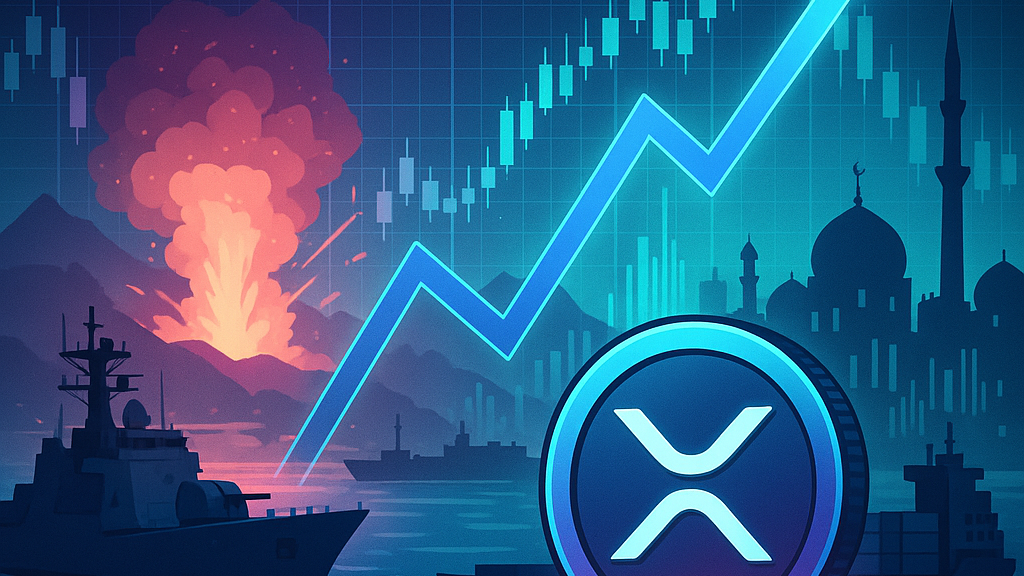
Amid escalating tensions in the Strait of Hormuz, a crucial corridor for oil shipping, the financial landscape is bracing for significant changes. The ongoing strife, driven by recent military actions involving the US and Israel against Iran, has severely affected vessel operations, resulting in a staggering 70% reduction in traffic through this vital passage.
Analysts highlight that the Strait of Hormuz is responsible for approximately 20% of the world’s oil transport. This turmoil is sparking discussions about how digital currencies, particularly XRP, could emerge as vital players in a shifting economic scenario. The ongoing chaos could act as a launching pad for Ripple’s ambitions in the financial sector.

The disruption of oil flows poses considerable risks for major Asian economies, including China, India, Japan, and South Korea, which rely heavily on this route for crude imports. The limited alternatives for bypassing disruptions raise concerns about the potential for oil prices to soar past $100 per barrel; this risk is underscored by various financial analysts.
As the geopolitical landscape evolves, industry experts suggest that the situation could fast-track Ripple’s and XRP’s adoption as key components of a new financial framework. The increasing momentum surrounding ISO 20022 compliance and the forthcoming implementation of Central Bank Digital Currencies (CBDCs) may further solidify Ripple’s technology as a core element of a resilient international financial system.
While cryptocurrency markets remained stable over the weekend, the opening of US markets on Monday could trigger a wave of investment shifts. For XRP, this context might provide the ideal conditions for a quicker transition towards widespread digital asset acceptance.
In addition to these developments, the United Arab Emirates is quietly advancing its utilization of the XRP Ledger. This trend seems to be gaining traction, as Ripple has become the first blockchain payments provider to obtain regulatory approval from the Dubai Financial Services Authority (DFSA). This authorization allows Ripple to provide cross-border crypto payment services within the UAE’s International Financial Centre.

The recognition by authorities has opened doors for various real-world asset projects to build on the XRP Ledger. Significant milestones include the tokenization of $280 million in certified diamonds by Billiton Diamond, with infrastructure support from Ripple Custody. There are also initiatives to tokenize real estate title deeds in collaboration with the Dubai Land Department.
The preference for the XRP Ledger among UAE firms is not without reason, as Ripple’s established regulatory compliance attracts institutional investments. The company boasts over 60 licenses worldwide, including those from esteemed regulatory bodies such as the DFSA and the Central Bank of Ireland. This regulatory clarity is pivotal in driving institutional interest, as evidenced by the ongoing projects in Dubai. Analysts project a rapid evolution of sectors, emphasizing that Ripple’s technology is taking a commanding lead in various asset classes.
Leave the reaction
Raj Patel






Commentaries
Add your comment
Fill in necessary fields and publish