


Senator Questions Binance CEO Over Discrepancies in Testimony
We have always followed the principles of transparency and clear information. Some of our content includes affiliate links, and we may earn a small commission through these partnerships. These partnerships do not influence our editorial independence or opinion. By using our site, you accept our privacy policy and terms and conditions.


A crypto casino and gaming specialist, Raj brings a digital native’s perspective to industry trends and provably fair systems. Having reviewed over 150 platforms, he…
Cryptocurrency is a high-risk asset class, and investing carries significant risk, including the potential loss of some or all of your investment. The information on this website is provided for informational and educational purposes only and does not constitute financial, investment, or gambling advice. Cryptowinx does not endorse any specific exchange or gaming platform. For more details, please read our terms and full disclaimer.
Cryptowinx navigates the digital asset universe with a dynamic, forward-looking vision. Throughout our evolution, we have followed every market cycle, from vertical rises to corrections, always remaining a solid point of reference for our community. Our team is made up of industry experts and analysts who experience the blockchain ecosystem daily: we constantly monitor Bitcoin’s stability, study the expansion of the Ethereum ecosystem, and analyze the new frontiers of crypto casinos. We are committed to absolute editorial integrity, separating the signal from the noise through rigorous fact-checking and multi-perspective news analysis. In a landscape where innovations emerge in moments, our mission is to simplify complex concepts and offer transparency into what is established and what is still experimental.
Learn more Cryptowinx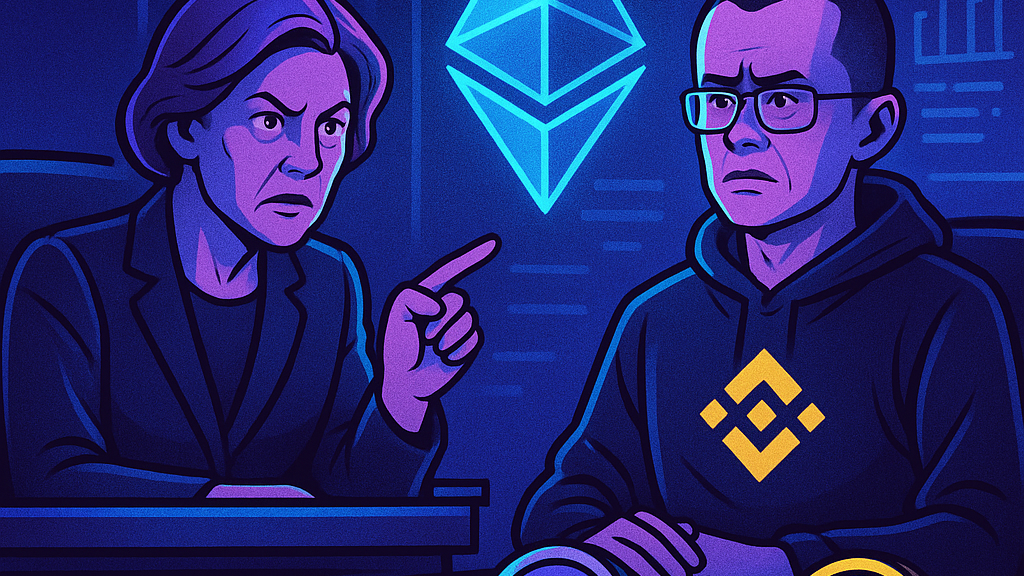
Senator Richard Blumenthal has intensified his examination of Binance by sending a follow-up letter to co-CEO Richard Teng on April 1. In this correspondence, he urged the cryptocurrency exchange to clarify inconsistencies observed between its prior testimony to the Senate and subsequent media revelations regarding transactions connected to Iran.
The Senator expressed his apprehensions, suggesting that Binance may have supplied misleading information to both the Subcommittee and the public. He requested access to the documents and records that influenced the company’s original responses.

The inquiry follows investigative reports from prominent media outlets, which uncovered roughly $1.7 billion in financial transactions linked to Binance accounts and entities associated with Iran. This figure starkly contrasts with the $110,000 disclosed by Binance last year concerning direct dealings with four major Iranian exchanges.
Blumenthal highlighted that such a significant discrepancy, coupled with Binance’s inconsistent or delayed submission of requested materials to the Senate Permanent Subcommittee on Investigations (PSI), raises serious concerns about the company’s transparency and compliance with Congressional oversight.
In the letter, the Senator outlined numerous specific inquiries and record requests. He sought clarity on whether any accounts had engaged in transactions with certain Iran-linked wallets mentioned in the reports, as well as the disclosure of those wallet addresses.
Additionally, he called for a comprehensive year-over-year account of transactions between Binance and established Iranian exchanges. Blumenthal also demanded an explanation regarding the methodology behind the reported $110,000 figure, questioning if it included transfers later identified with Iranian exchanges.
Compliance practices within Binance were also scrutinized in the letter. The Senator inquired whether the company had relaxed detection, screening, freezing, or reporting mechanisms since January 1, 2025, in a manner that would affect the identification of illicit transfers.
He asked whether Binance had ever opted not to investigate, suspend, or remove accounts associated with individuals in Iran, particularly those utilizing VPNs or “drop accounts,” which are KYC-verified accounts that can be shared or traded.

Moreover, Blumenthal sought insights into whether any compliance personnel had faced disciplinary actions for raising concerns or providing information to law enforcement, referencing reports of dismissals for “unauthorized disclosures.”
The Senator criticized Binance for what he deemed delayed responses to law enforcement alerts. He noted that it took the company two months to react to warnings about alleged terrorist financing involving entities like Hexa Whale and an additional two months to eliminate an implicated shell company.
He further accused Binance of taking over five months to cease its relationship with Blessed Trust following warnings of its potential involvement in terrorist financing activities. Blumenthal pointed out that in some instances, Binance had flagged certain accounts with internal notes such as “Don’t block. Internal accounts,” which he believed should have warranted increased scrutiny instead of shielding them from enforcement actions.
He requested precise dates concerning when accounts were created, when funds were transferred to Iranian intermediaries, when these occurrences were reported to US law enforcement, and when those accounts were ultimately suspended or removed.
Furthermore, he sought explanations for any delays between notifications and subsequent actions taken by Binance. Invoking Senate protocols, Blumenthal set a deadline of April 14 for Binance to provide the required records.
Leave the reaction
Raj Patel








Commentaries
Add your comment
Fill in necessary fields and publish