


Rising Crypto Scams: The Dangers of Deepfake Technology
We have always followed the principles of transparency and clear information. Some of our content includes affiliate links, and we may earn a small commission through these partnerships. These partnerships do not influence our editorial independence or opinion. By using our site, you accept our privacy policy and terms and conditions.


A crypto casino and gaming specialist, Raj brings a digital native’s perspective to industry trends and provably fair systems. Having reviewed over 150 platforms, he…
Cryptocurrency is a high-risk asset class, and investing carries significant risk, including the potential loss of some or all of your investment. The information on this website is provided for informational and educational purposes only and does not constitute financial, investment, or gambling advice. Cryptowinx does not endorse any specific exchange or gaming platform. For more details, please read our terms and full disclaimer.
Cryptowinx navigates the digital asset universe with a dynamic, forward-looking vision. Throughout our evolution, we have followed every market cycle, from vertical rises to corrections, always remaining a solid point of reference for our community. Our team is made up of industry experts and analysts who experience the blockchain ecosystem daily: we constantly monitor Bitcoin’s stability, study the expansion of the Ethereum ecosystem, and analyze the new frontiers of crypto casinos. We are committed to absolute editorial integrity, separating the signal from the noise through rigorous fact-checking and multi-perspective news analysis. In a landscape where innovations emerge in moments, our mission is to simplify complex concepts and offer transparency into what is established and what is still experimental.
Learn more Cryptowinx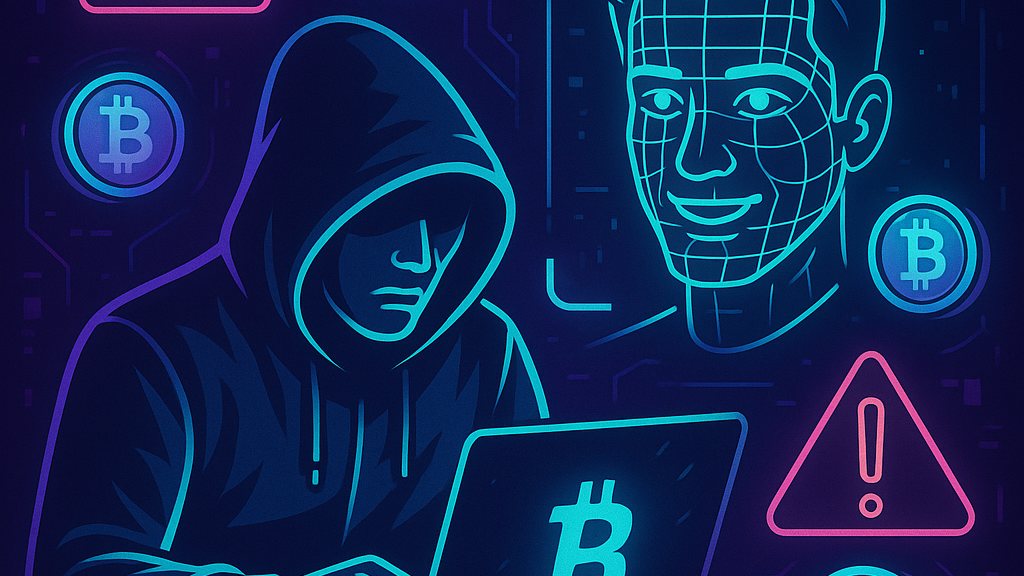
A recent incident involving a cryptocurrency founder highlights an alarming trend in online scams, particularly within the crypto space. This founder’s laptop was compromised during what he believed was a legitimate Microsoft Teams meeting with Pierre Kaklamanos, a known contact from the Cardano Foundation. The setup seemed innocent, as Kaklamanos had reached out regarding a project called Atrium, leading to a typical Teams invitation for a discussion.
During the call, the victim encountered an individual whose appearance and voice were both familiar, alongside two others who claimed to be associated with the foundation. However, the situation took a turn when the call unexpectedly lagged and dropped him from the meeting. Following this, a notification informed him that his Teams software was outdated and required reinstallation via Terminal. In what he thought was a routine fix, he executed the command, leaving his device vulnerable before shutting it down due to battery concerns.

Despite being technically skilled, the victim was caught off guard by the authenticity of the interaction. This underscores a critical point: social engineering tactics are increasingly sophisticated, particularly as adversaries leverage familiar contexts to gain trust.
Microsoft has previously documented incidents where cybercriminals distributed malicious files disguised as workplace applications like Teams and Zoom. Recent alerts highlighted threats targeting macOS users with prompts that instructed them to enter commands, potentially jeopardizing sensitive browser data, cryptocurrency wallets, and other credentials.
Research from Google Cloud’s Mandiant has outlined similar attacks within the cryptocurrency sector. These attacks utilized compromised accounts, fake meetings, and even AI-generated videos to create a convincing environment for deception. Although the specifics on the AI tools used remain uncorroborated, the integration of deepfake technology is increasingly prevalent in social engineering schemes.
On April 24, Kaklamanos himself alerted his followers on social media about the impersonation attempt, exacerbating the situation and emphasizing the need for vigilance. He encouraged people to verify communications through secure channels like LinkedIn, warning against engaging with unsolicited links or meeting requests.
This incident serves as a warning that the methods employed by scammers are becoming more advanced. The rise of generative AI, particularly OpenAI’s recent advancements in image generation, has made it easier to create realistic deepfakes. These enhancements not only elevate the threats posed by impersonation scams but also increase the likelihood of successful attacks.
The World Economic Forum has indicated that as generative AI continues to evolve, the credibility of phishing attempts is expected to rise, posing a significant challenge for security. Interpol has likewise categorized financial fraud as a growing global issue, emphasizing that tools like deepfakes make impersonation increasingly feasible.
Industry analyses indicate that the financial toll of crypto scams has reached staggering heights, with reports suggesting that losses totaled $17 billion in 2025. A notable factor contributing to this spike is the dramatic increase in impersonation scams, which have surged by 1,400%, often facilitated by AI technologies that yield far greater returns compared to traditional fraudulent methods.
The unique dynamics of cryptocurrency—quick transactions, high-value targets, and a culture of informal communication—further incentivize cybercriminals. Mandiant has asserted that these scams are particularly focused on software firms, developers, and executives in the crypto sector, indicating a growing trend that combines opportunistic exploitation with advanced technology.
In response to these challenges, companies like Zoom are implementing initiatives to enhance meeting security through real-time human verification. However, the future remains uncertain. While some sectors may rapidly adopt new defenses, others might lag, resulting in a race between security enhancements and the sophistication of impersonation tactics.
Ultimately, businesses must prioritize independent verification processes to combat these threats effectively. This includes using known contact numbers, hardware keys, and pre-established methods of communicating that attackers cannot manipulate. As the stakes continue to rise, the onus is on organizations to safeguard against increasingly sophisticated attempts at deception.
Leave the reaction
Raj Patel












Commentaries
Add your comment
Fill in necessary fields and publish