


Minnesota May Outlaw Crypto Kiosks Amid Scam Surge
We have always followed the principles of transparency and clear information. Some of our content includes affiliate links, and we may earn a small commission through these partnerships. These partnerships do not influence our editorial independence or opinion. By using our site, you accept our privacy policy and terms and conditions.


A Senior Altcoin Analyst, Sarah combines on-chain data with a background in venture capital research. With a Master’s in Computer Science, she provides precise evaluations…
Cryptocurrency is a high-risk asset class, and investing carries significant risk, including the potential loss of some or all of your investment. The information on this website is provided for informational and educational purposes only and does not constitute financial, investment, or gambling advice. Cryptowinx does not endorse any specific exchange or gaming platform. For more details, please read our terms and full disclaimer.
Cryptowinx navigates the digital asset universe with a dynamic, forward-looking vision. Throughout our evolution, we have followed every market cycle, from vertical rises to corrections, always remaining a solid point of reference for our community. Our team is made up of industry experts and analysts who experience the blockchain ecosystem daily: we constantly monitor Bitcoin’s stability, study the expansion of the Ethereum ecosystem, and analyze the new frontiers of crypto casinos. We are committed to absolute editorial integrity, separating the signal from the noise through rigorous fact-checking and multi-perspective news analysis. In a landscape where innovations emerge in moments, our mission is to simplify complex concepts and offer transparency into what is established and what is still experimental.
Learn more Cryptowinx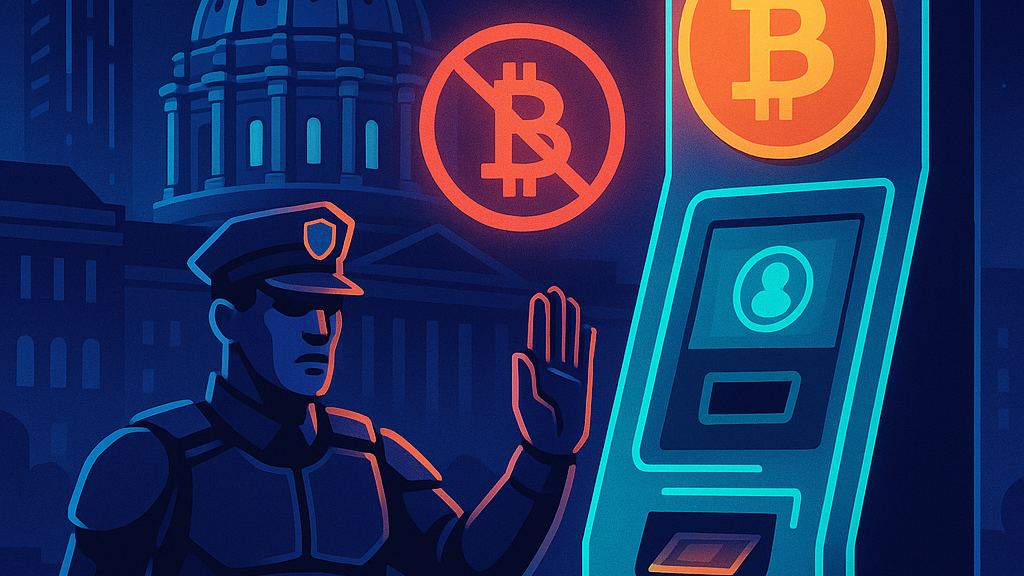
In Minnesota, a significant legislative proposal has emerged aiming to ban cryptocurrency kiosks across the state. The proposed bill, known as HF3642, has been introduced by Representative Erin Koegel, with the goal of combatting the alarming rise in scams, particularly those targeting vulnerable seniors.
The House Committee on Commerce Finance and Policy recently heard testimonies from law enforcement, indicating that scammers are exploiting these kiosks to swindle unsuspecting victims. Senior citizens have become primary targets, often manipulated into bypassing critical warnings designed to protect them.

One notable case discussed involved a Woodbury detective detailing the plight of a senior who, over the span of eight months, lost half of her income through multiple Bitcoin transactions at a kiosk. This individual, already facing housing instability, found herself in dire financial straits after falling victim to such fraudulent schemes.
Another instance highlighted by law enforcement involved a victim who was subjected to intense psychological manipulation, leading her to doubt the authenticity of responding officers. Scammers typically instruct their targets to input funds at kiosks using existing account numbers while deliberately ignoring state-mandated on-screen alerts.
The sheer scale of financial losses has prompted urgent action from lawmakers. For instance, a 78-year-old woman from St. Cloud lost a staggering $80,000 due to a scam linked to a cryptocurrency kiosk. Police in St. Cloud reported that the community was suffering significant losses, estimating that the total could potentially reach $2 million when accounting for unreported incidents.
Data from the Minnesota Department of Commerce reveals that the agency received 70 direct complaints last year, amounting to over $540,000 in losses. Unfortunately, only a fraction of these victims—48%—managed to recover funds, and the average refund represented just 16% of their overall losses.
Current laws aimed at consumer protection have proven inadequate, with recent legislation establishing a deposit cap for new users and requiring refunds for scam victims. However, dishonest actors have swiftly adapted, advising victims to seek kiosks across state lines in Wisconsin, effectively circumventing protections meant to safeguard them.
As the discussion surrounding this issue unfolds, industry representatives have voiced their dissent against an outright ban. The general counsel for CoinFlip, Larry Lipka, contended that kiosk operators should not bear the burden of criminal behaviors perpetrated by scammers. He proposed that implementing stricter regulations, such as ensuring full refunds for verified scam victims, would be a more effective approach.
Despite these assertions, critics maintain that existing regulatory measures are insufficient to deter fraud, given that they can be easily manipulated. The ongoing discussions in Minnesota’s legislature reflect a recognition of the urgent need for enhanced protections for consumers amidst a rapidly evolving landscape of cryptocurrency transactions.
With the future of crypto kiosks hanging in the balance, it is clear that the fight against scams targeting the most vulnerable continues to be a pressing issue for lawmakers. As deliberations progress, the fate of these kiosks may hold significant implications for consumer safety in the state.
Leave the reaction
Sarah Chen












Commentaries
Add your comment
Fill in necessary fields and publish