


Justin Sun Critiques Actions of World Liberty Financial
We have always followed the principles of transparency and clear information. Some of our content includes affiliate links, and we may earn a small commission through these partnerships. These partnerships do not influence our editorial independence or opinion. By using our site, you accept our privacy policy and terms and conditions.


A Senior Altcoin Analyst, Sarah combines on-chain data with a background in venture capital research. With a Master’s in Computer Science, she provides precise evaluations…
Cryptocurrency is a high-risk asset class, and investing carries significant risk, including the potential loss of some or all of your investment. The information on this website is provided for informational and educational purposes only and does not constitute financial, investment, or gambling advice. Cryptowinx does not endorse any specific exchange or gaming platform. For more details, please read our terms and full disclaimer.
Cryptowinx navigates the digital asset universe with a dynamic, forward-looking vision. Throughout our evolution, we have followed every market cycle, from vertical rises to corrections, always remaining a solid point of reference for our community. Our team is made up of industry experts and analysts who experience the blockchain ecosystem daily: we constantly monitor Bitcoin’s stability, study the expansion of the Ethereum ecosystem, and analyze the new frontiers of crypto casinos. We are committed to absolute editorial integrity, separating the signal from the noise through rigorous fact-checking and multi-perspective news analysis. In a landscape where innovations emerge in moments, our mission is to simplify complex concepts and offer transparency into what is established and what is still experimental.
Learn more Cryptowinx
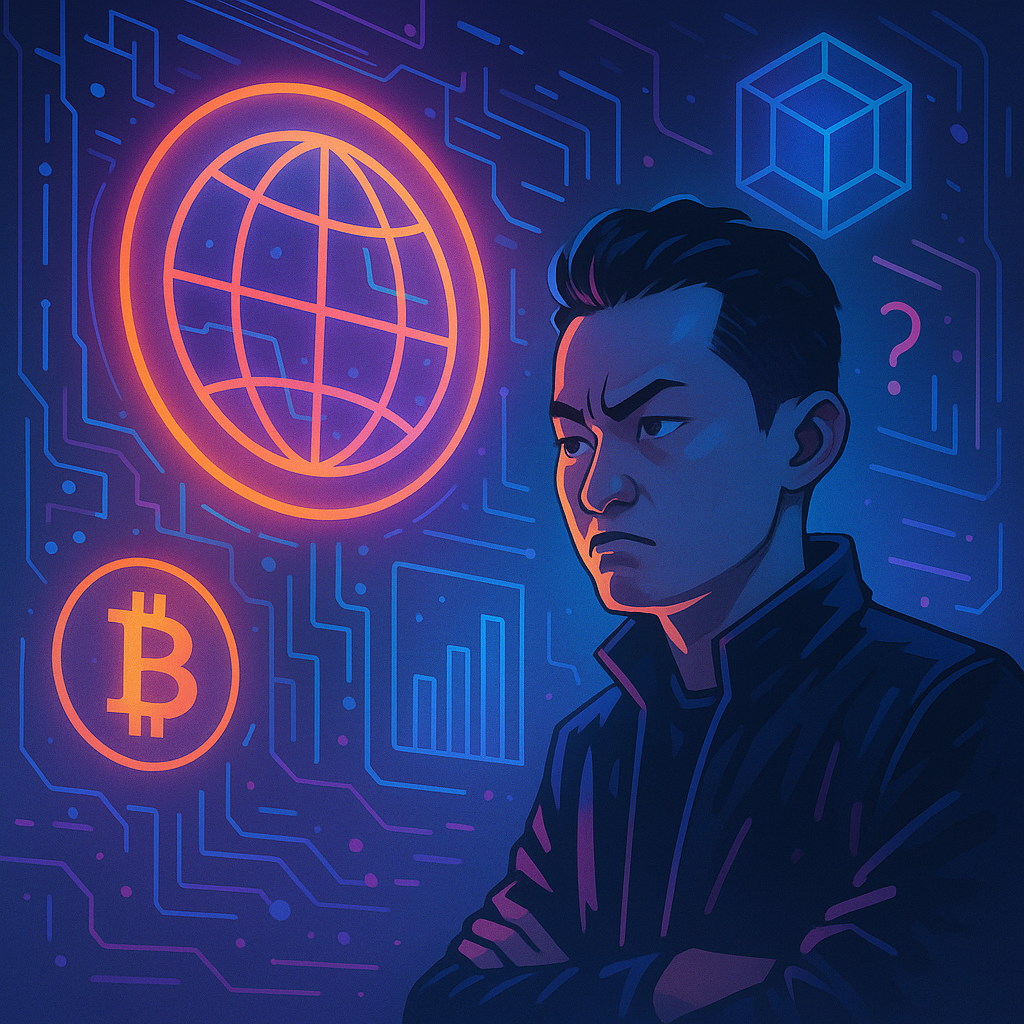
Recent events surrounding World Liberty Financial, a cryptocurrency initiative associated with former President Donald Trump, have stirred significant backlash, particularly from Justin Sun, the founder of the Tron project. In a detailed response, Sun labeled the measures taken by the project’s token holders as illegitimate and detrimental to the core principles of decentralization.
Sun’s criticism came on the heels of an alarming incident in September, when World Liberty Financial froze approximately 595 million WLFI tokens. He expressed his concerns over the opaque governance structure that purportedly allowed such actions without proper justification or transparency. Having initially invested $30 million into the project in 2024 and serving as an advisor, Sun felt compelled to speak out against what he believes is a breach of investor trust.

According to Sun, vital information about the project’s operational protocols, specifically a “backdoor blacklisting function” embedded within the smart contracts, was never disclosed to investors. This feature reportedly grants the issuers the power to freeze and restrict tokens at will, raising serious questions about the project’s governance integrity.
In the aftermath of the freezing of his assets, Sun highlighted that the total number of locked WLFI tokens reached nearly 2.4 billion, many of which were in a vesting period at the time. The platform defended its actions, claiming they were necessary to mitigate malicious activities that could compromise the community. However, Sun vehemently countered that the justification provided was insufficient and did not align with open and fair governance principles.
Sun articulated his concerns by stating that the alleged governance votes, which were cited to validate these decisions, lacked fairness and transparency. He indicated that crucial information was deliberately withheld and the participation of community members was limited, resulting in predetermined outcomes that favored a select few.

In light of these unfolding events, he urged the immediate unlocking of the seized tokens, emphasizing the need to restore investor confidence in the project. He asserted that the community’s trust had been severely undermined and stressed the importance of adhering to the principles that underpin the cryptocurrency space.
Sun’s public denouncement of World Liberty Financial serves as a cautionary tale regarding the governance and operational practices within cryptocurrency projects. As the landscape continues to evolve, the implications of these actions may have lasting effects on investor sentiment and the future resilience of the cryptocurrency market.
Leave the reaction
Sarah Chen



Commentaries
Add your comment
Fill in necessary fields and publish