


Iran’s Threats to U.S. Firms May Impact Crypto Infrastructure
We have always followed the principles of transparency and clear information. Some of our content includes affiliate links, and we may earn a small commission through these partnerships. These partnerships do not influence our editorial independence or opinion. By using our site, you accept our privacy policy and terms and conditions.


A crypto casino and gaming specialist, Raj brings a digital native’s perspective to industry trends and provably fair systems. Having reviewed over 150 platforms, he…
Cryptocurrency is a high-risk asset class, and investing carries significant risk, including the potential loss of some or all of your investment. The information on this website is provided for informational and educational purposes only and does not constitute financial, investment, or gambling advice. Cryptowinx does not endorse any specific exchange or gaming platform. For more details, please read our terms and full disclaimer.
Cryptowinx navigates the digital asset universe with a dynamic, forward-looking vision. Throughout our evolution, we have followed every market cycle, from vertical rises to corrections, always remaining a solid point of reference for our community. Our team is made up of industry experts and analysts who experience the blockchain ecosystem daily: we constantly monitor Bitcoin’s stability, study the expansion of the Ethereum ecosystem, and analyze the new frontiers of crypto casinos. We are committed to absolute editorial integrity, separating the signal from the noise through rigorous fact-checking and multi-perspective news analysis. In a landscape where innovations emerge in moments, our mission is to simplify complex concepts and offer transparency into what is established and what is still experimental.
Learn more Cryptowinx
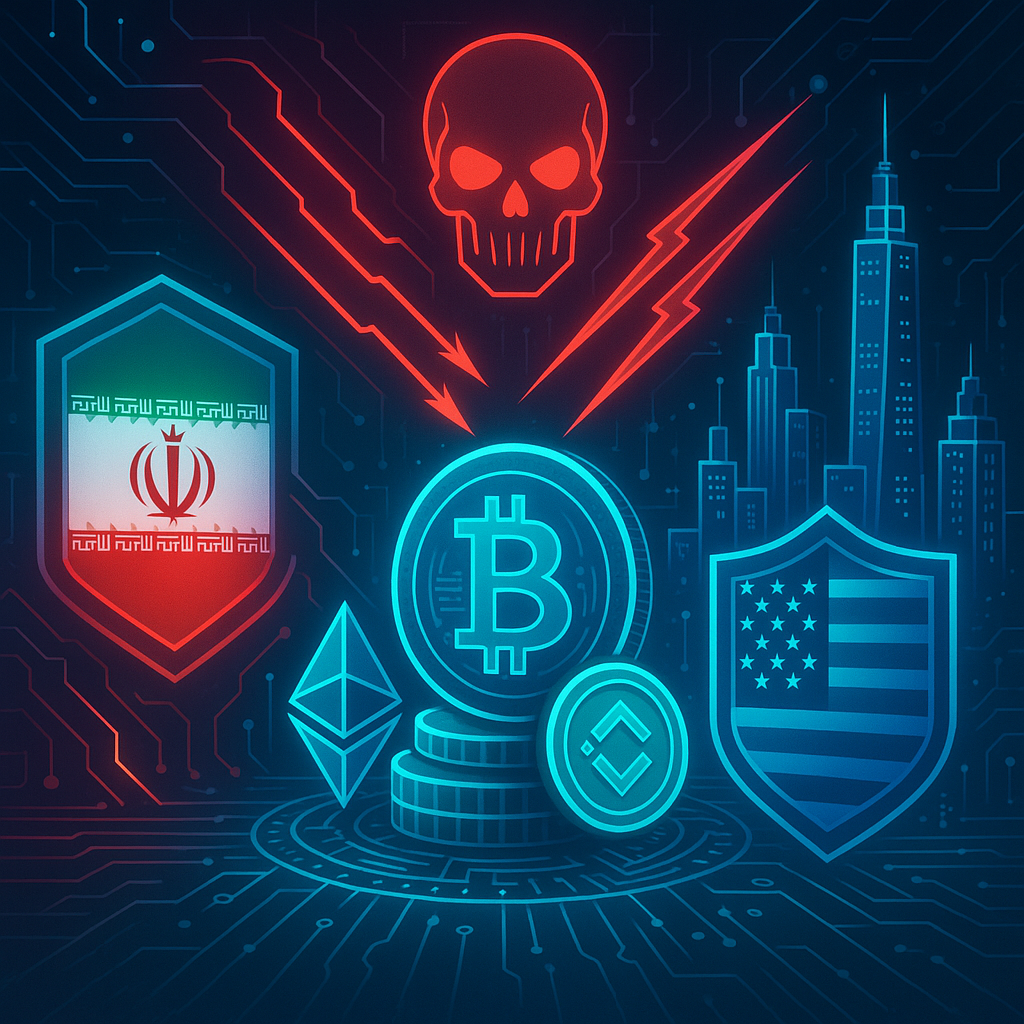
The recent warnings from Iran, targeting U.S. multinational companies in the Middle East, could have significant repercussions for the cryptocurrency sector.
According to reports, the Iranian Revolutionary Guard Corps (IRGC) announced its intention to consider various U.S. firms as “legitimate targets” beginning April 1. Among the companies identified were major players such as Microsoft, Google, Apple, Intel, IBM, Tesla, and Boeing, as well as financial giants like JPMorgan Chase and Oracle.

These threats are noteworthy particularly because many of the targeted firms play crucial roles in the infrastructure that supports the cryptocurrency ecosystem. This includes areas like cloud computing and digital payment solutions, which the crypto industry relies on extensively.
As geopolitical tensions rise, the implications for the cryptocurrency sector become evident. The relationship between U.S. companies and the crypto market is no longer confined to direct involvement in digital assets. Instead, the influence of large technology firms and banks means that threats directed at them can extend into the crypto space more rapidly than investors might anticipate.
In recent developments, drone strikes have already compromised cloud services in the Gulf region, highlighting the vulnerability of infrastructure in the current conflict. These incidents illustrate how quickly geopolitical tensions can disrupt the technical systems integral to businesses, including those associated with digital currencies.
Companies like Google have extensive connections to the crypto market, especially through its cloud services, which provide infrastructure for blockchain applications. Google’s focus on blockchain technology is evidenced by its recent launch of the Google Cloud Universal Ledger, designed to facilitate quicker payments and transactions across borders.
Similarly, JPMorgan Chase has enhanced its involvement in the cryptocurrency landscape through its digital-asset service platform, Kinexys, which has processed trillions of dollars in transactions. The banking giant’s commitment to expanding its blockchain initiatives underscores the growing integration of cryptocurrencies into mainstream financial frameworks.

Tesla stands out as another significant firm due to its substantial cryptocurrency holdings; it reportedly owns over 11,500 Bitcoin, making it one of the largest public companies with direct exposure to digital assets.
Beyond these examples, other companies that were named, such as NVIDIA and Microsoft, while not solely crypto-focused, have notable interactions with the industry. NVIDIA once thrived in the crypto mining sphere, and although its current focus is on AI and data centers, its past remains relevant. Microsoft has explored enterprise blockchain through its Azure platform and has accepted Bitcoin payments in limited scenarios.
The overarching narrative reveals that the current landscape of cryptocurrency risk is increasingly tied to established corporations, indicating a new dimension to the industry’s exposure. As digital assets become more intertwined with big tech and banking sectors, geopolitical tensions targeting these companies can quickly impact the broader cryptocurrency market.
The critical question now is whether these threats will lead to tangible consequences for the operational layers that support cryptocurrencies. Should such incidents escalate, the effects may resonate through digital payments, cloud service reliability, and market sentiment before directly influencing token values.
Leave the reaction
Raj Patel










Commentaries
Add your comment
Fill in necessary fields and publish