


Iran’s Shift to Bitcoin Over Stablecoins and Other Currencies
We have always followed the principles of transparency and clear information. Some of our content includes affiliate links, and we may earn a small commission through these partnerships. These partnerships do not influence our editorial independence or opinion. By using our site, you accept our privacy policy and terms and conditions.


James Mitchell combines investment banking with cryptocurrency journalism to analyze the institutional adoption of digital assets. Specializing in ETFs and regulation, he translates complex developments…
Cryptocurrency is a high-risk asset class, and investing carries significant risk, including the potential loss of some or all of your investment. The information on this website is provided for informational and educational purposes only and does not constitute financial, investment, or gambling advice. Cryptowinx does not endorse any specific exchange or gaming platform. For more details, please read our terms and full disclaimer.
Cryptowinx navigates the digital asset universe with a dynamic, forward-looking vision. Throughout our evolution, we have followed every market cycle, from vertical rises to corrections, always remaining a solid point of reference for our community. Our team is made up of industry experts and analysts who experience the blockchain ecosystem daily: we constantly monitor Bitcoin’s stability, study the expansion of the Ethereum ecosystem, and analyze the new frontiers of crypto casinos. We are committed to absolute editorial integrity, separating the signal from the noise through rigorous fact-checking and multi-perspective news analysis. In a landscape where innovations emerge in moments, our mission is to simplify complex concepts and offer transparency into what is established and what is still experimental.
Learn more Cryptowinx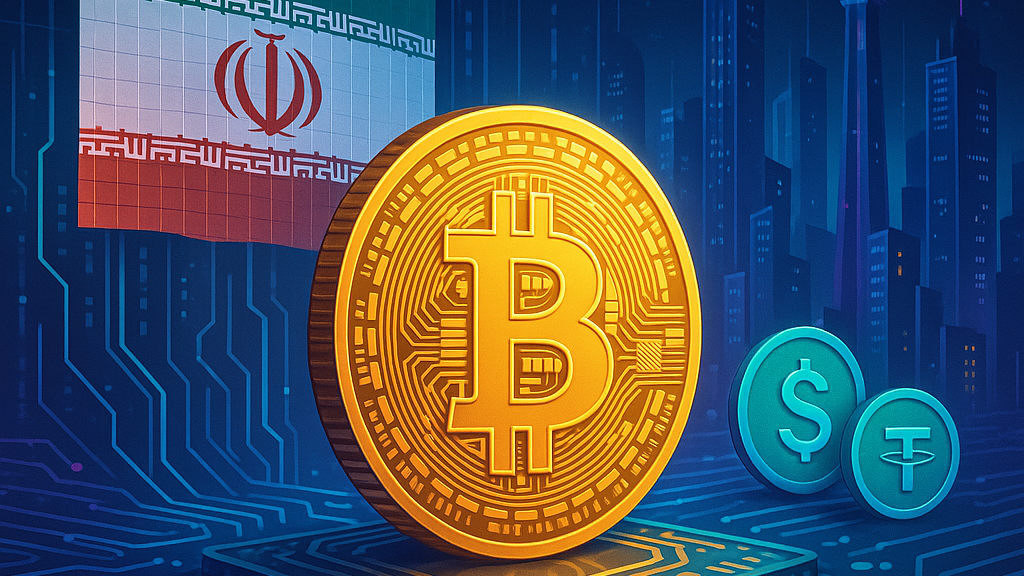
Recent developments indicate that Iran is increasingly leaning towards Bitcoin instead of stablecoins, various cryptocurrencies—including privacy-focused options—and even traditional currencies like the Yuan. This shift raises many questions about the motivations behind such a strategic choice.
Understanding Iran’s preference involves delving into the complexities of its economic and financial landscape. The country is navigating numerous economic sanctions, which heavily impact its ability to engage with the global market. In this context, Bitcoin offers a decentralized alternative that does not rely on conventional banking systems.

Officials within Iran have hinted at Bitcoin’s potential to circumvent these sanctions. By utilizing Bitcoin, the nation can engage in international trade more effectively, as this cryptocurrency operates outside the purview of centralized financial institutions. As a result, it provides an avenue for the transfer of value that might otherwise be restricted.
Stablecoins, often pegged to fiat currencies, do not provide the same level of autonomy. Iran’s decision to favor Bitcoin over these digital assets may stem from a desire to adopt a currency that aligns more closely with its political aims. Additionally, Bitcoin’s volatility could be seen as a double-edged sword; while it poses risks, it also offers opportunities for significant gains, which might be appealing to a nation seeking to bolster its economic standing.
Moreover, the Iranian government seems to be less inclined to utilize privacy-centric cryptocurrencies such as ZCash or Monero. While these alternatives do offer anonymity, their use could draw scrutiny and further sanctions from international bodies. Consequently, Bitcoin’s more public nature might present a calculated risk that Iran is willing to take.

In summary, Iran’s embrace of Bitcoin over stablecoins and other currencies reflects its quest for economic independence amid sanctions. The strategic choice appears to be driven by a desire for autonomy and the ability to engage in international trade without conventional banking restrictions. This significant pivot underscores the evolving role of cryptocurrencies in global finance, particularly for nations facing economic isolation.
Leave the reaction
James Mitchell









Commentaries
Add your comment
Fill in necessary fields and publish