


Iran’s Bitcoin Mining Activity Dips Significantly Amid Turmoil
We have always followed the principles of transparency and clear information. Some of our content includes affiliate links, and we may earn a small commission through these partnerships. These partnerships do not influence our editorial independence or opinion. By using our site, you accept our privacy policy and terms and conditions.


A Web3 and NFT expert, Elena focuses on the evolution of digital art and blockchain gaming for CryptoWinx. She combines technical expertise with a deep…
Cryptocurrency is a high-risk asset class, and investing carries significant risk, including the potential loss of some or all of your investment. The information on this website is provided for informational and educational purposes only and does not constitute financial, investment, or gambling advice. Cryptowinx does not endorse any specific exchange or gaming platform. For more details, please read our terms and full disclaimer.
Cryptowinx navigates the digital asset universe with a dynamic, forward-looking vision. Throughout our evolution, we have followed every market cycle, from vertical rises to corrections, always remaining a solid point of reference for our community. Our team is made up of industry experts and analysts who experience the blockchain ecosystem daily: we constantly monitor Bitcoin’s stability, study the expansion of the Ethereum ecosystem, and analyze the new frontiers of crypto casinos. We are committed to absolute editorial integrity, separating the signal from the noise through rigorous fact-checking and multi-perspective news analysis. In a landscape where innovations emerge in moments, our mission is to simplify complex concepts and offer transparency into what is established and what is still experimental.
Learn more Cryptowinx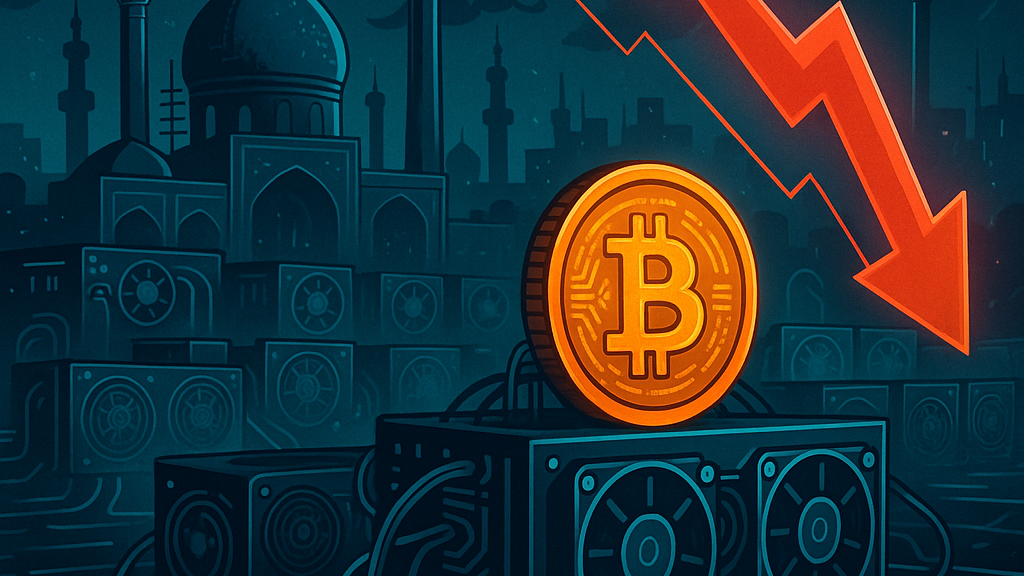
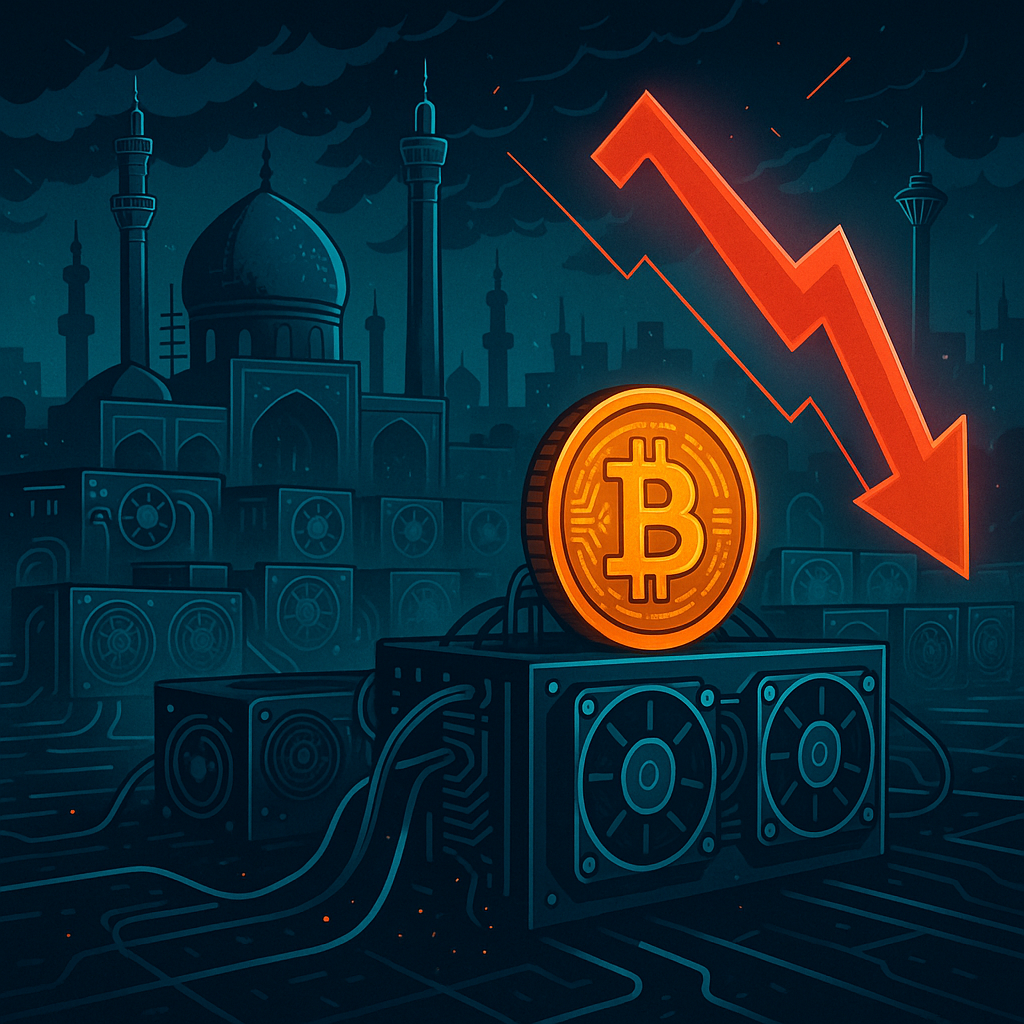
In recent months, Iran has experienced a substantial decrease in its Bitcoin hashrate, which plummeted by 77% in the last quarter. This significant drop coincided with ongoing regional tensions, although some experts suggest the decline is more closely linked to Bitcoin’s price fluctuations rather than direct impacts from conflict.
According to Ian Philpot, the marketing director at Luxor Technology, Iran’s hashrate fell by approximately 7 exahashes per second (EH/s), resulting in a total of around 2 EH/s currently. This decline was outlined in a report published on Monday and highlights the vulnerabilities in Iran’s mining capabilities amid a challenging economic landscape.

Philpot remarked that while the regional hostilities could have implications for Iran, its effects appear localized. Remarkably, neighboring countries like the United Arab Emirates and Oman have not seen similar disruptions in their hashrate. He noted that the global hashrate remains stable at around 1,000 EH/s, largely due to the capability of no single region to significantly threaten the continuity of the Bitcoin network.
The conflict escalated in February following military actions between the US, Israel, and Iran, leading to a series of retaliatory strikes. Despite these developments, a recent ceasefire agreement was reached, signaling a potential easing of tensions. Iran has around 427,000 active Bitcoin mining rigs that are vital to the network.
The overall global Bitcoin hashrate has also seen a minor decline, dropping from 1,066 EH/s in the first quarter to approximately 1,004 EH/s in the second quarter. Philpot attributes this decrease to the slump in Bitcoin prices, which have affected mining profitability. Miners are rewarded with Bitcoin for their efforts, but as prices fall, many find that their rewards do not sufficiently cover operational costs.
Bitcoin’s value has decreased by more than 45% from its record high of $126,000 in October, resulting in hash prices reaching unprecedented lows. Philpot underscored that the primary factor influencing current shifts in hashrate distribution is mining profitability, rather than energy costs or regulatory changes.

He pointed out that many older generation mining rigs have become financially unviable, leading to their shutdown. This has pushed an estimated 252 EH/s of capacity offline, with much of the outdated technology being retired. This trend appears cyclical, as mining profitability significantly impacts the deployment and retirement of mining machines.
On a broader scale, the top three countries dominate the global Bitcoin hashrate: the United States leads with over 37%, followed by Russia at about 17%, and China holding close to 12%. While the overall hashrate from these leading nations remains stable, Philpot indicated a shift in composition, with older equipment being phased out and newer hardware being selectively introduced in areas where profitability can be sustained.
In conclusion, the situation in Iran reflects broader trends impacting Bitcoin mining globally, with profitability and market conditions driving changes in hashrate distribution. The forthcoming months will likely reveal whether Iran can recover its mining strength amidst ongoing challenges.
Leave the reaction
Elena Rodriguez











Commentaries
Add your comment
Fill in necessary fields and publish