


Iran Conflict Looms: Market Dynamics Shift as Assets Rally
We have always followed the principles of transparency and clear information. Some of our content includes affiliate links, and we may earn a small commission through these partnerships. These partnerships do not influence our editorial independence or opinion. By using our site, you accept our privacy policy and terms and conditions.


A crypto casino and gaming specialist, Raj brings a digital native’s perspective to industry trends and provably fair systems. Having reviewed over 150 platforms, he…


A SEO and DeFi expert with six years of experience, Luca leads CryptoWinx’s Italian editorial operations. He specializes in MiCA regulations and blockchain strategies, making…
Cryptocurrency is a high-risk asset class, and investing carries significant risk, including the potential loss of some or all of your investment. The information on this website is provided for informational and educational purposes only and does not constitute financial, investment, or gambling advice. Cryptowinx does not endorse any specific exchange or gaming platform. For more details, please read our terms and full disclaimer.
Cryptowinx navigates the digital asset universe with a dynamic, forward-looking vision. Throughout our evolution, we have followed every market cycle, from vertical rises to corrections, always remaining a solid point of reference for our community. Our team is made up of industry experts and analysts who experience the blockchain ecosystem daily: we constantly monitor Bitcoin’s stability, study the expansion of the Ethereum ecosystem, and analyze the new frontiers of crypto casinos. We are committed to absolute editorial integrity, separating the signal from the noise through rigorous fact-checking and multi-perspective news analysis. In a landscape where innovations emerge in moments, our mission is to simplify complex concepts and offer transparency into what is established and what is still experimental.
Learn more Cryptowinx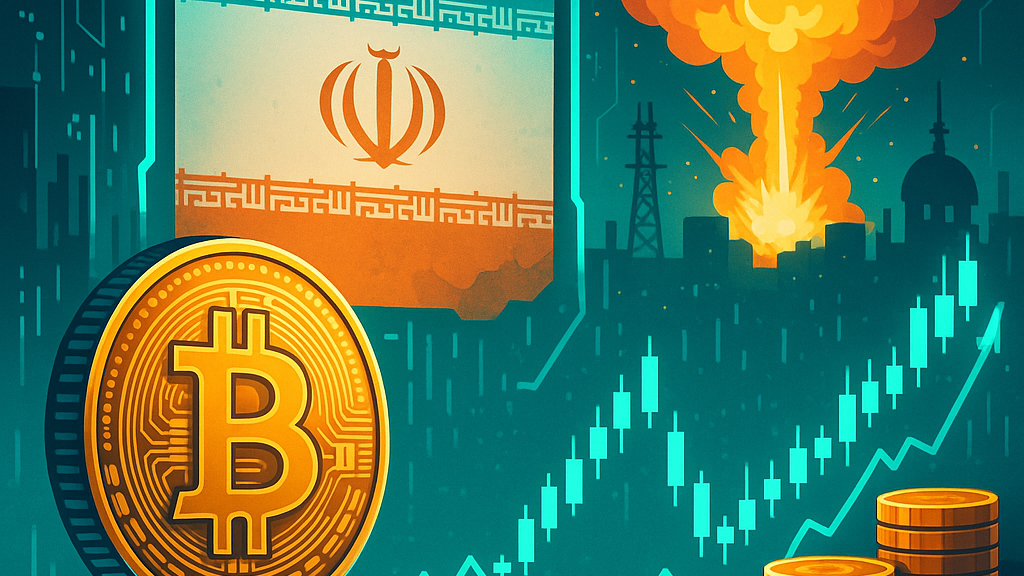
Amid escalating tensions in the Middle East, financial markets are experiencing significant upheaval. Reports indicate that the United States may be edging closer to a direct military engagement with Iran, prompting a notable shift towards safer investment options.
Gold and silver prices are rising sharply, oil is experiencing an uptick due to supply concerns, while Bitcoin is facing downward pressure as investors pivot away from more volatile assets.

Concerns about a potential military campaign against Iran have intensified, with recent intelligence suggesting any strike could evolve into a prolonged conflict lasting weeks. The prospect of sustained volatility in commodities, stocks, and cryptocurrencies is increasing.
According to recent analyses, a substantial military confrontation might be imminent, with Israel reportedly readying itself for possible engagement in a situation described as a “war within days.” This would mark a significant escalation involving a more extensive U.S.-Israeli offensive compared to prior operations.
Current reports reveal that U.S. forces in the region now comprise two aircraft carriers, a dozen warships, hundreds of fighter jets, and multiple air defense units, alongside extensive cargo flights delivering weapons and ammunition.
In response to these developments, oil prices have surged past $64 per barrel. Analysts note that as geopolitical risks escalate, commodities are significantly benefiting from the increased uncertainty.
Market strategists have pointed out that as fears regarding a U.S. military strike on Iran grow, precious metals are seeing substantial gains, positioning them as primary beneficiaries amid the rising tensions.
Oil, gold, and silver have all posted notable increases, reflecting this heightened risk environment. Investment experts have commented that the demand for precious metals has surged, with gold trading above $5,000 and silver following closely behind.
The market’s reaction is also linked to potential disruptions in the Strait of Hormuz, a critical global oil passage that carries about one-fifth of worldwide supply. Just the perception of risk associated with this route can result in volatile price fluctuations.
While traditional safe havens are seeing a rally, the cryptocurrency market is experiencing a downturn. Bitcoin has dropped below the vital support level of $67,014, trading at approximately $66,384. This trend illustrates a broader shift in investor sentiment towards a more cautious approach.
Histories of geopolitical tensions show that capital tends to flow towards commodities and cash equivalents before moving back to riskier assets like cryptocurrencies.
Despite the military build-up, some analysts express caution regarding the likelihood of a full-scale war. Concerns have been raised about the complexities of a prolonged conflict, particularly given Iran’s advanced military capabilities and potential domestic backlash within the U.S. against military intervention.
Furthermore, there are suggestions that China’s support for Iran may complicate the situation, with reports indicating that Beijing could be providing Tehran with critical intelligence and navigation assistance. This development might alter the strategic landscape in the region.
As ongoing peace talks show little progress, markets brace for an extended period of uncertainty. Traders are starting to account for the possibility that any military action could be more substantial and disruptive than in recent history.
This situation reflects the current dynamics where commodities are signaling fear, cryptocurrencies signal caution, and global investors remain vigilant about diplomatic progress.
Ultimately, whether diplomatic efforts yield fruit or tensions escalate further will have significant implications for oil and gold prices, alongside broader impacts on global financial markets.
Leave the reaction
Raj Patel









Commentaries
Add your comment
Fill in necessary fields and publish