


FTC Investigates Payment Giants Amid Financial Access Issues
We have always followed the principles of transparency and clear information. Some of our content includes affiliate links, and we may earn a small commission through these partnerships. These partnerships do not influence our editorial independence or opinion. By using our site, you accept our privacy policy and terms and conditions.


A Senior Altcoin Analyst, Sarah combines on-chain data with a background in venture capital research. With a Master’s in Computer Science, she provides precise evaluations…
Cryptocurrency is a high-risk asset class, and investing carries significant risk, including the potential loss of some or all of your investment. The information on this website is provided for informational and educational purposes only and does not constitute financial, investment, or gambling advice. Cryptowinx does not endorse any specific exchange or gaming platform. For more details, please read our terms and full disclaimer.
Cryptowinx navigates the digital asset universe with a dynamic, forward-looking vision. Throughout our evolution, we have followed every market cycle, from vertical rises to corrections, always remaining a solid point of reference for our community. Our team is made up of industry experts and analysts who experience the blockchain ecosystem daily: we constantly monitor Bitcoin’s stability, study the expansion of the Ethereum ecosystem, and analyze the new frontiers of crypto casinos. We are committed to absolute editorial integrity, separating the signal from the noise through rigorous fact-checking and multi-perspective news analysis. In a landscape where innovations emerge in moments, our mission is to simplify complex concepts and offer transparency into what is established and what is still experimental.
Learn more Cryptowinx
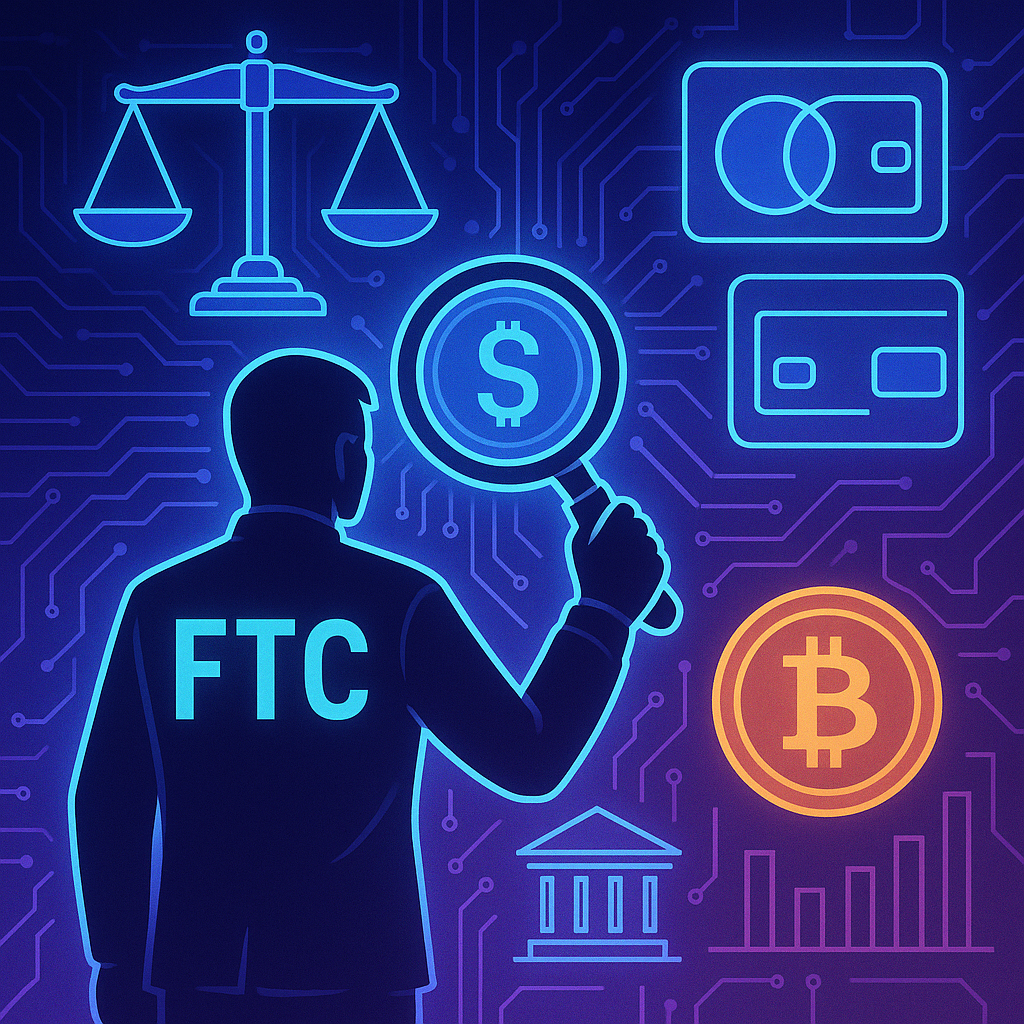
In a significant move, federal regulators are increasingly focusing on major payment processors as they address growing concerns surrounding accessibility to financial services. This scrutiny particularly targets industry leaders such as Visa, Mastercard, PayPal, and Stripe, amidst worries about their practices regarding account management and customer access.
The Federal Trade Commission (FTC) is signaling a potential commitment to enforcement actions against these companies, which may have implemented account restrictions that contradict consumer expectations and their publicly stated policies. This heightened examination comes at a time when debates over ‘debanking’—the practice of denying individuals access to banking services—are intensifying in the United States.

Regulatory officials are alarmed by how these payment giants manage customer accounts and the implications of their policies on financial inclusion. They have expressed concerns that existing practices could limit access for consumers, particularly those from underserved communities. The FTC’s involvement amplifies the urgency of the situation, challenging the operational integrity of these major players in the financial ecosystem.
The implications of these regulatory actions could be far-reaching, as they not only affect the companies in question but also the broader landscape of consumer rights and access to essential financial services. As the FTC continues to investigate, the potential for enforcement escalates, raising questions about the responsibility of payment processors to adhere to fair practices.
In this evolving scenario, industry stakeholders are urged to reassess their policies to ensure alignment with the expectations of both regulators and consumers. With the emphasis on accountability and transparency, the outcome of the FTC’s investigations could redefine the operational standards for payment processors in America.

The ongoing discourse highlights the necessity for companies like Visa, Mastercard, PayPal, and Stripe to prioritize consumer access and engagement. As regulations tighten, the pressure mounts for these businesses to foster an environment conducive to equitable financial participation for all.
Leave the reaction
Sarah Chen











Commentaries
Add your comment
Fill in necessary fields and publish