


CZ Addresses Quantum Computing’s Impact on Cryptocurrency
We have always followed the principles of transparency and clear information. Some of our content includes affiliate links, and we may earn a small commission through these partnerships. These partnerships do not influence our editorial independence or opinion. By using our site, you accept our privacy policy and terms and conditions.


A Web3 and NFT expert, Elena focuses on the evolution of digital art and blockchain gaming for CryptoWinx. She combines technical expertise with a deep…
Cryptocurrency is a high-risk asset class, and investing carries significant risk, including the potential loss of some or all of your investment. The information on this website is provided for informational and educational purposes only and does not constitute financial, investment, or gambling advice. Cryptowinx does not endorse any specific exchange or gaming platform. For more details, please read our terms and full disclaimer.
Cryptowinx navigates the digital asset universe with a dynamic, forward-looking vision. Throughout our evolution, we have followed every market cycle, from vertical rises to corrections, always remaining a solid point of reference for our community. Our team is made up of industry experts and analysts who experience the blockchain ecosystem daily: we constantly monitor Bitcoin’s stability, study the expansion of the Ethereum ecosystem, and analyze the new frontiers of crypto casinos. We are committed to absolute editorial integrity, separating the signal from the noise through rigorous fact-checking and multi-perspective news analysis. In a landscape where innovations emerge in moments, our mission is to simplify complex concepts and offer transparency into what is established and what is still experimental.
Learn more Cryptowinx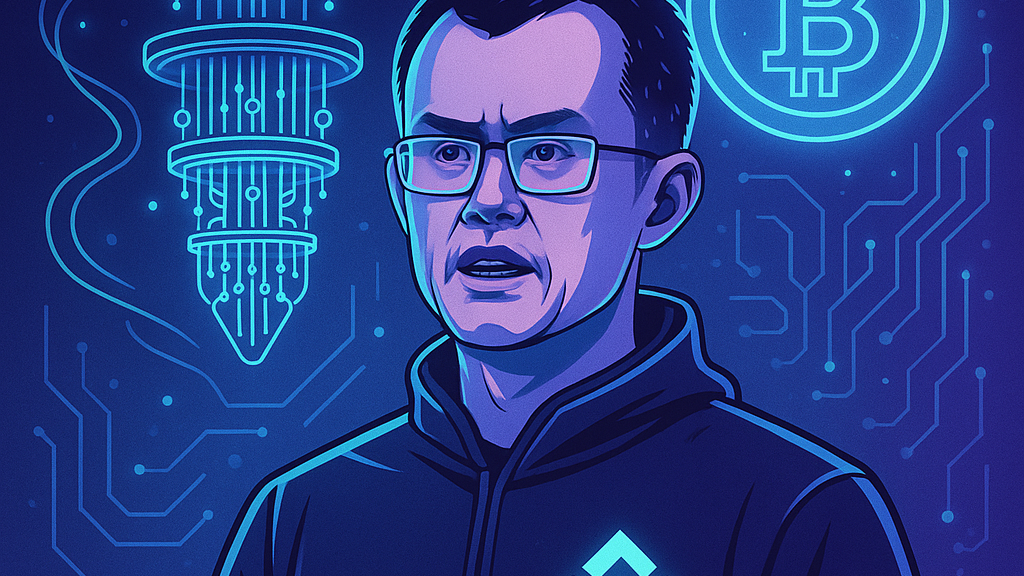
Changpeng Zhao, the co-founder of Binance, has shared insights on the implications of quantum computing for the cryptocurrency landscape. Through recent statements, he has aimed to alleviate the concerns surrounding the potential threats that quantum advancements pose to digital currencies.
Zhao reassured the crypto community, asserting that quantum computing does not spell doom for the sector. He took to social media after observing a surge of anxiety among users regarding quantum technologies. In his view, the solution lies in upgrading existing encryption methods rather than succumbing to panic.

Recent research from Google’s Quantum AI team has stirred unease among cryptocurrency enthusiasts. The findings suggested a remarkable capability of quantum computers to breach Bitcoin’s encryption, estimating that private keys could be compromised in as little as nine minutes. Given that Bitcoin’s average transaction block time is ten minutes, this revelation has raised alarms about the security of digital assets.
The implications of such vulnerabilities highlight a pressing issue: the cryptocurrency industry must confront the reality of quantum computing’s rapid development. If malicious actors were to gain access to sufficiently advanced quantum machines, they could potentially exploit weaknesses in Bitcoin’s security measures before the network processes transactions.
In light of this, Zhao advocates for the implementation of post-quantum cryptography. He maintains that transitioning to quantum-resilient algorithms is within reach but acknowledges that logistical hurdles make it a complex endeavor. Coordination among decentralized networks poses challenges, as disagreements on which algorithms to adopt could lead to community fragmentation, possibly resulting in forks.
Zhao also raised concerns about the risks associated with rolling out new code during the transition, which could inadvertently introduce new vulnerabilities. Users managing their own assets would face the additional task of migrating funds to updated wallets, adding another layer of complexity to the process.
Among Zhao’s noteworthy points was the fate of Satoshi Nakamoto’s long-dormant Bitcoin holdings. He proposed that if these addresses remain inactive for a defined period in the face of quantum threats, the community could contemplate measures like locking or destroying those wallets to thwart potential hacks.
As Zhao concluded his remarks, he expressed optimism about the resilience of the crypto ecosystem in the wake of quantum developments. He highlighted that strengthening encryption is generally more manageable than breaking it, suggesting that the evolution of computing power could ultimately enhance the entire industry.
In summary, while quantum computing poses legitimate challenges to cryptocurrencies, industry leaders like Zhao believe that strategic upgrades and coordinated efforts can safeguard digital assets against these future threats.
Leave the reaction
Elena Rodriguez










Commentaries
Add your comment
Fill in necessary fields and publish