


Bitwise CIO Divulges Insights on L1 Networks and Prediction Markets
We have always followed the principles of transparency and clear information. Some of our content includes affiliate links, and we may earn a small commission through these partnerships. These partnerships do not influence our editorial independence or opinion. By using our site, you accept our privacy policy and terms and conditions.


James Mitchell combines investment banking with cryptocurrency journalism to analyze the institutional adoption of digital assets. Specializing in ETFs and regulation, he translates complex developments…
Cryptocurrency is a high-risk asset class, and investing carries significant risk, including the potential loss of some or all of your investment. The information on this website is provided for informational and educational purposes only and does not constitute financial, investment, or gambling advice. Cryptowinx does not endorse any specific exchange or gaming platform. For more details, please read our terms and full disclaimer.
Cryptowinx navigates the digital asset universe with a dynamic, forward-looking vision. Throughout our evolution, we have followed every market cycle, from vertical rises to corrections, always remaining a solid point of reference for our community. Our team is made up of industry experts and analysts who experience the blockchain ecosystem daily: we constantly monitor Bitcoin’s stability, study the expansion of the Ethereum ecosystem, and analyze the new frontiers of crypto casinos. We are committed to absolute editorial integrity, separating the signal from the noise through rigorous fact-checking and multi-perspective news analysis. In a landscape where innovations emerge in moments, our mission is to simplify complex concepts and offer transparency into what is established and what is still experimental.
Learn more Cryptowinx
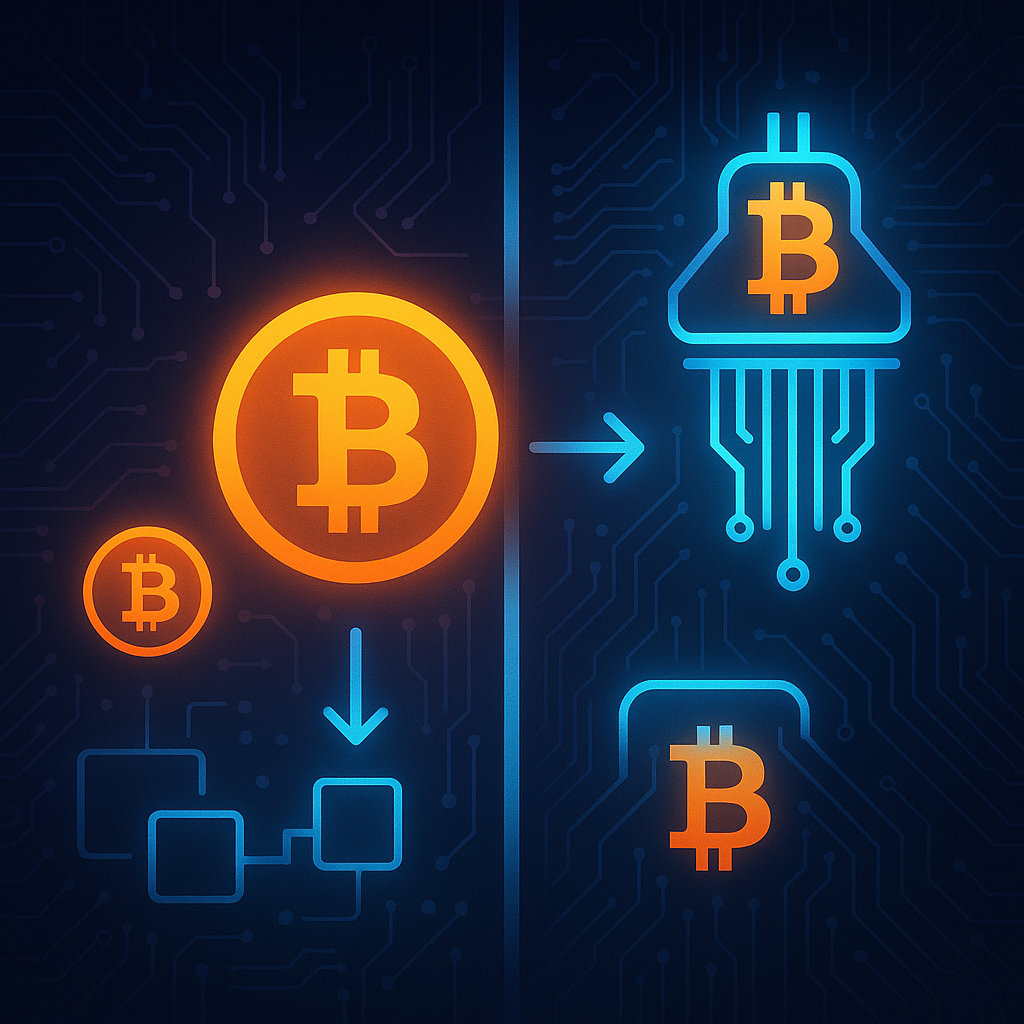
Bitwise Chief Investment Officer Matt Hougan has challenged the notion that Layer 1 (L1) blockspace can be viewed as a mere commodity. He asserts that institutional actions tell a more nuanced story, contrasting the prevalent belief in the crypto community.
Hougan’s criticism centers on the idea that if L1 blockspace were truly commoditized, investment and developments would be spread evenly across various blockchain networks. However, he notes that significant institutional activities are concentrated predominantly on a select few chains like Ethereum and Solana.

He pointed out the lack of interest in developing on the less prominent L1s, stating that the overwhelming focus on leading platforms highlights an uneven playing field in the blockchain space.
Ethereum and Solana continue to lead in areas such as user engagement, liquidity, and ongoing developer projects, even as newer contenders strive to attract users with competitive fees and improved performance. To explain the current low-fee climate, Hougan noted that these top-tier L1s have created more capacity than what the market currently demands.
Despite the favorable conditions at present, Hougan warned that this balance may not be sustainable. As he posed, the critical question remains what will unfold when demand surges alongside the growth of stablecoins, tokenization, and decentralized finance (DeFi) into the trillions.
He cautioned that an expansion of blockchain-based financial systems to accommodate vast sums in tokenized assets could lead to a swift adjustment in today’s surplus of network capacity, which might significantly alter the economic dynamics of leading platforms.
In addition to infrastructure, Hougan also addressed the contentious issue of insider trading in crypto-based prediction markets. He argued that concerns regarding insider trading in these markets are misguided. According to him, prediction markets serve as a modern extension of Regulation Fair Disclosure (Reg FD), leveling the playing field for all investors.
Reg FD was instituted to prevent selective sharing of material information with privileged investors. Hougan believes that prediction markets enhance this framework by openly assigning probabilities to significant events, thus democratizing information access.

He reflected on how historically, hedge funds gained an edge during important legislative discussions by employing lobbyists and consultants to secure insider knowledge. Now, everyday investors can monitor real-time probabilities on platforms such as Polymarket, including markets related to potential legislation like the Clarity Act.
Hougan suggested that the insights available in liquid markets may surpass those offered by traditional lobbying practices, creating a more equitable environment for investors.
While he acknowledged the necessity for stringent oversight against insider trading within prediction markets, he maintained that these platforms have a largely positive and egalitarian influence on the market.
Consequently, two primary debates arise from his observations: whether L1 networks are truly commoditized and if prediction markets provide unfair advantages. Both discussions fundamentally touch on the distribution of power within financial systems. According to Matt Hougan, the concentration of institutional investment in leading chains underscores economic realities rather than mere commoditization, while open prediction markets signify a progressive shift towards reducing information disparity.
Leave the reaction
James Mitchell










Commentaries
Add your comment
Fill in necessary fields and publish