


Bitcoin’s Surge: The Hidden Truth Behind Altcoin Losses
We have always followed the principles of transparency and clear information. Some of our content includes affiliate links, and we may earn a small commission through these partnerships. These partnerships do not influence our editorial independence or opinion. By using our site, you accept our privacy policy and terms and conditions.


A crypto casino and gaming specialist, Raj brings a digital native’s perspective to industry trends and provably fair systems. Having reviewed over 150 platforms, he…
Cryptocurrency is a high-risk asset class, and investing carries significant risk, including the potential loss of some or all of your investment. The information on this website is provided for informational and educational purposes only and does not constitute financial, investment, or gambling advice. Cryptowinx does not endorse any specific exchange or gaming platform. For more details, please read our terms and full disclaimer.
Cryptowinx navigates the digital asset universe with a dynamic, forward-looking vision. Throughout our evolution, we have followed every market cycle, from vertical rises to corrections, always remaining a solid point of reference for our community. Our team is made up of industry experts and analysts who experience the blockchain ecosystem daily: we constantly monitor Bitcoin’s stability, study the expansion of the Ethereum ecosystem, and analyze the new frontiers of crypto casinos. We are committed to absolute editorial integrity, separating the signal from the noise through rigorous fact-checking and multi-perspective news analysis. In a landscape where innovations emerge in moments, our mission is to simplify complex concepts and offer transparency into what is established and what is still experimental.
Learn more Cryptowinx
Amidst a turbulent period in the crypto market, Bitcoin has notably outperformed altcoins, with significant implications for investors. Analyst Willy Woo has shared insights into this disparity, shedding light on how the fallout from FTX’s collapse has shaped market dynamics.
Woo outlined in a recent post on X that the 2022 collapse of the FTX exchange triggered a series of events detrimental to altcoin investors. Following the disaster, Bitcoin’s value skyrocketed by over 400%, reaching approximately $88,000 by late 2025. In stark contrast, altcoins saw little to no movement.

The pivotal moment began when FTX filed for bankruptcy and administrators were tasked with liquidating assets, which included vast amounts of locked Solana tokens. Woo highlighted the process as one that not only affected Solana but had broader implications across the crypto ecosystem.
As bankruptcy procedures unfolded, administrators opted to sell these locked SOL tokens through off-chain agreements. This approach allowed them to promise future deliveries in exchange for immediate cash, a tactic quickly seized upon by hedge funds eager to profit.
These hedge funds acquired SOL at discounted rates—often over 60%—and subsequently shorted SOL futures to mitigate risk. This maneuver enabled them to create substantial returns, combining staking yields, basis yields, and the initial token discount. Consequently, while hedge funds positioned themselves advantageously, retail investors unknowingly absorbed losses, buying in at inflated prices during the market’s high points.
Woo emphasized that this phenomenon was not isolated to Solana but appeared to be a systemic issue affecting many projects within the crypto landscape. It became commonplace for backers and foundations to sell locked tokens that were technically still unavailable to the market, thereby offloading risks onto everyday investors before any unlocks were executed.
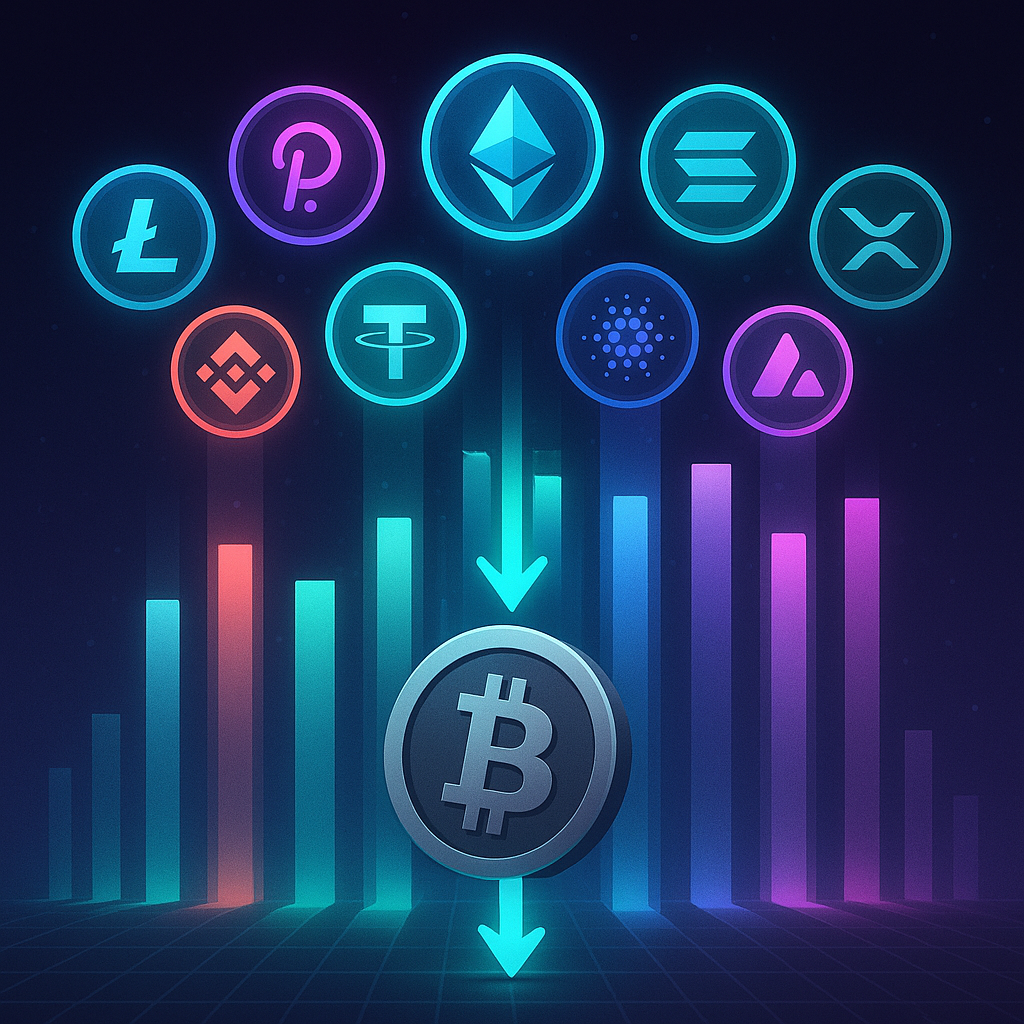
While Bitcoin’s dominance surged, fueling investor interest, altcoins struggled under the weight of hidden sell pressure and systemic vulnerabilities. During this tumultuous timeframe, Bitcoin’s market dominance climbed significantly, sitting between 55% and 60%. As Bitcoin’s price soared, altcoins remained stagnant, leading many investors to reevaluate their strategies.
Woo’s analysis brought forth a critical conclusion: financial gains from this cycle predominantly favored market-neutral hedge funds that understood the intricacies of locked token trading. This left many retail investors longing for the anticipated returns from altcoins that simply did not materialize.
Currently, Bitcoin is trading at $71,285, reflecting a modest 2.47% increase within the past day. However, the broader altcoin market has shown signs of recovery from earlier lows but remains significantly below previous highs.
In light of these revelations, Woo advised caution to prospective investors, highlighting that many tokens appearing locked on paper may have already been sold off-chain, potentially softening future sell pressures. His recommendations were clear and straightforward: focus on Bitcoin as a more reliable investment avenue.
Similarly, FTX creditor Simon Dixon shared his perspective, characterizing the FTX Chapter 11 process as a mechanism that disproportionately enriched a select few at the expense of creditors—many of whom lost substantial assets, including savings and homes.
Dixon urged cryptocurrency holders to consider self-custody for Bitcoin to eliminate the risks associated with intermediaries and corporate entities. He framed the situation as a stark reminder of the vulnerabilities within the financial system that can arise during crises.
In summary, both Woo and Dixon converge on a vital point: the crypto landscape from 2023 to 2025 has favored those with insider knowledge while leaving the broader investing public grappling with losses in altcoins. With Bitcoin emerging as a beacon of opportunity amidst chaos, its position as a preferred choice seems clearer than ever.
Leave the reaction
Raj Patel








Commentaries
Add your comment
Fill in necessary fields and publish