


Bitcoin and Gold: Divergence Signals Buyer Behavior Shift
We have always followed the principles of transparency and clear information. Some of our content includes affiliate links, and we may earn a small commission through these partnerships. These partnerships do not influence our editorial independence or opinion. By using our site, you accept our privacy policy and terms and conditions.


A Web3 and NFT expert, Elena focuses on the evolution of digital art and blockchain gaming for CryptoWinx. She combines technical expertise with a deep…
Cryptocurrency is a high-risk asset class, and investing carries significant risk, including the potential loss of some or all of your investment. The information on this website is provided for informational and educational purposes only and does not constitute financial, investment, or gambling advice. Cryptowinx does not endorse any specific exchange or gaming platform. For more details, please read our terms and full disclaimer.
Cryptowinx navigates the digital asset universe with a dynamic, forward-looking vision. Throughout our evolution, we have followed every market cycle, from vertical rises to corrections, always remaining a solid point of reference for our community. Our team is made up of industry experts and analysts who experience the blockchain ecosystem daily: we constantly monitor Bitcoin’s stability, study the expansion of the Ethereum ecosystem, and analyze the new frontiers of crypto casinos. We are committed to absolute editorial integrity, separating the signal from the noise through rigorous fact-checking and multi-perspective news analysis. In a landscape where innovations emerge in moments, our mission is to simplify complex concepts and offer transparency into what is established and what is still experimental.
Learn more Cryptowinx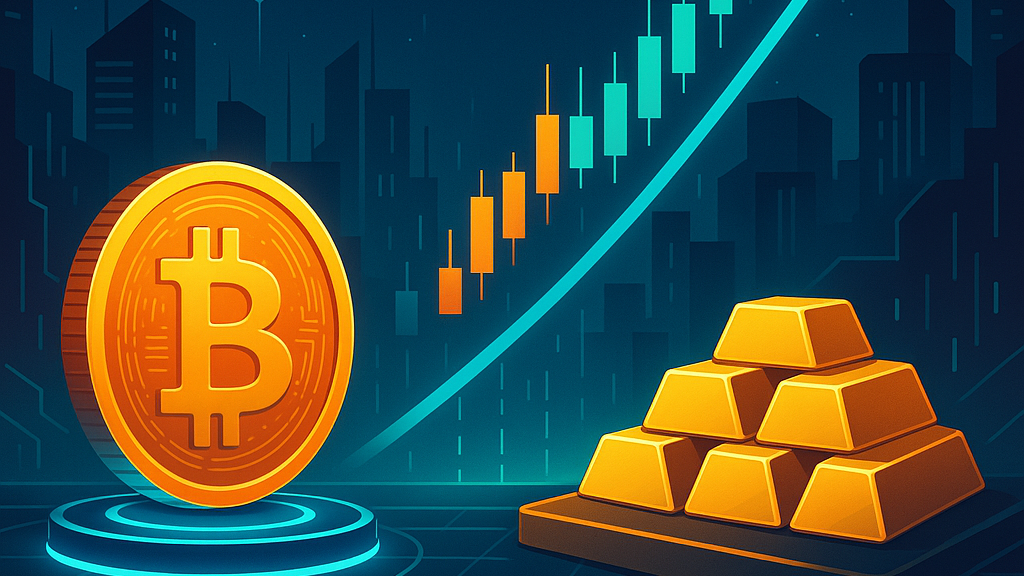
The recent behavior of Bitcoin (BTC) and gold reveals significant differences in buyer demographics, suggesting a potential shift in market dynamics. Stephen Coltman, the macro head at 21Shares, a provider of crypto exchange-traded products, discussed this phenomenon against the backdrop of recent escalations in the Middle East.
Coltman noted that while gold has historically attracted substantial interest from central banks, Bitcoin has gained traction primarily among retail investors. He pointed out that the surge of gold prices over the past three years can be largely attributed to central bank purchases.

According to Coltman, the role of physical gold extends beyond mere investment; it serves as a strategic asset for nations looking to preserve wealth amidst geopolitical tensions.
He elaborated that gold’s value tends to fluctuate in direct relation to global political stability. In contrast, BTC functions as a more practical tool for individuals, particularly when traditional banking systems falter in crisis situations. This necessity was highlighted when exchanges in Dubai and Abu Dhabi were temporarily closed due to missile strikes, underscoring Bitcoin’s appeal for immediate access during emergencies.
Despite gold’s recent peak near $5,600 per ounce at the beginning of this year, it faced a sharp decline to approximately $4,497, igniting discussions among analysts regarding its long-term viability as a stable store of value. The declining price has led to renewed scrutiny of how gold will compete against Bitcoin, particularly as each asset serves different roles in an investor’s portfolio.
Coltman advised that the contrasting trends in Bitcoin and gold could be beneficial for investors who diversify their holdings across both assets. He suggested that understanding the inverse correlation could enhance investment strategies.

In looking ahead, opinions among financial analysts are divided. Some, like macroeconomist Lyn Alden, predict Bitcoin may outperform gold in the upcoming years. Alden noted that such fluctuations often reflect broader market cycles.
Conversely, Ray Dalio, a former hedge fund manager, maintains skepticism regarding Bitcoin’s ability to fully replace gold’s position in the market. He remarked that Bitcoin currently shows characteristics of a risk asset, often correlating with tech stocks, while gold remains firmly established as a safeguard in financial systems.
As these discussions unfold, the diverging paths of Bitcoin and gold invite investors to analyze the implications of this buyer segmentation in shaping future market trends.
Leave the reaction
Elena Rodriguez











Commentaries
Add your comment
Fill in necessary fields and publish