


API Trading Represents 30% of South Korea’s Crypto Market
We have always followed the principles of transparency and clear information. Some of our content includes affiliate links, and we may earn a small commission through these partnerships. These partnerships do not influence our editorial independence or opinion. By using our site, you accept our privacy policy and terms and conditions.


A Senior Altcoin Analyst, Sarah combines on-chain data with a background in venture capital research. With a Master’s in Computer Science, she provides precise evaluations…
Cryptocurrency is a high-risk asset class, and investing carries significant risk, including the potential loss of some or all of your investment. The information on this website is provided for informational and educational purposes only and does not constitute financial, investment, or gambling advice. Cryptowinx does not endorse any specific exchange or gaming platform. For more details, please read our terms and full disclaimer.
Cryptowinx navigates the digital asset universe with a dynamic, forward-looking vision. Throughout our evolution, we have followed every market cycle, from vertical rises to corrections, always remaining a solid point of reference for our community. Our team is made up of industry experts and analysts who experience the blockchain ecosystem daily: we constantly monitor Bitcoin’s stability, study the expansion of the Ethereum ecosystem, and analyze the new frontiers of crypto casinos. We are committed to absolute editorial integrity, separating the signal from the noise through rigorous fact-checking and multi-perspective news analysis. In a landscape where innovations emerge in moments, our mission is to simplify complex concepts and offer transparency into what is established and what is still experimental.
Learn more Cryptowinx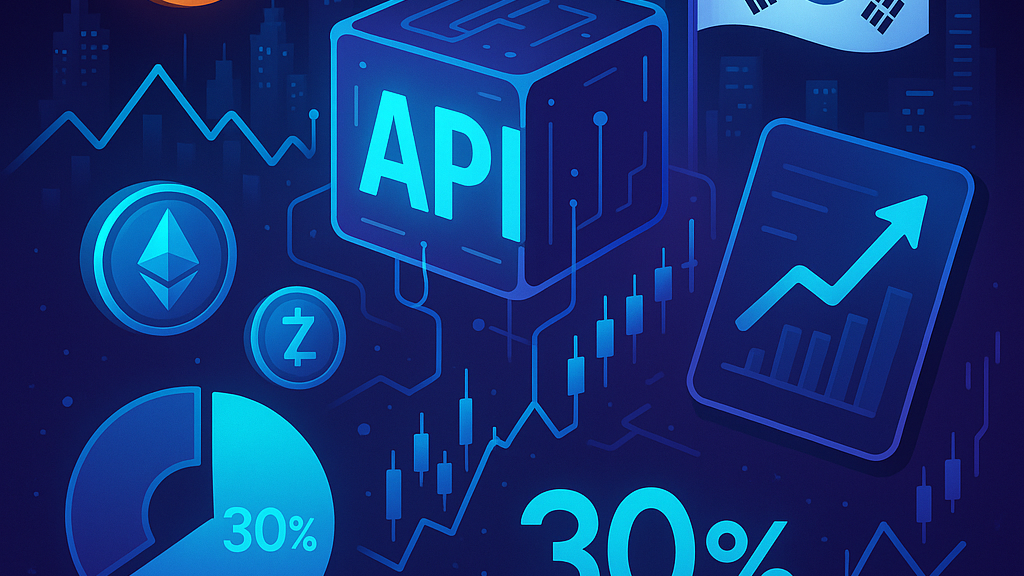
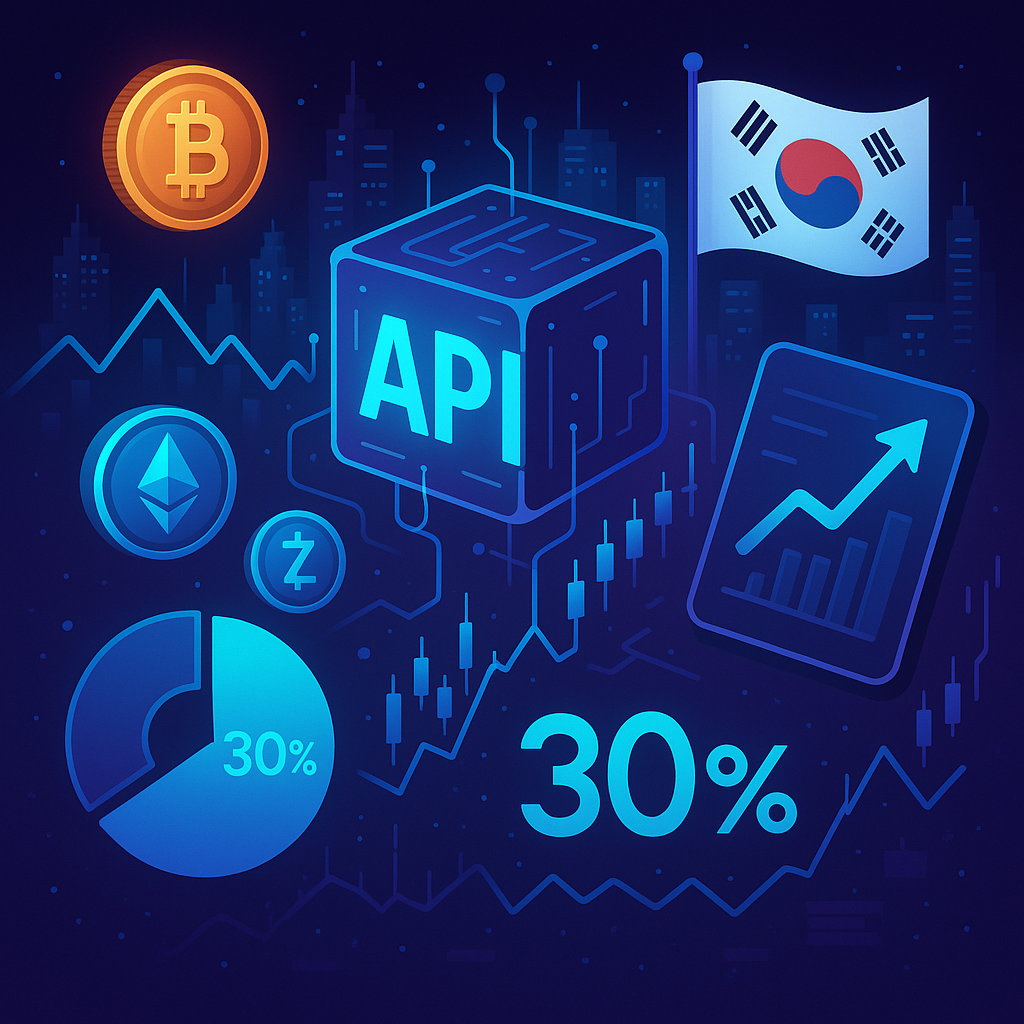
The Financial Supervisory Service (FSS) of South Korea recently revealed that API-driven trading has surged to dominate about 30% of the country’s cryptocurrency trading volume. This announcement comes alongside a warning regarding the manipulative practices related to automated trading, as reported by local news sources.
The FSS expressed concern that some traders exploit automated tools to artificially inflate trading volumes and manipulate cryptocurrency prices. Instances of repeated minor trades, deceptive order placements, and coordinated actions across various accounts have been flagged as potential abusive practices.

In response to these issues, the FSS is set to initiate focused investigations into specific accounts reportedly engaging in excessive or abnormal trading behaviors. This move signals an intention to enhance oversight on automated trading dynamics within the crypto sector.
South Korea’s regulatory body has highlighted various tactics used to distort price appearances, which include the frequent placement of small buy and sell orders to create an illusion of high trading activity. Additionally, traders may employ higher-priced limit orders aimed at artificially inflating asset prices.
One illustrative case involved a trader utilizing API technology to simulate activity between prices of 5,000 won (approximately $3) and 10,000 won (around $6), enabling them to profit by selling into rising prices as retail investors entered the market. Another instance involved a trader who consistently submitted higher-priced acquisition orders to propel the asset price toward a predetermined target.
The FSS has cautioned traders against the indiscriminate use of high-frequency trading algorithms that are freely available online, advising investors to be wary of purchasing assets that suddenly increase in price and trading volume without reasonable justification.
This advisory fits within a broader effort by South Korean authorities to reinforce regulatory measures, particularly in light of recent operational challenges and fraud incidents reported within the cryptocurrency landscape. On April 7, for example, regulatory bodies mandated that crypto exchanges conduct reconciliations of internal ledgers with actual asset holdings every five minutes, following findings of insufficient trading halt systems and delayed balance checks.
Furthermore, the Financial Services Commission (FSC) has sought to strengthen protections against scams, revealing that lax withdrawal-delay exemption rules have permitted unscrupulous individuals to swiftly relocate funds, contributing to significant losses linked to voice phishing schemes.
Despite these advancements, enforcement actions are often constrained by legal ambiguities. A South Korean court recently overturned a partial suspension against Upbit operator Dunamu, citing unclear regulations and revealing weaknesses in the current regulatory framework.
The ongoing scrutiny and regulatory push in South Korea represent a vital step towards safeguarding the integrity of the cryptocurrency market, aiming to protect investors from potential abuses while the industry continuously evolves.
Leave the reaction
Sarah Chen







Commentaries
Add your comment
Fill in necessary fields and publish