


AI’s Role in Transforming Decentralized Finance Operations
We have always followed the principles of transparency and clear information. Some of our content includes affiliate links, and we may earn a small commission through these partnerships. These partnerships do not influence our editorial independence or opinion. By using our site, you accept our privacy policy and terms and conditions.


A Senior Altcoin Analyst, Sarah combines on-chain data with a background in venture capital research. With a Master’s in Computer Science, she provides precise evaluations…
Cryptocurrency is a high-risk asset class, and investing carries significant risk, including the potential loss of some or all of your investment. The information on this website is provided for informational and educational purposes only and does not constitute financial, investment, or gambling advice. Cryptowinx does not endorse any specific exchange or gaming platform. For more details, please read our terms and full disclaimer.
Cryptowinx navigates the digital asset universe with a dynamic, forward-looking vision. Throughout our evolution, we have followed every market cycle, from vertical rises to corrections, always remaining a solid point of reference for our community. Our team is made up of industry experts and analysts who experience the blockchain ecosystem daily: we constantly monitor Bitcoin’s stability, study the expansion of the Ethereum ecosystem, and analyze the new frontiers of crypto casinos. We are committed to absolute editorial integrity, separating the signal from the noise through rigorous fact-checking and multi-perspective news analysis. In a landscape where innovations emerge in moments, our mission is to simplify complex concepts and offer transparency into what is established and what is still experimental.
Learn more Cryptowinx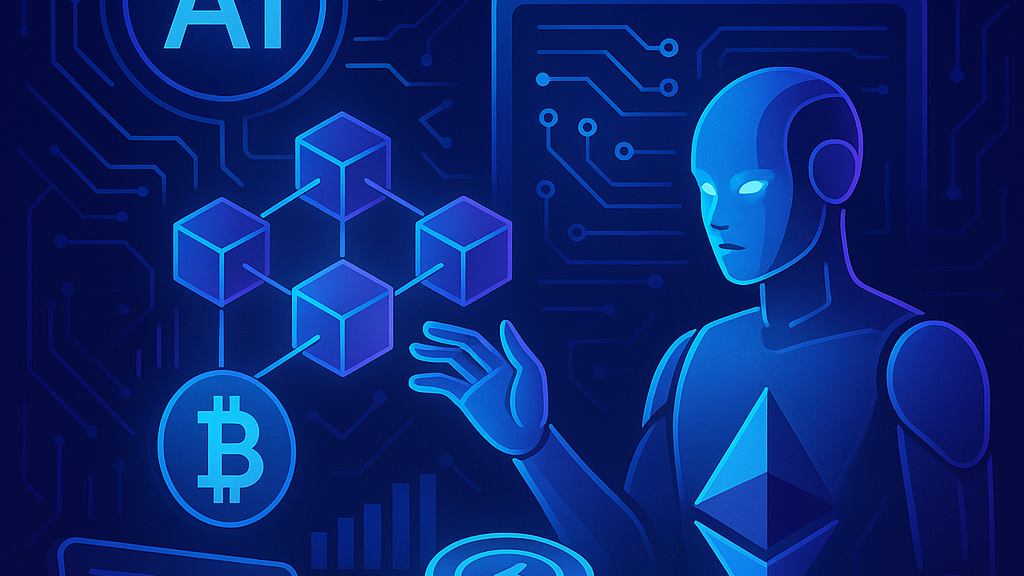
The integration of artificial intelligence (AI) within the realm of decentralized finance (DeFi) marks a significant evolution in how users engage with financial technology. Jacob C., co-founder and CEO of Coinfello, emphasizes that AI agents are transforming complex interactions with smart contracts into a more streamlined experience.
This new approach indicates a departure from the traditional need for constant vigilance over market variables, such as gas fees and potential liquidations. Instead, AI agents now provide round-the-clock management, capabilities that were previously exclusive to hedge funds.

These innovative agents can proactively manage risks by, for instance, withdrawing liquidity when detecting warning signs like rug pulls or fluctuations in stablecoin value. Jacob C. notes that this shift enhances user experience by removing reliance on centralized platforms that previously served as intermediaries.
He highlights that earlier, users had to depend on applications to convey the intentions and functions of smart contracts, presenting a range of risks, including trust and security vulnerabilities. AI agents mitigate these issues by interfacing directly with the smart contracts, thus improving transparency and user understanding.
Despite the clear advantages, Jacob C. cautions against new challenges introduced by AI, particularly focusing on the risks related to oracle dependencies—external data sources that, if skewed, can lead to erroneous results—and a gradual reduction of user control as decision-making shifts to algorithmic processes.
According to him, there is a vital need for users to remain vigilant, with the ability to audit or verify an AI agent before relinquishing complete control over their funds. He notes that many existing AI solutions necessitate transferring assets to a wallet managed wholly by the AI, creating potential for misuse.
To address these concerns, Coinfello employs a method termed “liquidity sandboxing,” which allows users to set specific permissions for the AI agents, defining the tokens the AI can handle. This framework is designed to offer a protective measure against the inherent risks of adopting AI in financial management.
Looking towards the future, Jacob C. envisions a landscape where AI agents take over tasks users may not have the bandwidth to monitor, such as executing tailored trading strategies. He anticipates a decline in the prominence of decentralized applications (dApps) by 2030, predicting that AI will become the main interface for engaging with smart contracts.
This transition towards utilizing AI reflects a broader trend in finance, indicating that as technology advances, so too does the potential for more efficient and less cumbersome user interactions with decentralized finance. The impact of this shift is poised to reshape how individuals approach financial transactions in the evolving digital ecosystem.
Leave the reaction
Sarah Chen












Commentaries
Add your comment
Fill in necessary fields and publish