


AI Poised to Transform Bitcoin’s Role in Finance
We have always followed the principles of transparency and clear information. Some of our content includes affiliate links, and we may earn a small commission through these partnerships. These partnerships do not influence our editorial independence or opinion. By using our site, you accept our privacy policy and terms and conditions.


James Mitchell combines investment banking with cryptocurrency journalism to analyze the institutional adoption of digital assets. Specializing in ETFs and regulation, he translates complex developments…
Cryptocurrency is a high-risk asset class, and investing carries significant risk, including the potential loss of some or all of your investment. The information on this website is provided for informational and educational purposes only and does not constitute financial, investment, or gambling advice. Cryptowinx does not endorse any specific exchange or gaming platform. For more details, please read our terms and full disclaimer.
Cryptowinx navigates the digital asset universe with a dynamic, forward-looking vision. Throughout our evolution, we have followed every market cycle, from vertical rises to corrections, always remaining a solid point of reference for our community. Our team is made up of industry experts and analysts who experience the blockchain ecosystem daily: we constantly monitor Bitcoin’s stability, study the expansion of the Ethereum ecosystem, and analyze the new frontiers of crypto casinos. We are committed to absolute editorial integrity, separating the signal from the noise through rigorous fact-checking and multi-perspective news analysis. In a landscape where innovations emerge in moments, our mission is to simplify complex concepts and offer transparency into what is established and what is still experimental.
Learn more Cryptowinx
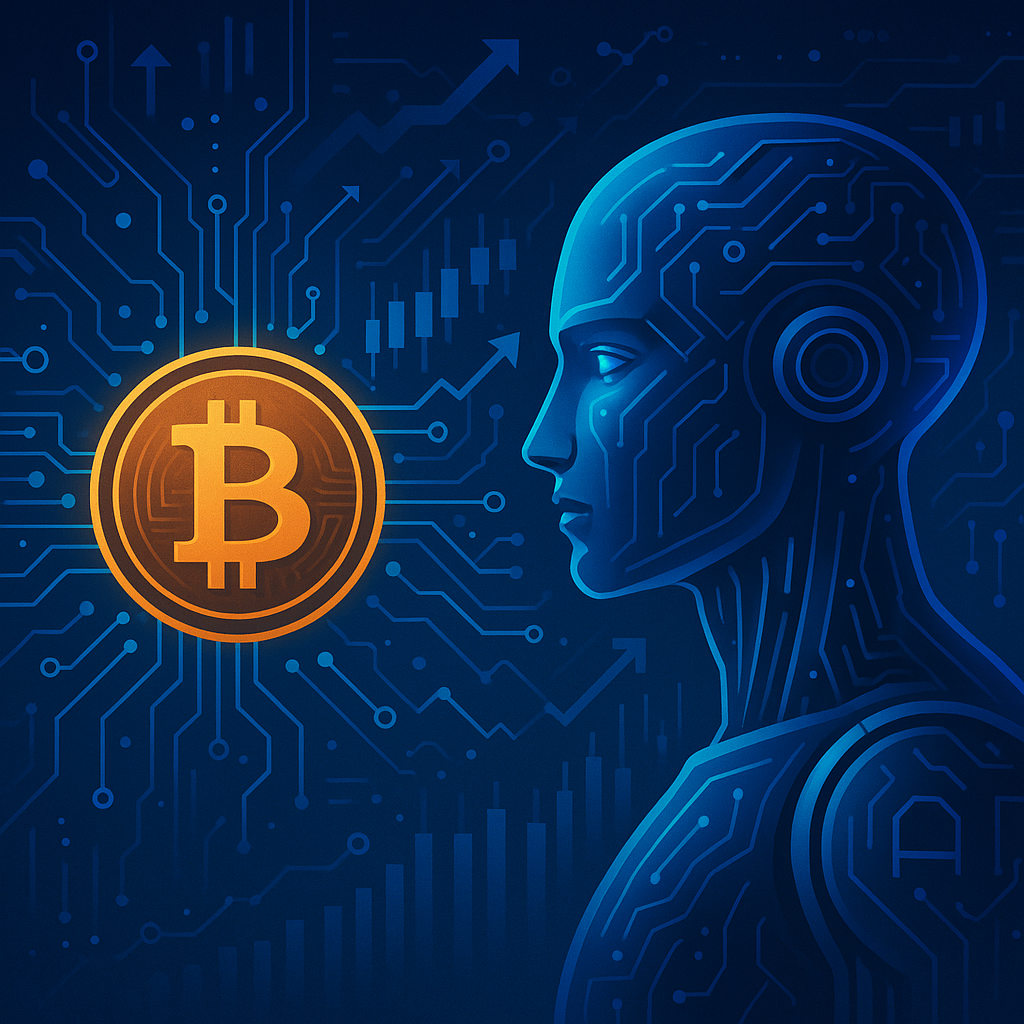
In a rapidly evolving financial landscape, artificial intelligence (AI) is anticipated to play a significant role in enhancing bitcoin’s utility and prominence. Jordi Vasser, a financial analyst and the Head of AI Macro Nexus Research at 22V, posits that the advent of AI could propel bitcoin towards achieving its true potential.
As AI technologies become integrated into financial systems, Vasser suggests that bitcoin could emerge as a neutral platform for transactions, particularly as conventional fiat networks grow more vulnerable to security breaches.

According to Vasser, the growing presence of AI agents in financial interactions may position bitcoin as a crucial infrastructure for future economic transactions. He noted that these AI agents, when implemented in applications that facilitate payments and transfers, could lead to an increased reliance on bitcoin.
Vasser remarked that in an environment where AI participates alongside human actors in economic activities, the bitcoin network stands to gain tremendous strength. It offers a universally recognized, decentralized, and liquid platform that caters to both machines and individuals alike.
He emphasized bitcoin’s advantages, indicating that it holds an appeal for AI agents thanks to its unconfiscatable properties. These agents possess the capability to identify weaknesses within traditional banking systems, which could further incentivize a shift towards crypto networks.
Recent developments surrounding the AI model, codenamed Mythos by Claude, support Vasser’s assertions. This model is designed to expose the vulnerabilities within legacy financial infrastructures, indicating that the new wave of AI agents could prioritize using more secure platforms for value transfer.

Vasser believes that AI’s integration into the financial fabric will accelerate bitcoin’s adoption, especially given its robust security features compared to conventional assets that can be swiftly confiscated. He articulated that bitcoin does not require a novel narrative; it merely needs the global financial environment to evolve in a way that aligns with its foundational principles.
Vasser’s predictions suggest that as AI continues to reshape the economic landscape, bitcoin is strategically positioned to thrive as a leading asset for 2026 and beyond. With the right conditions in place, it could reaffirm its status as the most resilient and high-performing asset in the marketplace.
Leave the reaction
James Mitchell











Commentaries
Add your comment
Fill in necessary fields and publish