


Concerns Over Quantum Risks for Legacy Bitcoin Wallets
We have always followed the principles of transparency and clear information. Some of our content includes affiliate links, and we may earn a small commission through these partnerships. These partnerships do not influence our editorial independence or opinion. By using our site, you accept our privacy policy and terms and conditions.


A Web3 and NFT expert, Elena focuses on the evolution of digital art and blockchain gaming for CryptoWinx. She combines technical expertise with a deep…
Cryptocurrency is a high-risk asset class, and investing carries significant risk, including the potential loss of some or all of your investment. The information on this website is provided for informational and educational purposes only and does not constitute financial, investment, or gambling advice. Cryptowinx does not endorse any specific exchange or gaming platform. For more details, please read our terms and full disclaimer.
Cryptowinx navigates the digital asset universe with a dynamic, forward-looking vision. Throughout our evolution, we have followed every market cycle, from vertical rises to corrections, always remaining a solid point of reference for our community. Our team is made up of industry experts and analysts who experience the blockchain ecosystem daily: we constantly monitor Bitcoin’s stability, study the expansion of the Ethereum ecosystem, and analyze the new frontiers of crypto casinos. We are committed to absolute editorial integrity, separating the signal from the noise through rigorous fact-checking and multi-perspective news analysis. In a landscape where innovations emerge in moments, our mission is to simplify complex concepts and offer transparency into what is established and what is still experimental.
Learn more Cryptowinx
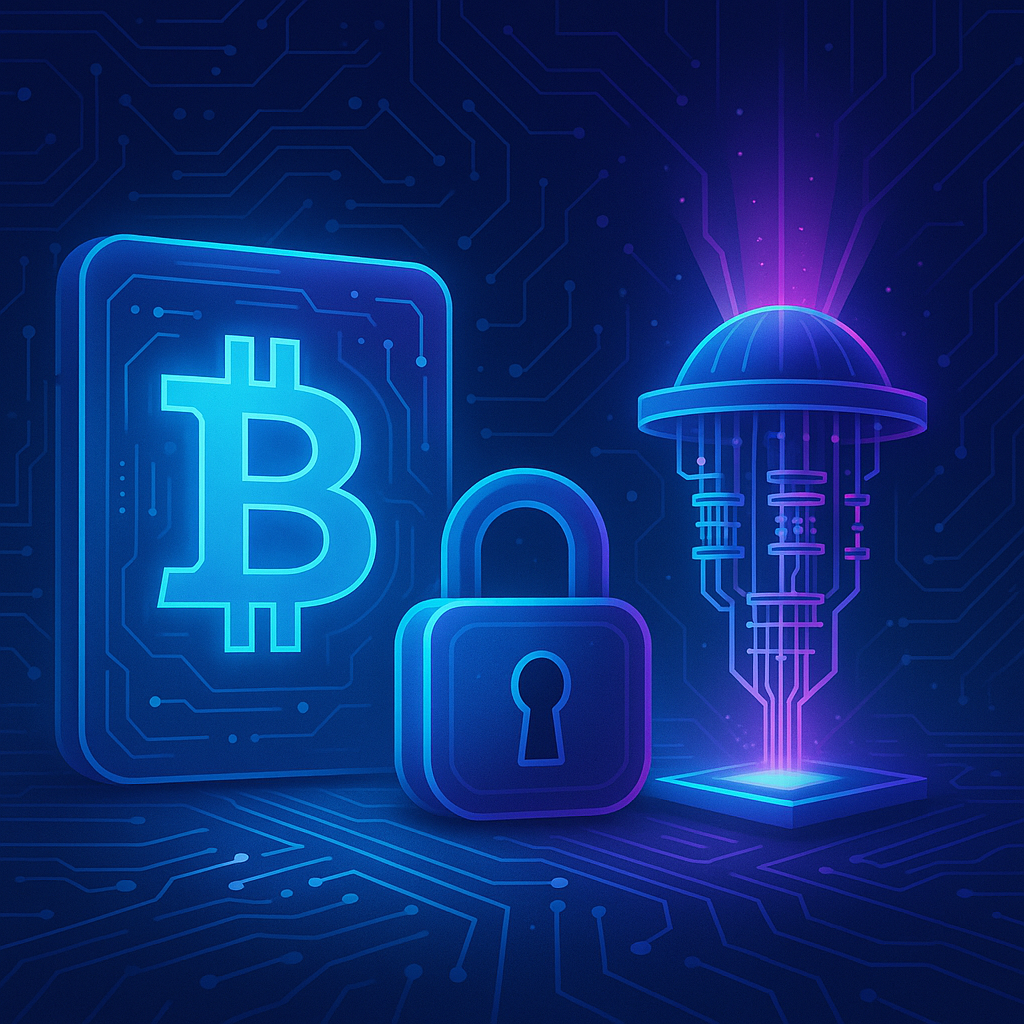
The Chief Technology Officer of Ledger highlights significant risks for older Bitcoin wallets in a quantum computing era. While a new Bitcoin Improvement Proposal, BIP-361, aims to address these challenges, it may leave pre-2013 coins vulnerable.
The cryptocurrency community is abuzz with discussions around a newly introduced Bitcoin Improvement Proposal known as BIP-361. This proposal seeks to confront one of Bitcoin’s future challenges: the reality of quantum migration.

BIP-361 outlines strategies for Bitcoin holders, suggesting ways to transition their assets into quantum-resistant addresses. However, concerns have arisen from Ledger’s CTO regarding the potential irretrievability of certain older Bitcoin wallets.
In essence, BIP-361 aims to navigate the complexities that come with transitioning to a quantum-safe environment. It does not specifically favor any signature scheme; instead, it focuses on motivating holders to migrate their assets securely.
The proposal is structured into three phases. Phase A, set to initiate approximately three years after activation, will prohibit new transactions to certain vulnerable addresses. While existing funds can still be transferred, it must be to post-quantum scripts. Phase B, following two years later, renders transactions to outdated address types invalid, freezing unmigrated funds at that point.
Transitioning from Phase A to Phase B appears straightforward: mitigate exposure first and subsequently eliminate it. Yet, the intricacies of Phase C introduce a host of political and ethical considerations that earlier phases do not address.
In the realm of quantum computing, the fundamental principles of ownership may undergo drastic changes. The emergence of cryptographically relevant quantum computers poses a significant threat, as they can extract private keys from public keys, challenging Bitcoin’s foundational security assumptions.
BIP-361 offers a glimpse of a sophisticated approach for Phase C, incorporating a zero-knowledge proof system to validate ownership without revealing sensitive information. This method leverages the BIP-39 seed phrase in a way that quantum computers cannot reverse, allowing wallet owners to prove their entitlement without disclosing their seed phrase.

Besides addressing the immediate concern, the implementation of native zero-knowledge proofs could facilitate advancements in validity rollups and privacy enhancements within the Bitcoin ecosystem.
However, challenges persist for Bitcoin coins created prior to 2013. Standards such as BIP-39 did not exist before this time, leaving those coins without a tied seed phrase. Consequently, many of these earlier coins, particularly Pay-to-Public-Key types, expose their public keys on the blockchain.
The recovery of these outputs through ZK-based methods is fundamentally unfeasible. BIP-361 recognizes this limitation and suggests resorting to an alternative mechanism—a rate-limited spending method, rather than cryptographic proof, for these transactions.
This aspect presents an unresolved issue within the proposal. While BIP-361 lays a comprehensive groundwork, the intricacies of Phase C only partially address the concerns surrounding the most antiquated Bitcoin assets. Thus, the oldest holdings remain significantly at risk as the community navigates a landscape increasingly shaped by quantum technology.
Leave the reaction
Elena Rodriguez











Commentaries
Add your comment
Fill in necessary fields and publish