


DoorDash Implements Stablecoin Payments to Enhance Operations
We have always followed the principles of transparency and clear information. Some of our content includes affiliate links, and we may earn a small commission through these partnerships. These partnerships do not influence our editorial independence or opinion. By using our site, you accept our privacy policy and terms and conditions.


A crypto casino and gaming specialist, Raj brings a digital native’s perspective to industry trends and provably fair systems. Having reviewed over 150 platforms, he…
Cryptocurrency is a high-risk asset class, and investing carries significant risk, including the potential loss of some or all of your investment. The information on this website is provided for informational and educational purposes only and does not constitute financial, investment, or gambling advice. Cryptowinx does not endorse any specific exchange or gaming platform. For more details, please read our terms and full disclaimer.
Cryptowinx navigates the digital asset universe with a dynamic, forward-looking vision. Throughout our evolution, we have followed every market cycle, from vertical rises to corrections, always remaining a solid point of reference for our community. Our team is made up of industry experts and analysts who experience the blockchain ecosystem daily: we constantly monitor Bitcoin’s stability, study the expansion of the Ethereum ecosystem, and analyze the new frontiers of crypto casinos. We are committed to absolute editorial integrity, separating the signal from the noise through rigorous fact-checking and multi-perspective news analysis. In a landscape where innovations emerge in moments, our mission is to simplify complex concepts and offer transparency into what is established and what is still experimental.
Learn more Cryptowinx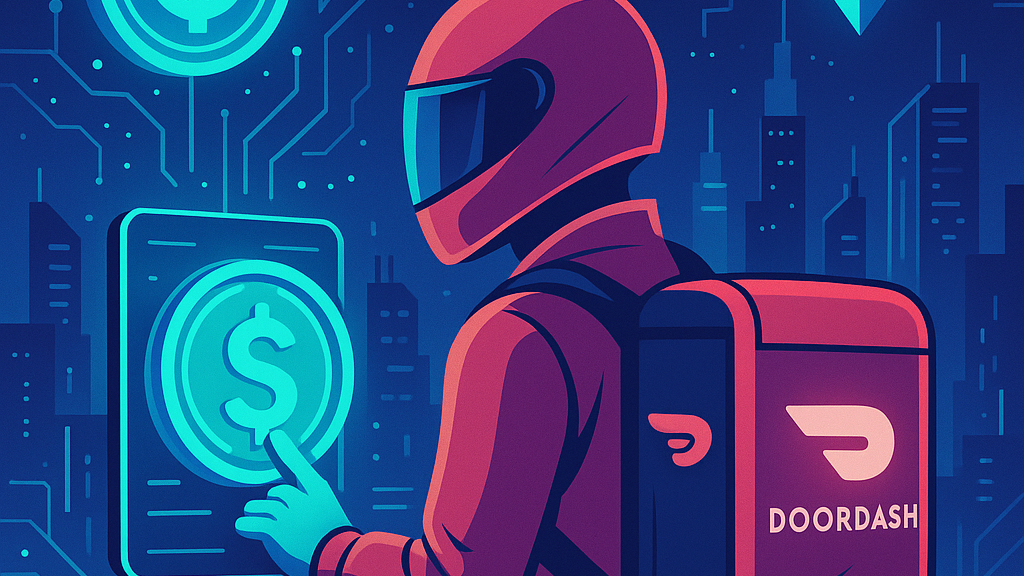
In a significant step forward, DoorDash is partnering with Tempo, a platform supported by Stripe, to integrate stablecoin-based payouts into its operational framework. This initiative aims to streamline transactions within the company’s vast marketplace, which spans over 40 countries.
The dynamics of financial transactions within DoorDash involve multiple parties, including customers making payments at checkout, merchants awaiting settlements, and Dashers relying on timely payouts to access their earnings. This intricate flow highlights a growing trend: the adoption of stablecoins into essential business infrastructures.

One of the central inquiries surrounding stablecoins is whether major platforms consider them a viable solution for financial transactions that require quick settlements and reliability, particularly in a global marketplace. Tempo has indicated that DoorDash, along with Stripe, Coastal Bank, and ARQ, is set to implement stablecoin payments in their operations.
According to Andy Fang, co-founder of DoorDash, the main benefit of using stablecoins lies in enhancing the speed and cost-effectiveness of payouts. The company faces a challenge in reconciling rapid ordering processes from customers with slower, often fragmented payment systems governed by banking schedules and regional settlement protocols. This delay, at times extending from hours to days, poses a significant issue in the company’s operational model.
Both merchants and Dashers feel the weight of this delay. Merchants, experiencing payment slowdowns, face difficulties in managing payroll, inventory acquisition, and overall liquidity. Similarly, Dashers feel the pinch of delayed cash availability, particularly during rising fuel and living costs. Recently, DoorDash responded to these pressures with initiatives designed to support its Dashers, such as relief measures targeting fuel costs in the U.S. and a support program in Canada.
The evolving use case for stablecoins goes beyond mere assertions of innovation; it signifies a practical application that outperforms existing alternatives. In the context of cryptocurrency, Bitcoin caters to various needs like currency reserves and macroeconomic strategies, while stablecoins are seeking to establish themselves as the backbone of digital commerce settlement processes.
Payment systems often face numerous bottlenecks, especially in a global market. DoorDash’s engagement in incorporating stablecoins presents an opportunity to address these hurdles by allowing for faster, more reliable transactions across various jurisdictions. Although customer transactions may appear instantaneous, the backend processes frequently lag due to traditional banking systems and intermediaries.
Stripe has been promoting the benefits of stablecoin payments, emphasizing their potential to reduce delays, cut costs, and enhance predictability in transactions. Tempo aims to bridge this gap, having been developed to effectively handle payment operations while partnering with recognized entities like DoorDash, Deutsche Bank, and Visa.
The partnership positions DoorDash in a unique role to explore the effectiveness of stablecoins as a solution for improving transaction speeds and reliability in a complex operational environment. It also serves as a crucial litmus test for the practicality of stablecoin integration in large-scale platforms.

While specifics about the mechanics of this integration remain unclear, including which financial flows will transition to stablecoins and the extent of on-chain processing, the overarching trend is evident. Major enterprises are increasingly investigating stablecoins as viable operational rails.
The implications of DoorDash’s shift toward stablecoin payments suggest that cryptocurrency may become more pervasive through behind-the-scenes infrastructure, often unnoticed by users. The general public typically does not engage with the complexities of payment systems; they prioritize the speed of transactions, associated costs, and usability of funds.
Swift settlements empower merchants to manage payroll and procurement efficiently. For Dashers, quicker access to earnings alleviates financial pressures related to everyday expenses. While these improvements might seem incremental on an individual level, their cumulative effect is substantial across a marketplace of DoorDash’s scope.
As stablecoins find their footing in mainstream applications, they present an accessible narrative linking cryptocurrency infrastructure to established business practices. The movement of digital dollars is already significant and continues to grow, as evidenced by the vast transaction volumes reported recently.
The initiative undertaken by DoorDash illustrates an ongoing transformation within the financial landscape. While it does not resolve all debates regarding compliance, custody, or the future of stablecoins, it highlights a critical area where the next phase of competition is likely to unfold. The future may encompass a quieter evolution of financial frameworks that underpin daily transactions in commerce and work, rather than a frenzy of consumer interest. In essence, DoorDash’s approach signals that a redesign of financial practices is in progress, potentially reshaping how we perceive and utilize cryptocurrency in everyday life.
Leave the reaction
Raj Patel









Commentaries
Add your comment
Fill in necessary fields and publish