


Bitcoin Protocol Explored by US Military for Cybersecurity Measures
We have always followed the principles of transparency and clear information. Some of our content includes affiliate links, and we may earn a small commission through these partnerships. These partnerships do not influence our editorial independence or opinion. By using our site, you accept our privacy policy and terms and conditions.


A Web3 and NFT expert, Elena focuses on the evolution of digital art and blockchain gaming for CryptoWinx. She combines technical expertise with a deep…
Cryptocurrency is a high-risk asset class, and investing carries significant risk, including the potential loss of some or all of your investment. The information on this website is provided for informational and educational purposes only and does not constitute financial, investment, or gambling advice. Cryptowinx does not endorse any specific exchange or gaming platform. For more details, please read our terms and full disclaimer.
Cryptowinx navigates the digital asset universe with a dynamic, forward-looking vision. Throughout our evolution, we have followed every market cycle, from vertical rises to corrections, always remaining a solid point of reference for our community. Our team is made up of industry experts and analysts who experience the blockchain ecosystem daily: we constantly monitor Bitcoin’s stability, study the expansion of the Ethereum ecosystem, and analyze the new frontiers of crypto casinos. We are committed to absolute editorial integrity, separating the signal from the noise through rigorous fact-checking and multi-perspective news analysis. In a landscape where innovations emerge in moments, our mission is to simplify complex concepts and offer transparency into what is established and what is still experimental.
Learn more Cryptowinx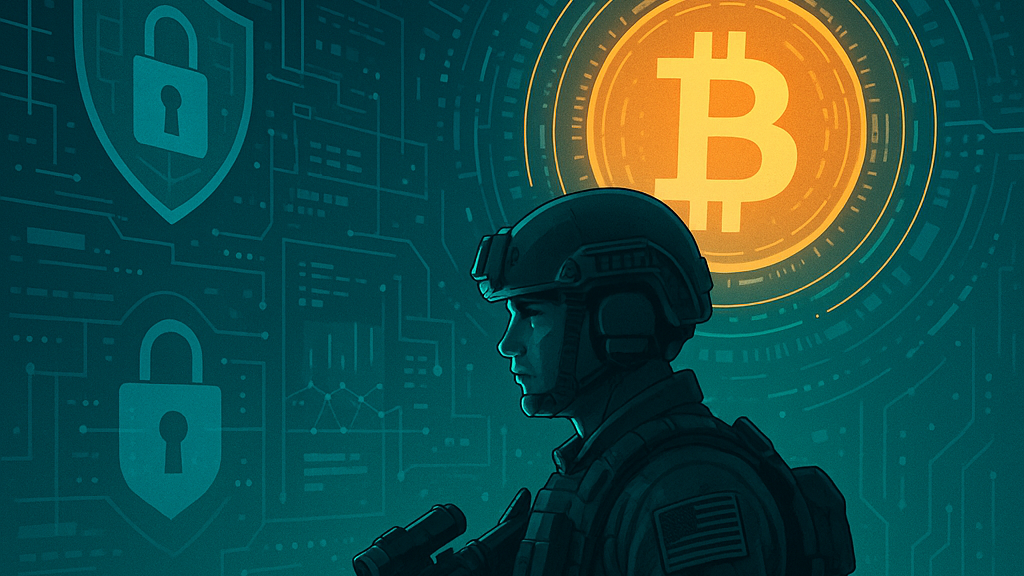
The U.S. military is turning its focus to innovative technologies as it tests Bitcoin’s protocol, prioritizing the aspect of cybersecurity over traditional financial applications.
Amid rising global tensions and the evolution of cyber threats, unconventional technological solutions are becoming increasingly vital for national defense strategies. Bitcoin, previously perceived primarily as a financial venture, is now being evaluated for its technological capabilities. A senior official from the U.S. military recently disclosed that the exploration of Bitcoin’s architecture is already in progress.

During a recent session of the House Armed Services Committee, Admiral Samuel Paparo, who commands U.S. forces in the Pacific, confirmed that a Bitcoin node is operational as part of the military’s cybersecurity research initiatives. He emphasized that this experimentation is still in its initial stages.
Admiral Paparo clarified that the initiative does not aim to mine Bitcoin or generate profits. Instead, the primary goal is to analyze the node’s activity and investigate how Bitcoin’s underlying technology could facilitate secure communications and enhance network defense. He characterized this project as a technical exploration centered on blockchain and cryptographic elements.
Key features of interest for the military include reusable proof-of-work mechanisms and decentralized validation processes. Admiral Paparo asserted that these aspects could potentially bolster military networks and secure sensitive systems. Framing Bitcoin as a practical tool in computer science, he steered away from discussions of its financial implications.
As the conversation unfolded, concerns were raised by Congressman Lance Gooden regarding the competitive landscape with China and the idea of the U.S. accumulating strategic Bitcoin assets. However, Admiral Paparo redirected the dialogue towards the technology’s applications in cybersecurity.
The military’s growing focus on cybersecurity underscores the increasing recognition of digital threats within contemporary warfare. Planners are evaluating how decentralized technologies could mitigate risks associated with vulnerabilities in critical infrastructure.
Additionally, Admiral Paparo connected the discussion to the strength and stability of the U.S. dollar. He expressed support for measures aimed at preserving the dollar’s global standing and highlighted legislative efforts like the GENIUS Act as part of this strategy.
As interest in cryptocurrency policy continues to gain traction in Washington, lawmakers and industry stakeholders are advocating for regulations surrounding stablecoins and the broader digital asset market, reflecting the growing strategic importance of these technologies.
Leave the reaction
Elena Rodriguez











Commentaries
Add your comment
Fill in necessary fields and publish