


Bitcoin’s Future Hangs in the Balance Amid Strait of Hormuz Tensions
We have always followed the principles of transparency and clear information. Some of our content includes affiliate links, and we may earn a small commission through these partnerships. These partnerships do not influence our editorial independence or opinion. By using our site, you accept our privacy policy and terms and conditions.


A Senior Altcoin Analyst, Sarah combines on-chain data with a background in venture capital research. With a Master’s in Computer Science, she provides precise evaluations…
Cryptocurrency is a high-risk asset class, and investing carries significant risk, including the potential loss of some or all of your investment. The information on this website is provided for informational and educational purposes only and does not constitute financial, investment, or gambling advice. Cryptowinx does not endorse any specific exchange or gaming platform. For more details, please read our terms and full disclaimer.
Cryptowinx navigates the digital asset universe with a dynamic, forward-looking vision. Throughout our evolution, we have followed every market cycle, from vertical rises to corrections, always remaining a solid point of reference for our community. Our team is made up of industry experts and analysts who experience the blockchain ecosystem daily: we constantly monitor Bitcoin’s stability, study the expansion of the Ethereum ecosystem, and analyze the new frontiers of crypto casinos. We are committed to absolute editorial integrity, separating the signal from the noise through rigorous fact-checking and multi-perspective news analysis. In a landscape where innovations emerge in moments, our mission is to simplify complex concepts and offer transparency into what is established and what is still experimental.
Learn more Cryptowinx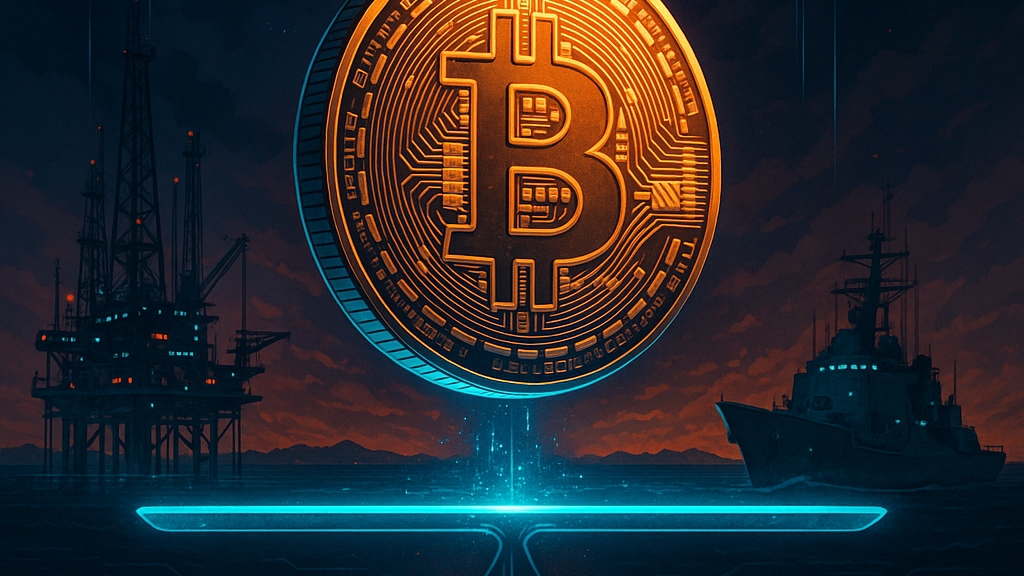
The geopolitical landscape surrounding the Strait of Hormuz has shifted dramatically after Iran’s Friday declaration that the waterway would temporarily reopen during an ongoing ceasefire. This announcement triggered a significant drop in oil prices, which saw Brent crude decrease by 12.95%, landing at $86.52, and WTI plunge 14.26% to $81.19—both representing their lowest points since early March.
The sharp decline in oil prices led to a surge in U.S. stock markets, a decrease in bond yields, and a weakening of the dollar. Concurrently, Bitcoin reached an impressive intraday peak of $78,336, as traders recalibrated their expectations in response to the developments.

With the Strait briefly opened under strict Iranian regulations, commercial vessels were required to obtain specific authorizations and navigate designated safe lanes. However, the U.S. blockade on Iranian shipping remains firmly in place, a fact that continues to create uncertainty in the shipping industry.
As of April 18, Iran announced the reclosure of the Strait, pushing markets closer to a critical deadline on April 22 that could see a negotiation breakthrough or further complications in oil and shipping traffic. Initially, only eight oil and gas tankers managed to transit the waterway during its temporary reopening, highlighting a significant drop from normal shipping traffic levels.
The potential implications of these developments for Bitcoin are profound. As the countdown to the ceasefire deadline approaches, market sentiment surrounding oil and shipping logistics remains fragile, with traders watching closely for signs of a return to normalcy or further restrictions.
The Energy Information Administration has documented that approximately 20 million barrels of oil flow through the Strait daily, accounting for a substantial percentage of global petroleum consumption. This indicates the high stakes involved; if shipping normalizes before the deadline, oil prices may stabilize, positively impacting risk assets like Bitcoin.
Oil prices are influenced not only by physical supply but also by investor sentiment and expectations surrounding inflation and Federal Reserve policies. The recent dip in oil prices has changed the financial landscape, leading traders to adjust their forecasts. Rather than projecting higher interest rates well into 2027, they are now considering potential cuts by late 2026.

Renewed diplomacy following Iran’s ceasefire announcement has sparked a glimmer of hope, but with the U.S. blockade and mine threats still looming, the situation remains precarious. Until shipping operations can regain a semblance of normalcy, the future of Bitcoin, alongside oil, stays entangled in geopolitical complexities.
The dichotomy of outcomes remains clear: should the ceasefire hold and traffic along the Strait normalize, oil prices could stabilize in the mid-$70s to mid-$80s, creating a more favorable environment for Bitcoin. Conversely, if normalization fails to materialize, prices may see a rebound toward the $100-$115 range, resulting in significant challenges for Bitcoin’s ascent.
As market participants closely monitor upcoming developments, the next few days may prove crucial in determining whether a lasting resolution emerges from ongoing tensions or if the current volatility will persist. The fate of Bitcoin and its associated market narrative hinges on these unfolding events.
Leave the reaction
Sarah Chen









Commentaries
Add your comment
Fill in necessary fields and publish