


Did Adam Back Leverage NYT Exposure for BSTR Gains?
We have always followed the principles of transparency and clear information. Some of our content includes affiliate links, and we may earn a small commission through these partnerships. These partnerships do not influence our editorial independence or opinion. By using our site, you accept our privacy policy and terms and conditions.


A crypto casino and gaming specialist, Raj brings a digital native’s perspective to industry trends and provably fair systems. Having reviewed over 150 platforms, he…
Cryptocurrency is a high-risk asset class, and investing carries significant risk, including the potential loss of some or all of your investment. The information on this website is provided for informational and educational purposes only and does not constitute financial, investment, or gambling advice. Cryptowinx does not endorse any specific exchange or gaming platform. For more details, please read our terms and full disclaimer.
Cryptowinx navigates the digital asset universe with a dynamic, forward-looking vision. Throughout our evolution, we have followed every market cycle, from vertical rises to corrections, always remaining a solid point of reference for our community. Our team is made up of industry experts and analysts who experience the blockchain ecosystem daily: we constantly monitor Bitcoin’s stability, study the expansion of the Ethereum ecosystem, and analyze the new frontiers of crypto casinos. We are committed to absolute editorial integrity, separating the signal from the noise through rigorous fact-checking and multi-perspective news analysis. In a landscape where innovations emerge in moments, our mission is to simplify complex concepts and offer transparency into what is established and what is still experimental.
Learn more Cryptowinx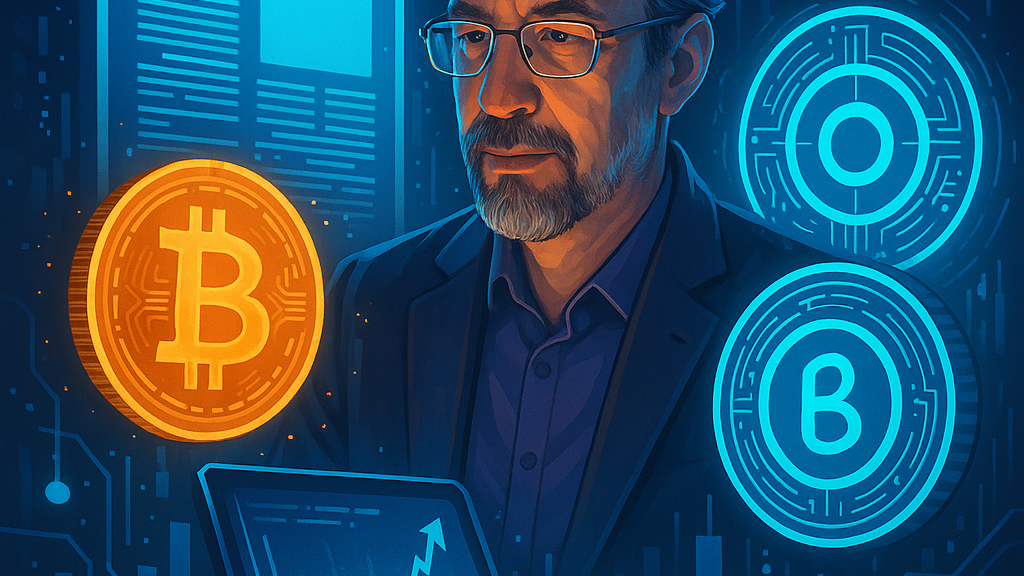
Adam Back, known as the CEO of Blockstream and identified by the New York Times as a leading candidate for the enigmatic figure of Satoshi Nakamoto, has been under scrutiny regarding his motivations for engaging with the newspaper’s investigation.
Recent discussions among industry experts have raised the possibility that Back’s collaboration with the media could have served as an advantageous promotional strategy for his firm, Bitcoin Standard Treasury Company (BSTR), which is reportedly gearing up for a public listing.

John Carreyrou, notable for his investigative journalism, disclosed that Back consented to a photo session in Miami weeks prior to the publication of the revealing NYT article. This decision has prompted questions about the intent behind his participation.
Carreyrou implied that agreeing to such exposure raises eyebrows, especially if one is not actually Satoshi. A follow-up remark from ETF analyst James Seyffart noted the potential public relations benefits of this strategy, particularly at minimal cost while preparing for an initial public offering.
The context is significant, as BSTR is on the verge of completing a merger with Cantor Equity Partners I via a special purpose acquisition company (SPAC). This merger involves a substantial $1.5 billion private investment in public equity (PIPE) deal, marking it as the largest ever associated with a Bitcoin treasury.

Upon its debut, BSTR is projected to hold over 30,000 BTC, positioning it among the largest publicly traded Bitcoin treasury firms. This strategic placement in the market raises questions about the timing of the NYT coverage coinciding with the impending merger.
The anticipated closure of this deal, initially expected in the first quarter of 2026, remains contingent on regulatory evaluation and the approval of shareholders. In light of these developments, whether Back deliberately sought the media spotlight or simply took advantage of it, the situation casts a new light on the intersection of media relations and corporate strategy within the cryptocurrency landscape.
Leave the reaction
Raj Patel












Commentaries
Add your comment
Fill in necessary fields and publish