


Bitcoin’s Decline Affects Altcoins Amid Failed US-Iran Talks
We have always followed the principles of transparency and clear information. Some of our content includes affiliate links, and we may earn a small commission through these partnerships. These partnerships do not influence our editorial independence or opinion. By using our site, you accept our privacy policy and terms and conditions.


A Senior Altcoin Analyst, Sarah combines on-chain data with a background in venture capital research. With a Master’s in Computer Science, she provides precise evaluations…
Cryptocurrency is a high-risk asset class, and investing carries significant risk, including the potential loss of some or all of your investment. The information on this website is provided for informational and educational purposes only and does not constitute financial, investment, or gambling advice. Cryptowinx does not endorse any specific exchange or gaming platform. For more details, please read our terms and full disclaimer.
Cryptowinx navigates the digital asset universe with a dynamic, forward-looking vision. Throughout our evolution, we have followed every market cycle, from vertical rises to corrections, always remaining a solid point of reference for our community. Our team is made up of industry experts and analysts who experience the blockchain ecosystem daily: we constantly monitor Bitcoin’s stability, study the expansion of the Ethereum ecosystem, and analyze the new frontiers of crypto casinos. We are committed to absolute editorial integrity, separating the signal from the noise through rigorous fact-checking and multi-perspective news analysis. In a landscape where innovations emerge in moments, our mission is to simplify complex concepts and offer transparency into what is established and what is still experimental.
Learn more Cryptowinx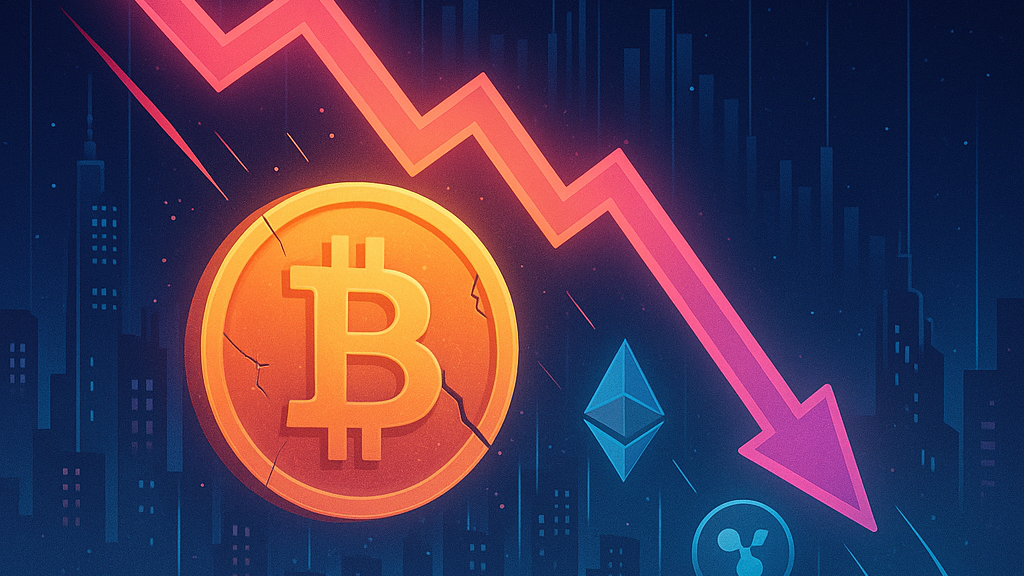
On April 12, Bitcoin experienced a significant decline after negotiations between the United States and Iran failed to yield a lasting peace agreement.
This downturn interrupted a recent upward trend that began following the announcement of a two-week ceasefire between the two nations.

Initially, Bitcoin started strong, rising from approximately $67,000 to $70,000 after reports surfaced about the ceasefire talks. However, renewed uncertainty surrounding these discussions sparked volatility in the market.
The digital asset gained further ground after President Trump declared a ceasefire, boosting Bitcoin above $72,000 and nearing $73,000 as optimism grew regarding reduced geopolitical tensions, particularly concerning the Strait of Hormuz.
Bitcoin maintained its upward momentum into the weekend as peace talks in Pakistan were set to commence, reaching nearly $74,000 by late April 11. However, this brief rally came to an abrupt halt on April 12. Following comments from Vice President JD Vance regarding the lack of a permanent agreement, Bitcoin plummeted by over $2,000 in mere minutes. At the time of reporting, Bitcoin hovered around $71,500, reflecting a 1.5% drop for the day.
As Bitcoin faltered, many significant altcoins followed suit. Ethereum saw a decline of about 1%, stabilizing just above $2,200, while XRP dipped to $1.33. BNB fell below the $600 mark, and Solana experienced a loss exceeding 2%. Assets such as HYPE, Cardano, and Bitcoin Cash each recorded drops of over 3%, with Polkadot and RAIN facing even steeper declines.

In contrast, the token of RaveDAO defied the broader trend, skyrocketing by an additional 40%. This remarkable performance brought its total gains to over 1,000% since last Sunday, catapulting it into the top 100 altcoins by market capitalization.
The overall cryptocurrency market cap suffered a significant blow, shedding more than $30 billion and settling at $2.51 trillion. Bitcoin’s market cap was approximately $1.43 trillion, with its dominance still above 57%.
This series of events underscores the interconnected nature of geopolitical dynamics and cryptocurrency market movements, demonstrating that external factors can lead to substantial shifts in digital asset valuations.
Leave the reaction
Sarah Chen










Commentaries
Add your comment
Fill in necessary fields and publish