


Bots Embrace Humans as Workers in New Economic Era
We have always followed the principles of transparency and clear information. Some of our content includes affiliate links, and we may earn a small commission through these partnerships. These partnerships do not influence our editorial independence or opinion. By using our site, you accept our privacy policy and terms and conditions.


James Mitchell combines investment banking with cryptocurrency journalism to analyze the institutional adoption of digital assets. Specializing in ETFs and regulation, he translates complex developments…
Cryptocurrency is a high-risk asset class, and investing carries significant risk, including the potential loss of some or all of your investment. The information on this website is provided for informational and educational purposes only and does not constitute financial, investment, or gambling advice. Cryptowinx does not endorse any specific exchange or gaming platform. For more details, please read our terms and full disclaimer.
Cryptowinx navigates the digital asset universe with a dynamic, forward-looking vision. Throughout our evolution, we have followed every market cycle, from vertical rises to corrections, always remaining a solid point of reference for our community. Our team is made up of industry experts and analysts who experience the blockchain ecosystem daily: we constantly monitor Bitcoin’s stability, study the expansion of the Ethereum ecosystem, and analyze the new frontiers of crypto casinos. We are committed to absolute editorial integrity, separating the signal from the noise through rigorous fact-checking and multi-perspective news analysis. In a landscape where innovations emerge in moments, our mission is to simplify complex concepts and offer transparency into what is established and what is still experimental.
Learn more Cryptowinx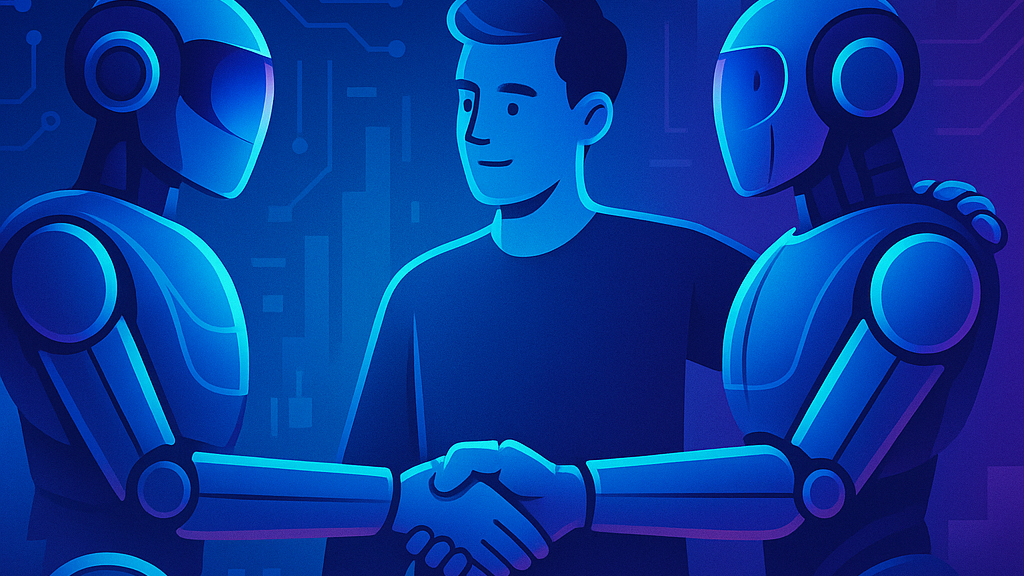
The landscape of work is continuously shifting, and the latest transformation is led by artificial intelligence, which is redefining how humans and machines interact. In this evolving economy, AI is not merely a tool but instead acts as a conductor, orchestrating human labor in ways previously unimagined.
This transition marks a significant departure from traditional automation. Instead of replacing human jobs, AI systems are increasingly designed to coordinate efforts among workers, creating what has been referred to as a ‘clawbot’ economy. These agents extend their influence from digital tasks into the physical realm, employing humans to perform actions that machines cannot accomplish.

The term ‘clawbot’ serves as a metaphor rather than a technical classification, suggesting an intelligence with unseen appendages that interacts through application programming interfaces (APIs) and various platforms. While these systems are incapable of performing tasks like physically delivering packages or verifying identities, they excel in assigning such duties to human participants. This delegation of responsibility enables a new form of leverage within the economy.
The emerging concept centers on the idea that AI is shifting from a simplistic tool to a sophisticated operator that organizes human activities. This innovation fosters a transition from a typical automation-driven economy to one that prioritizes collaboration and coordination among human laborers.
Recent commentary has highlighted platforms such as Rentahuman.ai, which represent this transformative phase. This solution allows AI agents to enlist human workers for tasks beyond their technical capacities, like in-person document verification or logistics management. This model signifies a conceptual shift where humans are not merely laborers; they become accessible components within a more extensive operational framework.
An evolving narrative suggests that this new approach challenges conventional notions of work and identity. Individuals are now considered for their specific capabilities rather than fixed job titles, leading to a more dynamic professional landscape. This change could cultivate opportunities for new forms of economic participation, especially for those in developing regions.
While the potential for growth in flexible work arrangements is exciting, ethical questions inevitably arise about labor, compensation, and accountability in these new systems. Ensuring transparent operations where workers understand their engagements and receive fair remuneration is paramount. Furthermore, establishing clear lines of accountability for actions carried out by AI-coordinated human efforts is essential.

As this shift unfolds, transparency and ethical frameworks must underpin the emerging agent economy. Setting foundational standards will help prevent exploitation while promoting inclusivity for individuals seeking work in this globalized environment.
Blockchain technology is becoming an integral part of this new economic framework by facilitating seamless transactions and enhancing the coordination of efforts. This digital layer promotes independent collaboration while allowing AI agents to oversee financial operations without reliance on conventional banking systems.
The future suggests that humans will play a crucial role in this network, acting as interfaces bridging digital functionality with real-world tasks. The relationship between human workers and AI will evolve, forming a collaborative ecosystem where the capabilities of both can be optimized.
Ultimately, the question remains not whether this new labor structure will become prevalent, but rather how it will be crafted and regulated. As AI-driven systems increasingly assume a pivotal role, it is vital to construct appropriate frameworks that support human interests and enhance potential rather than diminish it.
Leave the reaction
James Mitchell











Commentaries
Add your comment
Fill in necessary fields and publish