


Bitcoin Stalls at $73K as Altcoins Decline After Ceasefire
We have always followed the principles of transparency and clear information. Some of our content includes affiliate links, and we may earn a small commission through these partnerships. These partnerships do not influence our editorial independence or opinion. By using our site, you accept our privacy policy and terms and conditions.


A crypto casino and gaming specialist, Raj brings a digital native’s perspective to industry trends and provably fair systems. Having reviewed over 150 platforms, he…
Cryptocurrency is a high-risk asset class, and investing carries significant risk, including the potential loss of some or all of your investment. The information on this website is provided for informational and educational purposes only and does not constitute financial, investment, or gambling advice. Cryptowinx does not endorse any specific exchange or gaming platform. For more details, please read our terms and full disclaimer.
Cryptowinx navigates the digital asset universe with a dynamic, forward-looking vision. Throughout our evolution, we have followed every market cycle, from vertical rises to corrections, always remaining a solid point of reference for our community. Our team is made up of industry experts and analysts who experience the blockchain ecosystem daily: we constantly monitor Bitcoin’s stability, study the expansion of the Ethereum ecosystem, and analyze the new frontiers of crypto casinos. We are committed to absolute editorial integrity, separating the signal from the noise through rigorous fact-checking and multi-perspective news analysis. In a landscape where innovations emerge in moments, our mission is to simplify complex concepts and offer transparency into what is established and what is still experimental.
Learn more Cryptowinx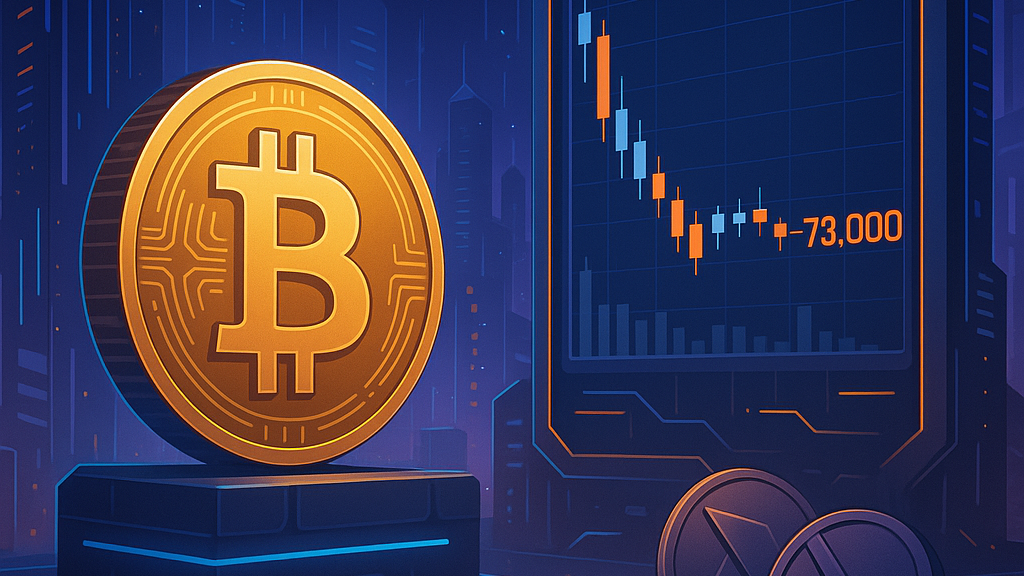
On April 10, Bitcoin’s price hit an intraday peak of $73,111 but faced another setback, marking the third consecutive time it has struggled to surpass this barrier since the ceasefire announcement between the US and Iran. This resistance level has proven a challenge for cryptocurrency traders, with many analysts suggesting that a break above $75,000 is essential for any significant bullish momentum.
This persistent resistance has had repercussions across the altcoin market, causing notable declines in the prices of Ethereum, Solana, and Dogecoin. Analysts remarked that the repeated inability of Bitcoin to climb past $73,000 has put additional pressure on these altcoins, leading to their downward trajectory.

The market has been under strain since the onset of the conflict, with Bitcoin’s price stagnating amidst geopolitical tensions. This stagnation has impacted the overall market sentiment, and the altcoins are particularly vulnerable during such periods. The current trading environment suggests that altcoins tend to struggle more acutely when Bitcoin fails to breach significant resistance levels.
Despite the potential for a market rally, the ongoing geopolitical uncertainties have overshadowed any short-term gains. Bitcoin’s previous peaks during the conflict have all halted at the $73,000 mark, emphasizing the psychological barriers that traders face. Market participants are cautious, with lingering concerns about the geopolitical climate affecting risk appetite.
Looking ahead, market experts believe that a comprehensive diplomatic resolution from the upcoming talks in Islamabad could alleviate some of these tensions. Should the Strait of Hormuz reopen without restrictions and oil prices stabilize below $100, this could provide the necessary impetus for Bitcoin to finally break through its current resistance. Analysts emphasize that a shift in macroeconomic conditions may serve as a crucial catalyst for renewed altcoin momentum.
In summary, the combination of Bitcoin’s ongoing struggles with resistance at $73,000 and the subsequent decline of key altcoins reflects a market still grappling with the implications of geopolitical developments. Until a break above $75,000 is achieved or macroeconomic factors shift favorably, traders may remain hesitant to adopt a risk-on approach.
Leave the reaction
Raj Patel









Commentaries
Add your comment
Fill in necessary fields and publish