


Bitcoin Faces Uncertainty Amid Trump’s Iran Ultimatum
We have always followed the principles of transparency and clear information. Some of our content includes affiliate links, and we may earn a small commission through these partnerships. These partnerships do not influence our editorial independence or opinion. By using our site, you accept our privacy policy and terms and conditions.


Financial services expert with over three years of experience monitoring cryptocurrency markets and blockchain innovation. Passionate about digital assets and the decentralized future.
Cryptocurrency is a high-risk asset class, and investing carries significant risk, including the potential loss of some or all of your investment. The information on this website is provided for informational and educational purposes only and does not constitute financial, investment, or gambling advice. Cryptowinx does not endorse any specific exchange or gaming platform. For more details, please read our terms and full disclaimer.
Cryptowinx navigates the digital asset universe with a dynamic, forward-looking vision. Throughout our evolution, we have followed every market cycle, from vertical rises to corrections, always remaining a solid point of reference for our community. Our team is made up of industry experts and analysts who experience the blockchain ecosystem daily: we constantly monitor Bitcoin’s stability, study the expansion of the Ethereum ecosystem, and analyze the new frontiers of crypto casinos. We are committed to absolute editorial integrity, separating the signal from the noise through rigorous fact-checking and multi-perspective news analysis. In a landscape where innovations emerge in moments, our mission is to simplify complex concepts and offer transparency into what is established and what is still experimental.
Learn more Cryptowinx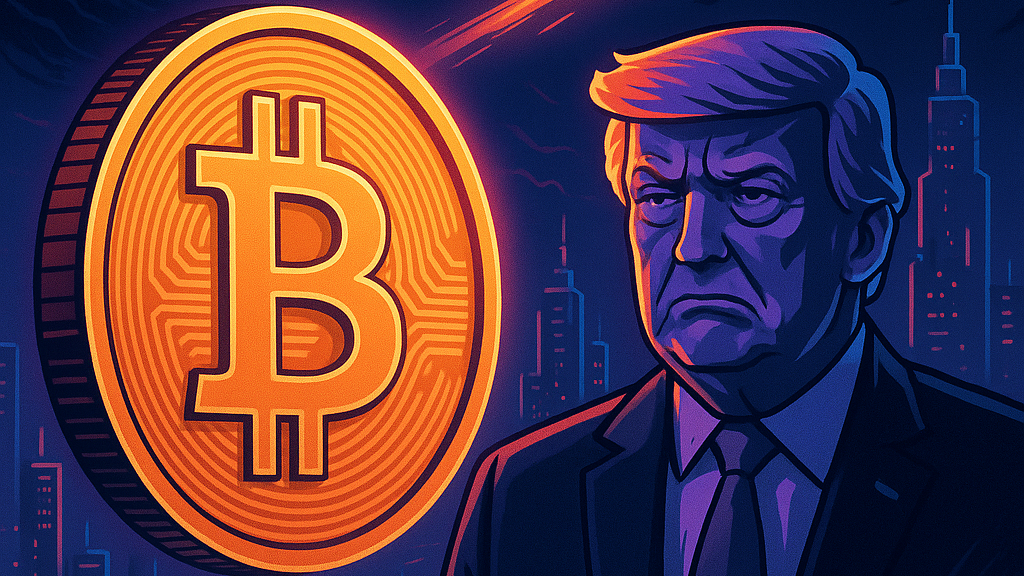
Kyle Rodda, a Senior Financial Market Analyst at Capital.com, highlighted significant risks associated with Bitcoin (BTC), particularly in light of President Trump’s ultimatum directed at Iran, which is set for Tuesday at 8 PM ET. This situation has led to a landscape where traders must navigate either escalation or relief, creating a stark binary risk for cryptocurrency investors.
On Tuesday, Bitcoin experienced a drop below $69,000 after briefly surpassing the $70,000 mark the previous day. This decline followed Iran’s rejection of a proposed 45-day ceasefire, coinciding with Trump’s declaration of the deadline as “final.”

In his demands, Trump has urged Iran to resume operations in the Strait of Hormuz or face military strikes on infrastructure across the nation. This ultimatum marks the fourth extension of the deadline since March 21, showcasing a notable pattern in geopolitical tension.
While there is a possibility of a further delay in Trump’s deadline if negotiations appear fruitful, he expressed skepticism regarding postponing again on Monday, identifying it as “highly unlikely.”
Rodda pointed out that the financial markets are currently in a state of anticipation, awaiting the outcome of this escalating situation. He noted that traders are bracing for one of two potential scenarios: either military action will ensue, leading to further market turmoil, or a relief rally could take place if tensions ease.
He elaborated that Bitcoin’s trading range remains confined between approximately $60,000 and $75,000. A significant rise in oil prices, driven by geopolitical tensions, could adversely affect BTC by increasing U.S. Treasury yields and bolstering the U.S. Dollar.
Currently, the U.S. Dollar Index (DXY) is stable around 100, indicating potential breakout movements that may spell trouble for Bitcoin prices. Rodda emphasized that the DXY’s upward movements could negatively impact the cryptocurrency market, particularly if it aligns with a drop in Tether (USDT) dominance, further pressuring Bitcoin.
Despite the turmoil, Rodda acknowledged Bitcoin’s remarkable resilience. He noted tentative signs that the cryptocurrency may be nearing a bottom, although far from conclusive.
Technical indicators suggest urgency, as Bitcoin has been trading within a bear flag pattern for around 60 days, mirroring the duration of a previous bear pattern that led to significant market declines.

Additionally, trading volumes in the cryptocurrency market have dwindled to levels reminiscent of the FTX collapse, indicating a severe reduction in market sentiment.
QCP Capital analysts remarked on the market’s cooling response to Trump’s escalating rhetoric after several deadlines have come and gone. As crude oil prices have softened and equity futures appear stable, the sense of urgency surrounding impending military action diminishes.
Institutional interest in Bitcoin, however, remains strong. In March, spot Bitcoin ETFs observed net inflows totaling $1.32 billion, breaking a four-month streak of outflows. Moreover, MicroStrategy has resumed its Bitcoin purchases after a short hiatus.
As geopolitical tensions continue to evolve, traders assess the probabilities of a ceasefire, with recent data suggesting only a 3% chance before April 7, and a slight increase to 30% by the end of the month.
With impending outcomes on the table—whether military actions will materialize or if negotiations will yield another extension—Bitcoin’s response could provide critical insights into its potential recovery amid ongoing geopolitical conflicts.
Leave the reaction
Gregory Russell












Commentaries
Add your comment
Fill in necessary fields and publish