


Brazil Expands Pix Payment Network Amid U.S. Opposition
We have always followed the principles of transparency and clear information. Some of our content includes affiliate links, and we may earn a small commission through these partnerships. These partnerships do not influence our editorial independence or opinion. By using our site, you accept our privacy policy and terms and conditions.


A Web3 and NFT expert, Elena focuses on the evolution of digital art and blockchain gaming for CryptoWinx. She combines technical expertise with a deep…
Cryptocurrency is a high-risk asset class, and investing carries significant risk, including the potential loss of some or all of your investment. The information on this website is provided for informational and educational purposes only and does not constitute financial, investment, or gambling advice. Cryptowinx does not endorse any specific exchange or gaming platform. For more details, please read our terms and full disclaimer.
Cryptowinx navigates the digital asset universe with a dynamic, forward-looking vision. Throughout our evolution, we have followed every market cycle, from vertical rises to corrections, always remaining a solid point of reference for our community. Our team is made up of industry experts and analysts who experience the blockchain ecosystem daily: we constantly monitor Bitcoin’s stability, study the expansion of the Ethereum ecosystem, and analyze the new frontiers of crypto casinos. We are committed to absolute editorial integrity, separating the signal from the noise through rigorous fact-checking and multi-perspective news analysis. In a landscape where innovations emerge in moments, our mission is to simplify complex concepts and offer transparency into what is established and what is still experimental.
Learn more Cryptowinx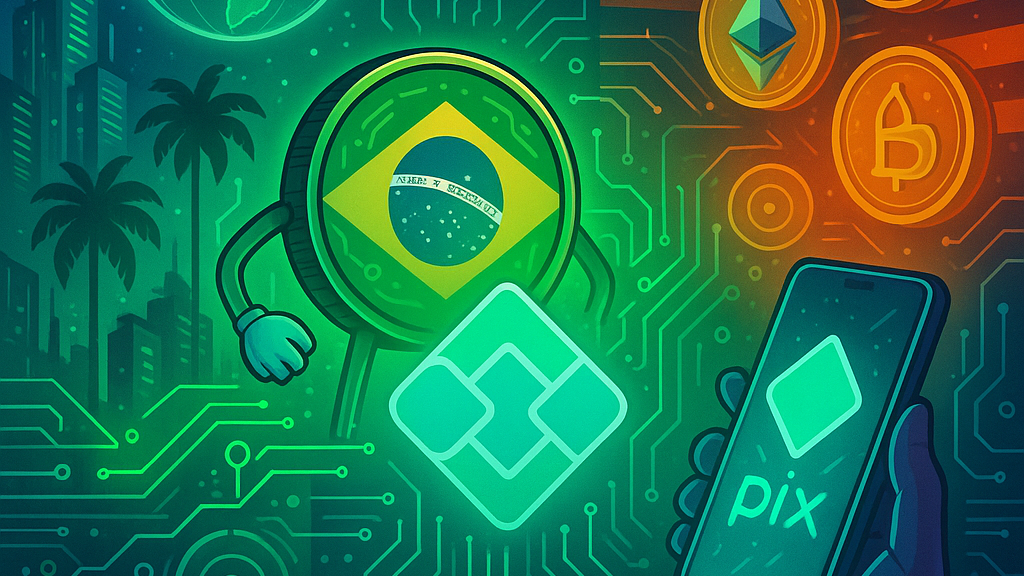
The Central Bank of Brazil has announced plans to expand its widely-used instant payment system, Pix, beyond its national borders, facilitating cross-border payments and remittances. This initiative is seen as a significant step in enhancing Brazil’s financial technology landscape.
Currently, Pix serves an impressive user base of over 175 million individuals across Brazil, processing approximately 200 billion transactions since its inception in November 2020. By introducing International Pix, the Central Bank aims to establish a framework that interconnects various instant payment systems globally.

Although Pix is already operational in several countries, including Argentina, the U.S., and Portugal on a limited basis, these new efforts are intended to make its international functionality permanent. This strategic move could reshape the way international transactions are conducted, enhancing ease and efficiency.
However, this expansion has sparked criticism from the U.S. government. According to a report from the Office of the United States Trade Representative (USTR), the Pix system’s fee-free model and instantaneous transaction finality pose challenges to established payment giants like Visa and Mastercard, which operate on a different financial framework.
In response to criticism, Brazilian President Luiz Inácio Lula da Silva has publicly defended the initiative, emphasizing that Pix is a valuable asset for Brazil and should remain unaffected by external pressures. He has positioned the project as pivotal to his re-election campaign, asserting that efforts to undermine Pix will not prevail.
Furthermore, the internationalization of Pix may inspire other nations to develop similar payment systems, which could lessen reliance on traditional international banking standards and national currencies, notably the U.S. dollar.

Support for this initiative has emerged from Colombian President Gustavo Petro, who has expressed interest in adopting the Pix system for Colombia. He has urged Brazil to expand the initiative southward, criticizing the influence of the Office of Foreign Assets Control (OFAC) and advocating for greater financial autonomy in the region.
This unfolding scenario around Brazil’s Pix system not only highlights the nation’s ambitions in the fintech arena but also underscores the growing tensions in international financial relations, particularly with the United States. The implications of Brazil’s strategy in global payments could resonate significantly, altering the dynamics of how countries engage in financial transactions in the future.
Leave the reaction
Elena Rodriguez












Commentaries
Add your comment
Fill in necessary fields and publish