


China’s Hidden Bitcoin Holdings: Analyzing the 5% Controversy
We have always followed the principles of transparency and clear information. Some of our content includes affiliate links, and we may earn a small commission through these partnerships. These partnerships do not influence our editorial independence or opinion. By using our site, you accept our privacy policy and terms and conditions.


A presale and tokenomics specialist, Sofia evaluates new crypto projects with the analytical rigor of her Bocconi background. Having reviewed over 200 launches, she excels…
Cryptocurrency is a high-risk asset class, and investing carries significant risk, including the potential loss of some or all of your investment. The information on this website is provided for informational and educational purposes only and does not constitute financial, investment, or gambling advice. Cryptowinx does not endorse any specific exchange or gaming platform. For more details, please read our terms and full disclaimer.
Cryptowinx navigates the digital asset universe with a dynamic, forward-looking vision. Throughout our evolution, we have followed every market cycle, from vertical rises to corrections, always remaining a solid point of reference for our community. Our team is made up of industry experts and analysts who experience the blockchain ecosystem daily: we constantly monitor Bitcoin’s stability, study the expansion of the Ethereum ecosystem, and analyze the new frontiers of crypto casinos. We are committed to absolute editorial integrity, separating the signal from the noise through rigorous fact-checking and multi-perspective news analysis. In a landscape where innovations emerge in moments, our mission is to simplify complex concepts and offer transparency into what is established and what is still experimental.
Learn more Cryptowinx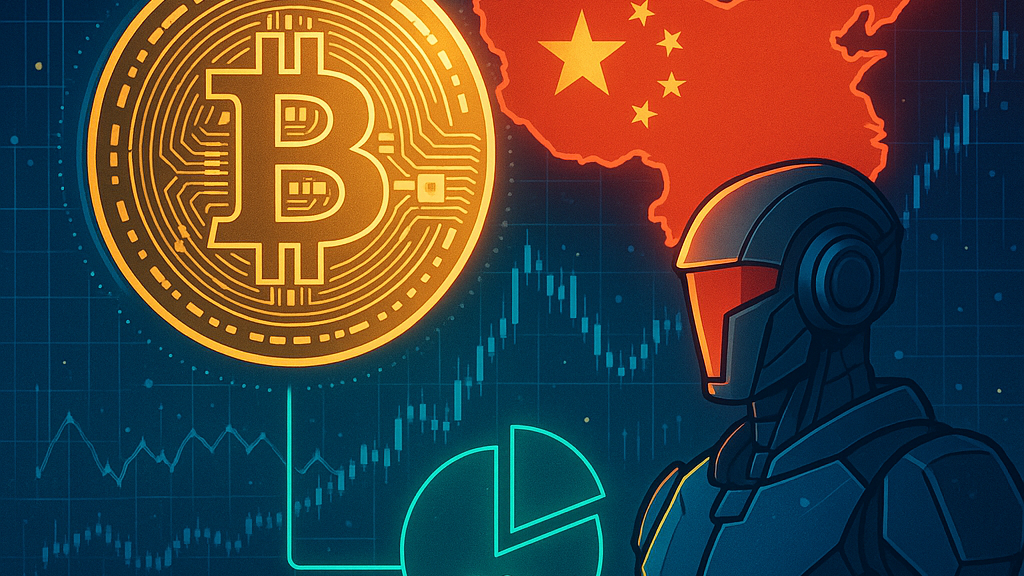
The narrative surrounding China’s approach to Bitcoin is increasingly complex. Although the nation has enacted stringent bans against cryptocurrency trading and mining, speculation abounds regarding its potential covert accumulation of Bitcoin through overseas channels.
Recent discussions have emerged suggesting that China may possess as much as 1,000,000 Bitcoins, representing around 5% of the total Bitcoin supply. This idea has captured the attention of both analysts and investors alike, igniting debates on the implications of such significant holdings.

China’s official stance on cryptocurrencies has been clear, with gradual bans on domestic Bitcoin trading and mining from 2017 to 2021, which authorities justified as necessary due to financial risks and environmental concerns associated with energy consumption. These restrictions have led to a marked decline in visible crypto trading activities within the nation.
Nevertheless, experts continue to speculate that Chinese investors could be accessing Bitcoin through offshore platforms, including exchanges based in Hong Kong and other international jurisdictions. The Chinese government, however, has not acknowledged any private accumulation of Bitcoin, focusing instead on regulation and risk management.
This lack of transparency leads professionals in the field to rely on speculation and blockchain tracking to gauge potential holdings. Some commentators suggest that the separation between government policy and private market actions may allow for Bitcoin accumulation to proceed discreetly despite the bans.
The claim regarding China’s supposed possession of 1,000,000 Bitcoins has gained traction, with investment firms like Pantera Capital also engaging in this discourse. Analysis has emerged indicating that countries might contemplate Bitcoin as part of their reserve assets.
While Pantera has emphasized that their assertion regarding China acquiring such a large amount is rooted in geopolitical considerations rather than mere price predictions, the idea that a major economy like China could recognize Bitcoin as a reserve asset changes the dynamics of market perception.
Nonetheless, there remains no definitive evidence to confirm that China indeed holds 1,000,000 Bitcoins. While substantial wallets have been identified, attributing ownership can be problematic. Transactions on the blockchain can be traced, yet determining the owner behind these addresses often remains obscure, particularly when state-related entities are involved.
Even so, these discussions significantly impact investor sentiment and trading behaviors. Speculation surrounding substantial national holdings tends to influence market dynamics, prompting heightened trading activity among participants.
It is important to note that discussions regarding the potential holdings, while intriguing, often lack confirmation. The reported figure represents a fraction, specifically about 5%, of Bitcoin’s total supply of 21 million coins. This statistic underlines the inherent scarcity of Bitcoin, regardless of confirmed ownership.
Bitcoin’s capped supply, enshrined in its protocol, continues to serve as a benchmark for assessing market rarity. If confirmed, China’s ownership of 1,000,000 Bitcoins would imply a notable influence on market conditions, yet the global distribution presents a different scenario.
Comparisons have been drawn between Bitcoin reserves and traditional central bank gold holdings, both regarded as stores of value. However, unlike gold, Bitcoin transactions are more transparent, enabling a degree of traceability through blockchain data, albeit without conclusive evidence of ownership.
The 5% figure introduces an additional layer to geopolitical discussions, highlighting the potential leverage a single nation could exert in a constrained market. Analysts continue to weigh the possible ramifications of such holdings on supply and demand dynamics.
Political analysts have observed that nations may operate differently in public versus private market scenarios. U.S. Senator JD Vance has pointed out that countries often display one stance while acting in a markedly different manner behind closed doors.
The ongoing speculation regarding national accumulation of Bitcoin tends to drive market interest and activity. Traders may react to speculative reports swiftly, often prior to any official confirmation, illustrating how narratives shape cryptocurrency pricing.
Though speculation remains rampant, China has not released any formal statements regarding its Bitcoin holdings. Analysts will continue to scrutinize blockchain activities and international trading platforms for potential indicators. As the global landscape regarding regulations and cryptocurrency adoption evolves, investors remain vigilant, navigating the challenges of extracting verified information amidst the complexities of the market.
Leave the reaction
Sofia Russo











Commentaries
Add your comment
Fill in necessary fields and publish