


Impact of Rising Oil Prices on Bitcoin Market Sentiment
We have always followed the principles of transparency and clear information. Some of our content includes affiliate links, and we may earn a small commission through these partnerships. These partnerships do not influence our editorial independence or opinion. By using our site, you accept our privacy policy and terms and conditions.


A Web3 and NFT expert, Elena focuses on the evolution of digital art and blockchain gaming for CryptoWinx. She combines technical expertise with a deep…
Cryptocurrency is a high-risk asset class, and investing carries significant risk, including the potential loss of some or all of your investment. The information on this website is provided for informational and educational purposes only and does not constitute financial, investment, or gambling advice. Cryptowinx does not endorse any specific exchange or gaming platform. For more details, please read our terms and full disclaimer.
Cryptowinx navigates the digital asset universe with a dynamic, forward-looking vision. Throughout our evolution, we have followed every market cycle, from vertical rises to corrections, always remaining a solid point of reference for our community. Our team is made up of industry experts and analysts who experience the blockchain ecosystem daily: we constantly monitor Bitcoin’s stability, study the expansion of the Ethereum ecosystem, and analyze the new frontiers of crypto casinos. We are committed to absolute editorial integrity, separating the signal from the noise through rigorous fact-checking and multi-perspective news analysis. In a landscape where innovations emerge in moments, our mission is to simplify complex concepts and offer transparency into what is established and what is still experimental.
Learn more Cryptowinx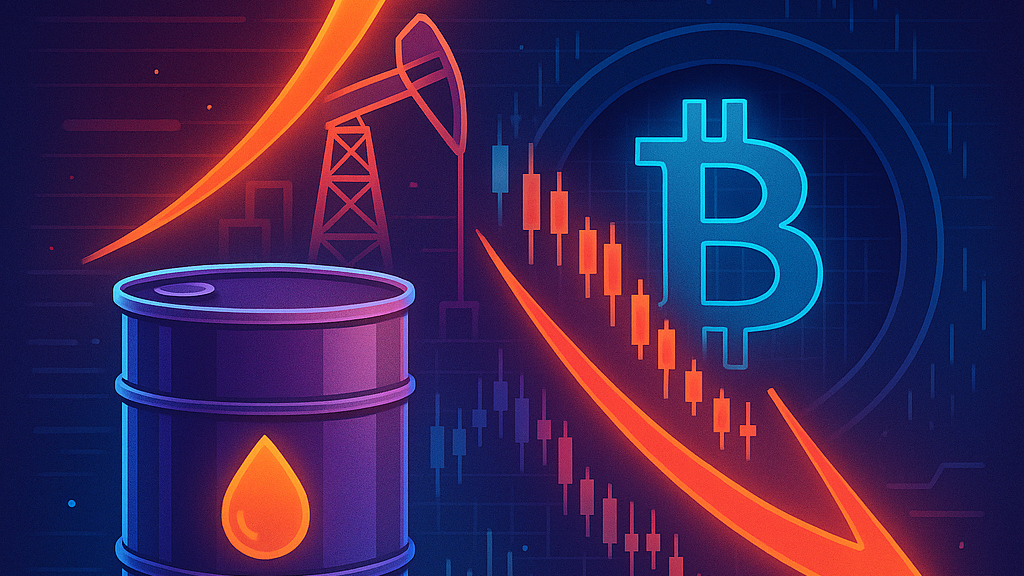
The persistent unrest in the Middle East is exerting significant pressure on Bitcoin and other high-risk investments. As investors become increasingly apprehensive, the implications of climbing oil prices on the cryptocurrency market have drawn considerable attention. Current projections indicate a bleak outlook for Bitcoin, suggesting that recovery may only occur when regional tensions subside.
Analysts have expressed their views regarding the ongoing conflict between the US and Iran, highlighting its ramifications on both financial and cryptocurrency markets. A crypto expert from BTC Markets reported that Bitcoin’s price remains volatile in light of fresh developments related to the Middle East situation.

The analyst remarked on the turbulent week for Bitcoin, which saw a surge to $72,000 amid hopes for a diplomatic resolution to the conflict. However, these optimistic gains were swiftly undone as investor confidence waned and worries about oil supply emerged. This trend led to a typical retreat from riskier assets such as Bitcoin, with investors opting for safer options out of apprehension.
Concerns regarding inflation have been intensified by the current developments in the Strait of Hormuz. This uncertainty hinders the Federal Reserve’s ability to reduce interest rates, limiting potential economic relief. As a result, the crypto market feels the squeeze from these tighter financial conditions, contributing to notable declines in major cryptocurrencies.
Echoing this sentiment, another market expert has taken a pessimistic view of Bitcoin amidst ongoing Middle East tensions. He anticipates that elevated oil prices could impede economic growth in the approaching months. The expert stated that the combined effects of rising energy costs and adverse economic conditions leave ample room for further declines in cryptocurrency prices. He warned that Bitcoin could potentially plummet to $60,000 before the market sees any meaningful recovery.
Interestingly, many bearish forecasts for Bitcoin are converging around the $60,000 mark, indicating that experts might consider this price level as a significant bottom. Analysts at Bernstein have also affirmed this price floor prior to projected surges toward $150,000 in subsequent market cycles.

Current data indicates that retail investors are displaying a heightened sense of fear, with many opting to hedge their investments or remain on standby until the market shows signs of stabilization. The Bitcoin Fear and Greed Index illustrates this hesitation, as broader market sentiment trends toward neutrality.
Moreover, the overall cryptocurrency market is now categorized as being in a state of extreme fear, with major assets like Bitcoin, Ethereum, and Dogecoin continuing their downward trajectory, further undermining investor confidence.
Leave the reaction
Elena Rodriguez








Commentaries
Add your comment
Fill in necessary fields and publish